


1. Introduction to ZrC and HfC and TaC
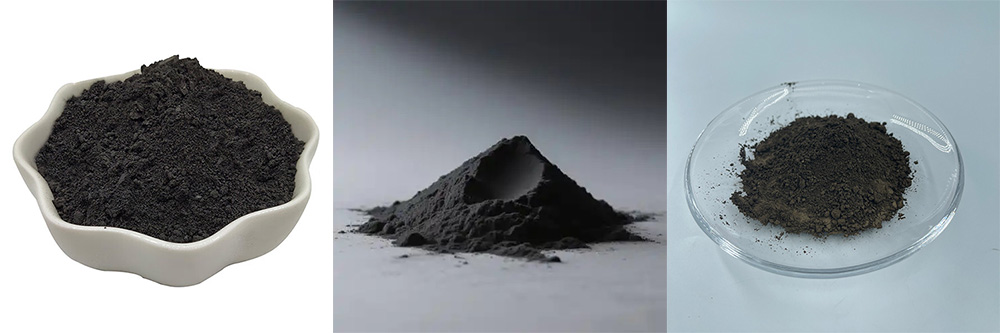
Zirconium carbide (ZrC), hafnium carbide (HfC) and tantalum carbide (TaC) are refractory transition metal carbides known for their high melting points, hardness and stability under demanding thermal conditions. They belong to the family of ultra-high-temperature ceramics (UHTCs) and are widely investigated for advanced structural materials, protective coatings and high-temperature engineering applications.
Although these three materials share a face-centred cubic (FCC) crystal structure, their physical properties differ considerably. The comparison of ZrC vs HfC vs TaC is crucial for material selection.
Hafnium carbide and tantalum carbide are particularly notable for their exceptionally high melting points, while zirconium carbide offers a combination of high-temperature capability, lower density and useful electrical and thermal properties.
Understanding these differences is important when selecting a carbide for a specific application. The most suitable material depends on operating temperature, mechanical requirements, oxidation environment, component weight, processing conditions and material cost.
2. Basic Properties of ZrC and HfC and TaC
The three carbides share similar crystal structures but differ in elemental composition, density and thermal behaviour.
| Property | Zirconium Carbide (ZrC) | Hafnium Carbide (HfC) | Tantalum Carbide (TaC) |
|---|---|---|---|
| Chemical Formula | ZrC | HfC | TaC |
| CAS Number | 12070-14-3 | 12069-85-1 | 12070-06-3 |
| Crystal Structure | Face-Centred Cubic | Face-Centred Cubic | Face-Centred Cubic |
| Density | Approx. 6.6 g/cm³ | Approx. 12.7 g/cm³ | Approx. 14.5 g/cm³ |
| Melting Point | Approx. 3,420–3,530 °C | Approx. 3,900–3,980 °C | Approx. 3,800–3,980 °C |
| Vickers Hardness | Approx. 16–27 GPa | Approx. 18–26 GPa | Approx. 14–20 GPa |
| Electrical Behaviour | Metallic Conductivity | Metallic Conductivity | Metallic Conductivity |
Note: Values are indicative reference ranges for ceramic materials. Actual properties depend on stoichiometry, purity, porosity, grain size, testing methods and processing conditions.
All three materials have an FCC crystal structure in their typical cubic carbide phase. Their strong bonding and refractory characteristics contribute to their suitability for high-temperature applications.
An important distinction is density. HfC and TaC are considerably denser than ZrC because hafnium and tantalum have higher atomic masses than zirconium.
This difference can become important in applications where component weight, material volume and structural design are relevant.
3. Melting Point and High-Temperature Performance
Melting point is one of the most widely discussed properties when comparing ultra-high-temperature carbides.
All three materials can withstand temperatures far beyond the capabilities of many conventional engineering metals. However, HfC and TaC generally exhibit higher reported melting points than ZrC.
Zirconium carbide has a reported melting point of approximately 3,420–3,530 °C, depending on composition and reference data.
Its high melting point makes it relevant to refractory ceramics, high-temperature structural materials and thermal protection systems.
ZrC is particularly interesting for applications where high-temperature performance needs to be balanced with relatively low density among these three carbides.
Hafnium carbide has a reported melting point of approximately 3,900–3,980 °C.
Its exceptionally high melting point makes it one of the most important candidate materials for extreme-temperature ceramic applications.
HfC is investigated for use in thermal protection systems, high-temperature structural components and refractory composites.
Its high density, however, is an important consideration when designing lightweight components.
Tantalum carbide also exhibits an exceptionally high melting point, generally reported in the range of approximately 3,800–3,980 °C.
Its high-temperature stability and hardness make it attractive for refractory materials, protective coatings and specialised high-temperature components.
Depending on composition and measurement conditions, reported melting-point values for TaC can approach or exceed those reported for HfC.
3.4 Melting Point Comparison
The general comparison is:
- ZrC: High melting point with relatively low density.
- HfC: Among the highest melting-point refractory carbides.
- TaC: Comparable ultra-high-temperature capability, with high density and useful mechanical properties.
It is important to distinguish melting point from maximum operating temperature. Oxidation, thermal shock, mechanical loading and environmental conditions can limit actual service temperatures long before a material reaches its melting point.
4. Hardness and Mechanical Properties
Hardness is another important factor when comparing ZrC and HfC and TaC.
All three materials are hard ceramic compounds, although reported values vary depending on testing conditions, grain structure and material density.
4.1 Zirconium Carbide
ZrC exhibits high hardness and good resistance to mechanical wear.
Its properties make it suitable for consideration in abrasive materials, wear-resistant ceramic components and specialised coatings.
ZrC-based composites can also be developed to improve the overall mechanical performance of ceramic systems.
4.2 Hafnium Carbide
HfC combines high hardness with high-temperature stability.
Its mechanical properties make it relevant to advanced refractory ceramics and specialised structural materials.
The final hardness of HfC ceramics is strongly influenced by purity, stoichiometry, grain size and densification.
4.3 Tantalum Carbide
TaC is also a hard refractory ceramic with good resistance to mechanical wear.
It is used in research and development of cutting-related materials, wear-resistant coatings and high-temperature composites.
Its mechanical performance depends on composition, processing conditions and microstructural characteristics.
4.4 Mechanical Property Comparison
Although ZrC and HfC and TaC all exhibit high hardness, a direct ranking is not always meaningful.
For example, reported Vickers hardness values can overlap considerably between the three materials. Differences in indentation load, sample density and grain structure can also affect the results.
For engineering applications, hardness should therefore be considered together with fracture toughness, flexural strength, thermal shock resistance and component microstructure.
5. Thermal and Chemical Behaviour
In addition to melting point and hardness, thermal conductivity, thermal expansion and oxidation behaviour are important when selecting refractory carbides.
5.1 Thermal Conductivity
ZrC and HfC and TaC exhibit metallic electrical behaviour and measurable thermal conductivity.
Indicative room-temperature thermal conductivity values reported for dense materials are:
| Material | Thermal Conductivity |
|---|---|
| Zirconium Carbide (ZrC) | Approx. 19–25 W/(m·K) |
| Hafnium Carbide (HfC) | Approx. 15–25 W/(m·K) |
| Tantalum Carbide (TaC) | Approx. 20–40 W/(m·K) |
These values are representative ranges rather than guaranteed product specifications.
Thermal conductivity depends on temperature, stoichiometry, impurities, porosity and microstructure.
5.2 Thermal Expansion
All three carbides have relatively low coefficients of thermal expansion compared with many metallic materials.
Typical values are in the range of approximately 6–8 × 10⁻⁶ K⁻¹.
Their thermal expansion characteristics are relevant when designing ceramic components, coatings and composite systems exposed to temperature variations.
Compatibility between the thermal expansion coefficients of a coating and its substrate is particularly important for minimising thermally induced stress.
5.3 Oxidation Resistance
A high melting point does not automatically mean excellent oxidation resistance.
ZrC, HfC and TaC can all oxidise in oxygen-containing environments at elevated temperatures.
Their oxidation behaviour is influenced by temperature, oxygen partial pressure, exposure duration, composition and microstructure.
ZrC forms zirconium oxide (ZrO₂) during oxidation, while HfC and TaC form their corresponding oxides.
The formation and stability of oxide layers can influence further oxidation, material loss and the integrity of protective coatings.
For applications involving high-temperature air exposure, oxidation protection and composite design should be considered alongside the intrinsic properties of the carbide.
6. Synthesis and Processing Differences
ZrC and HfC and TaC can be produced through several synthesis routes, including carbothermal reduction, direct reaction and other solid-state or precursor-based methods.
The appropriate process depends on raw material characteristics, desired purity, particle size and final product form.
6.1 Powder Synthesis
Carbothermal reduction is an established approach for producing transition metal carbide powders.
It generally involves reacting a metal oxide with a carbon source at elevated temperatures under controlled atmospheric conditions.
The synthesis of ZrC and HfC and TaC requires control of the starting material composition and reaction conditions to obtain the desired carbide phase.
Important powder quality parameters include:
- Chemical purity
- Metal-to-carbon ratio
- Oxygen content
- Particle size distribution
- Phase composition
- Particle morphology
6.2 Sintering and Densification
Producing dense carbide ceramics can be challenging due to their strong bonding and high melting points.
Common consolidation techniques include:
- Pressureless sintering
- Hot pressing
- Spark plasma sintering (SPS)
- Hot isostatic pressing (HIP)
The selection of a suitable process depends on the powder characteristics, required density, component geometry and final application.
Fine powder can support densification by increasing surface area and reducing diffusion distances. However, agglomeration and surface contamination may negatively affect the resulting microstructure.
6.3 Processing Considerations
Although ZrC and HfC and TaC share similar processing challenges, their individual compositions and powder characteristics can influence the required processing conditions.
For this reason, powder specifications should be evaluated before selecting a synthesis or sintering route.
7. Main Applications of ZrC and HfC and TaC
The three carbides are relevant to several advanced material applications, although their relative advantages differ.
7.1 Aerospace and Thermal Protection Systems
Extreme-temperature aerospace applications require materials capable of maintaining structural integrity under severe thermal and mechanical conditions.
HfC and TaC are particularly interesting because of their exceptionally high melting points.
ZrC is also investigated for thermal protection systems and high-temperature ceramic composites, especially where lower density is beneficial.
Potential application areas include high-temperature structural components, thermal protection materials and refractory composite systems.
7.2 Refractory Materials
All three materials are refractory carbides suitable for research and development of components exposed to high temperatures.
HfC and TaC are especially relevant where extremely high melting points are important.
ZrC can be considered where high-temperature capability needs to be combined with a lower material density.
7.3 Wear-Resistant Coatings and Hard Materials
Their high hardness makes ZrC and HfC and TaC relevant to specialised coating systems and wear-resistant materials.
They can be incorporated into composite materials or deposited as carbide-containing films using suitable coating technologies.
The final coating performance depends on adhesion, density, deposition conditions, substrate compatibility and microstructure.
7.4 Thin-Film Deposition and Sputtering
All three carbides are available in sputtering target form for physical vapour deposition (PVD) applications.
ZrC and HfC and TaC sputtering targets can be used in research and development of carbide-containing thin films.
Target selection should consider purity, density, dimensions, microstructural uniformity and compatibility with the deposition equipment.
The resulting film properties depend on both the target material and the deposition conditions.
7.5 Advanced Ceramic Composites
ZrC and HfC and TaC can be incorporated into advanced ceramic and composite systems to modify thermal and mechanical properties.
Research focuses on combining refractory carbides with other ceramic phases to improve oxidation behaviour, thermal shock resistance and structural performance.
Material composition and processing conditions must be tailored to the intended operating environment.
8. ZrC vs HfC vs TaC: Which Material Should You Choose?
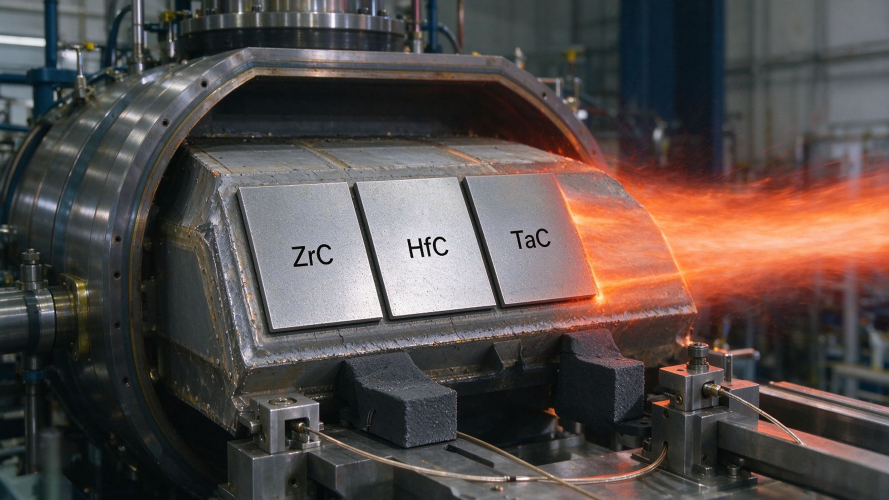
The most suitable carbide depends on the specific performance requirements of the application.
There is no universal best choice across all engineering conditions.
Choose Zirconium Carbide (ZrC) When:
- High melting point and high-temperature capability are required.
- Lower density is important compared with HfC and TaC.
- Electrical conductivity and ceramic hardness are relevant.
- The material is intended for refractory ceramics, composites or specialised coatings.
Choose Hafnium Carbide (HfC) When:
- Extremely high melting point is a primary requirement.
- The application involves advanced ultra-high-temperature ceramics.
- High-temperature structural performance is more important than minimising material density.
- The material is intended for specialised thermal protection or refractory composite research.
Choose Tantalum Carbide (TaC) When:
- High-temperature stability and refractory characteristics are required.
- Hardness and mechanical performance are important.
- The material is intended for specialised coatings, refractory components or advanced ceramic systems.
- The higher density is acceptable for the intended design.
Material Selection Summary
| Selection Factor | ZrC | HfC | TaC |
|---|---|---|---|
| Very High Melting Point | Excellent | Excellent | Excellent |
| Relatively Low Density | Best of the Three | Higher | Highest |
| Hardness | High | High | High |
| Electrical Conductivity | Yes | Yes | Yes |
| Refractory Applications | Suitable | Suitable | Suitable |
| Advanced UHTC Research | Suitable | Particularly Relevant | Particularly Relevant |
| Material Cost Consideration | Often More Economical | Generally Higher | Generally Higher |
The cost comparison is a general market consideration, not a quotation or guaranteed price ranking. Actual costs depend on purity, particle size, manufacturing route, product form and order quantity.
9. Available ZrC and HfC and TaC Product Forms at VIMATERIAL
VIMATERIAL supplies zirconium carbide and hafnium carbide and tantalum carbide in three product forms: powder, granules and sputtering targets.
These forms are intended for different material processing and manufacturing requirements.
9.1 Zirconium Carbide (ZrC)
Zirconium carbide powder is available with the following specification:
| Specification | Available Grade |
|---|---|
| Purity | 99% (Zr + Hf) |
| Particle Size | D50 < 5 μm |
| Product Forms | Powder, Granules, Sputtering Targets |
The stated purity represents the combined content of zirconium and hafnium metallic elements. It should not be interpreted as the individual zirconium content or as a direct measurement of stoichiometric ZrC phase purity.
9.2 Hafnium Carbide (HfC)
VIMATERIAL offers several HfC powder specifications:
| Purity | Particle Size | Product Forms |
|---|---|---|
| 99% (Hf + Zr) | < 500 nm | Powder, Granules, Sputtering Targets |
| 99% (Hf + Zr) | D50 < 5 μm | Powder, Granules, Sputtering Targets |
| 99.5% (Hf + Zr) | -325 Mesh | Powder, Granules, Sputtering Targets |
The stated purity represents the combined content of hafnium and zirconium metallic elements.
Different particle size specifications provide options for applications with different powder processing and material preparation requirements.
Available product forms include powder, granules and sputtering targets.
9.3 Tantalum Carbide (TaC)
VIMATERIAL offers tantalum carbide powder with the following specification:
| Specification | Available Grade |
|---|---|
| Purity | 99.5% |
| Particle Size | FSSS ≤ 1.5 μm |
| Product Forms | Powder, Granules, Sputtering Targets |
FSSS (Fisher Sub-Sieve Sizer) is a fineness measurement based on the specific surface area of a powder. It is not directly interchangeable with laser diffraction particle size values such as D50.
9.4 Choosing the Appropriate Product Form
The three available product forms serve different processing requirements:
- Powder: Suitable for ceramic manufacturing, powder metallurgy, composite preparation and other powder-based processes.
- Granules: Suitable for processes requiring granular feedstock and specific particle handling characteristics.
- Sputtering Targets: Designed for physical vapour deposition and thin-film research or manufacturing.
For material selection, purity, particle size, composition and product geometry should be considered together with the intended application.
Frequently Asked Questions (FAQ)
1. Which has the highest melting point: ZrC, HfC or TaC?
HfC and TaC generally have higher reported melting points than ZrC. Their exact values depend on composition and measurement conditions.
2. Which is denser, HfC or TaC?
TaC is generally denser than HfC, with typical densities of approximately 14.5 g/cm³ and 12.7 g/cm³, respectively.
3. Is ZrC harder than HfC and TaC?
ZrC can exhibit higher hardness than some HfC and TaC samples, but the actual result depends on composition, density, grain structure and testing conditions.
4. What is the main advantage of ZrC over HfC and TaC?
ZrC offers a useful combination of high-temperature capability, hardness and substantially lower density. It can be attractive when material weight and overall material economics are important.
5. Are ZrC, HfC and TaC electrically conductive?
Yes. All three are electrically conductive transition metal carbides with metallic electrical characteristics.
6. Are these three carbides resistant to oxidation?
All three can oxidise at elevated temperatures in oxygen-containing environments. Their oxidation behaviour depends on temperature, atmosphere, exposure time and material composition.
7. What is the difference between D50 and FSSS?
D50 is the median particle size measured using a particle size distribution method, while FSSS estimates powder fineness based on specific surface area. The two measurements are not directly interchangeable.
8. Does VIMATERIAL supply ZrC, HfC and TaC in different forms?
Yes. VIMATERIAL offers all three materials in powder, granule and sputtering target forms. Available specifications depend on the material and product type.
9. Can VIMATERIAL provide different particle sizes and purity grades?
VIMATERIAL offers different specifications depending on the material. Contact our team to discuss available purity levels, particle sizes and other technical requirements.
Conclusion
Zirconium carbide and hafnium carbide and tantalum carbide are three important refractory transition metal carbides with outstanding high-temperature characteristics.
HfC and TaC are particularly notable for their extremely high melting points, while ZrC offers a combination of high-temperature performance and lower density.
Their differences in density, hardness, thermal properties and processing requirements make each material suitable for different engineering applications.
Selecting the appropriate carbide requires a comprehensive evaluation of operating conditions, material specifications, processing methods and cost considerations.
VIMATERIAL supplies ZrC and HfC and TaC in powder, granule and sputtering target forms for industrial manufacturing and scientific research. Contact our team to discuss your material requirements and identify a suitable specification for your application.
References
- [1] Carbides and Nitrides of Zirconium and Hafnium. (2019). Journal of Research of the National Institute of Standards and Technology, 124.
- [2] Polymer-Derived Ultra-High Temperature Ceramics (UHTCs) and Related Materials. (2019). Advanced Engineering Materials.
- [3] Current Status of Synthesis and Consolidation Strategies for Ultra-High-Temperature Ceramics. (2023). Nanotechnology Reviews.
- [4] Processing and Properties of High-Entropy Ultra-High Temperature Carbides. (2018). Nature Communications.
- [5] Research Progress on Carbide Ultra-High Temperature Ceramic Anti-Ablation Coatings for Thermal Protection Systems. (2024). Journal of Inorganic Materials.
Further Reading
- Zirconium Carbide (ZrC): Properties, Synthesis and Applications
- Zirconium Carbide Synthesis and Sintering Methods
- Hafnium Diboride vs Zirconium Diboride: Properties and High-Temperature Applications
- Ultra-High Temperature Ceramics (UHTCs): Materials for Extreme High-Temperature Applications
- High Purity Titanium Carbide: The “Ultra-Hard Pioneer” Powering Advanced Technologies
Looking for ZrC, HfC or TaC Materials?
Choosing the right refractory carbide depends on your application, processing requirements and material specifications.
VIMATERIAL supplies Zirconium Carbide (ZrC), Hafnium Carbide (HfC) and Tantalum Carbide (TaC) in powder, granule and sputtering target forms for industrial and research applications.
We offer different purity grades and particle size specifications to meet a range of material requirements.
Whether you are developing advanced ceramics, high-temperature components, composite materials or thin-film coatings, our team is ready to discuss your requirements.
Contact VIMATERIAL to request a quotation or discuss your material specifications.