


1. What Is Zirconium Carbide?
Zirconium carbide (ZrC) is a refractory transition metal carbide known for its high melting point, exceptional hardness, electrical conductivity and resistance to high-temperature environments. Combining metallic and ceramic characteristics, it is an important material in the development of advanced ceramics, high-temperature structural components, wear-resistant coatings and functional composite materials.
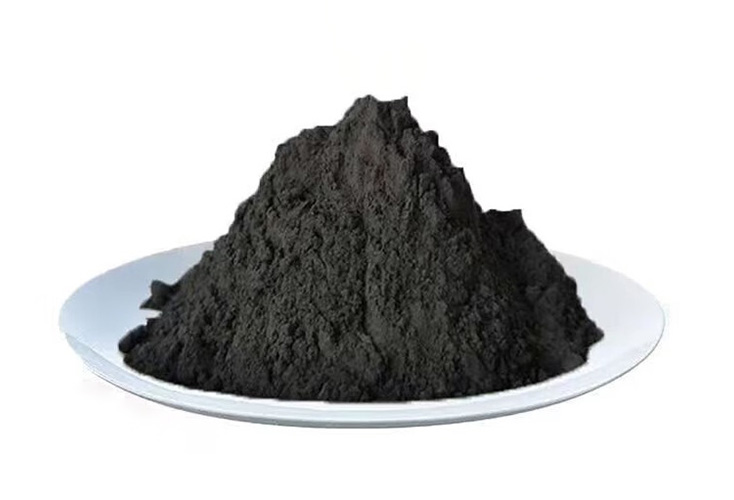
With the chemical formula ZrC and CAS number 12070-14-3, zirconium carbide typically appears as a grey to black solid. Its face-centred cubic (FCC) crystal structure consists of zirconium atoms arranged in a cubic lattice, with carbon atoms occupying the octahedral interstitial sites.
An important characteristic of ZrC is its non-stoichiometric composition. The material can exist over a relatively broad carbon-to-zirconium ratio, commonly expressed as ZrCₓ. Carbon vacancies within the crystal lattice influence its physical, thermal, electrical and mechanical properties.
This combination of structural stability and functional performance makes zirconium carbide relevant to applications where conventional metals or conventional ceramic materials may not provide the required combination of properties.
2. Key Properties of Zirconium Carbide
Zirconium carbide belongs to the group of ultra-high-temperature ceramics (UHTCs). Its properties make it suitable for demanding industrial and research environments, particularly where high temperatures, mechanical wear and electrical conductivity are important considerations.
2.1 High Melting Point and Thermal Stability
One of the most distinctive properties of zirconium carbide is its exceptionally high melting point, generally reported in the range of approximately 3,400–3,540 °C.
This characteristic allows ZrC to retain its solid structure at temperatures far beyond the operating limits of many conventional metallic materials.
Its high-temperature stability makes it a candidate material for refractory components, thermal protection systems and specialised ceramic structures.
However, thermal stability and oxidation resistance should be considered separately. Zirconium carbide can oxidise when exposed to oxygen at elevated temperatures. Its suitability therefore depends on the atmosphere, temperature, exposure duration and protective material design.
2.2 High Hardness and Wear Resistance
Zirconium carbide is a particularly hard ceramic material, with reported hardness values exceeding 25 GPa under suitable measurement conditions. Its Mohs hardness is commonly reported in the range of 8–9.
This high hardness contributes to its resistance to mechanical wear and surface damage.
Potential applications include:
- Wear-resistant ceramic components
- Abrasive and grinding materials
- Hard coatings for tools and industrial components
- Ceramic-metal composites
- Specialised components exposed to mechanical abrasion
In practical applications, the final wear performance depends on material density, grain structure, porosity, composition and processing conditions.
2.3 Electrical Conductivity
Unlike conventional insulating ceramics, zirconium carbide exhibits metallic electrical conductivity.
Its electrical properties originate from the electronic structure of the zirconium-carbon bonding system. The interaction between zirconium d orbitals and carbon p orbitals contributes to its characteristic conductive behaviour.
This property makes ZrC interesting for applications requiring both ceramic characteristics and electrical functionality.
Potential areas of interest include conductive ceramic components, specialised electrodes, electrical heating elements and functional thin films.
2.4 Thermal Conductivity and Thermal Expansion
Zirconium carbide combines relatively high thermal conductivity with a comparatively low coefficient of thermal expansion.
Typical reference values include:
| Property | Typical Value |
|---|---|
| Chemical Formula | ZrC |
| CAS Number | 12070-14-3 |
| Crystal Structure | Face-Centred Cubic (FCC) |
| Density | Approximately 6.73 g/cm³ |
| Melting Point | Approximately 3,400–3,540 °C |
| Mohs Hardness | Approximately 8–9 |
| Microhardness | Generally above 25 GPa |
| Thermal Conductivity | Approximately 20–21 W/(m·K) |
| Coefficient of Thermal Expansion | Approximately 6.7 × 10⁻⁶ K⁻¹ |
| Electrical Resistivity | Approximately 43–50 μΩ·cm |
Note: These are indicative material values. Actual results vary with carbon content, purity, porosity, microstructure, temperature and measurement methodology. Values for powder and fully densified ceramic bodies should not be treated as interchangeable.
2.5 Chemical Stability and Oxidation Behaviour
Zirconium carbide offers good chemical stability in selected environments and is resistant to many forms of chemical attack under suitable conditions.
Its behaviour is nevertheless dependent on the surrounding atmosphere and temperature.
In particular, oxidation becomes an important consideration at elevated temperatures. Exposure to oxygen can result in the formation of zirconium oxide and carbon-containing gaseous products.
For this reason, ZrC components intended for high-temperature applications may require protective coatings, composite structures or controlled operating atmospheres.
Understanding these limitations is essential when evaluating zirconium carbide for demanding engineering applications.
3. Zirconium Carbide Synthesis and Processing
The properties of zirconium carbide are closely related to its synthesis route and subsequent processing conditions.
Different production methods influence powder purity, particle size, chemical composition, phase structure and suitability for further manufacturing.
3.1 Carbothermal Reduction
Carbothermal reduction is an established approach for producing zirconium carbide powder.
The process generally involves reacting zirconium oxide (ZrO₂) with a carbon source, such as graphite or carbon black, at elevated temperatures.
The reaction produces zirconium carbide through the reduction of zirconium oxide in the presence of carbon.
Carbothermal reduction is attractive because of its relatively straightforward process route and the availability of its starting materials.
However, achieving high purity and controlling the final carbon-to-zirconium ratio require careful control of raw material preparation, mixing, reaction temperature and processing time.
3.2 Direct Synthesis
Direct synthesis involves the reaction of zirconium and carbon under suitable high-temperature conditions.
This approach provides a relatively direct route to carbide formation. However, reaction temperature, powder reactivity and particle growth must be carefully controlled.
The resulting powder characteristics depend strongly on the reaction conditions and subsequent milling or classification processes.
3.3 Sol-Gel Processing
Sol-gel processing uses chemically prepared precursor systems to obtain a relatively homogeneous distribution of zirconium and carbon-containing components.
After drying and high-temperature treatment, zirconium carbide can be produced.
The method offers opportunities for controlling precursor homogeneity and obtaining fine particles. Nevertheless, precursor stability, process complexity and production economics remain important considerations.
3.4 Mechanical Alloying
Mechanical alloying uses high-energy milling to promote mixing and solid-state reactions between zirconium- and carbon-containing starting materials.
It can be used to develop fine powders and modify particle characteristics.
Milling conditions, contamination from grinding media and subsequent heat treatment can influence the purity and microstructure of the final material.
3.5 Chemical Vapour Deposition (CVD)
Chemical vapour deposition is another important route associated with zirconium carbide, particularly for producing ZrC coatings and thin films.
In a typical CVD process, a zirconium-containing gaseous precursor reacts with a carbon-containing gas under controlled high-temperature conditions.
The resulting reaction deposits zirconium carbide onto a substrate.
CVD is particularly relevant when a controlled carbide layer is required on the surface of another material.
4. Zirconium Carbide Powder: Important Material Characteristics
Zirconium carbide powder is an important starting material for ceramic manufacturing, powder metallurgy, composite development and other specialised applications.
Its performance in subsequent processing depends on several interconnected characteristics.
4.1 Purity and Chemical Composition
Powder purity influences the material’s phase composition, sintering behaviour and final performance.
Relevant impurities may include oxygen, nitrogen, iron and other metallic elements.
The carbon-to-zirconium ratio is another important parameter. Because ZrC can exhibit non-stoichiometric compositions, controlling the carbon content is essential when consistent material properties are required.
Depending on the intended application, chemical analysis and phase identification may be necessary to evaluate the material.
4.2 Particle Size Distribution
Particle size is commonly characterised using D-values, particularly D50, which represents the median particle size.
Particle size distribution affects several aspects of powder processing:
- Packing behaviour and green density
- Surface area and reaction activity
- Sintering behaviour and densification
- Dispersion in composite formulations
- Coating and other powder-based processes
Fine zirconium carbide powders can offer advantages in applications requiring enhanced sintering activity.
However, very fine particles may also exhibit a greater tendency to agglomerate. Particle size should therefore be evaluated together with dispersion characteristics and the intended manufacturing process.
4.3 Particle Morphology
Particle morphology influences powder flowability, packing density and processing consistency.
Zirconium carbide powders may exhibit irregular, angular or near-spherical particle shapes depending on the manufacturing and classification methods.
For processes such as thermal spraying and additive manufacturing, morphology and flowability can be particularly important.
4.4 Powder Storage and Handling
Zirconium carbide powder should be stored in a dry, sealed environment to minimise moisture exposure and unwanted particle agglomeration.
It should also be protected from contamination and contact with incompatible oxidising materials.
During handling, appropriate dust-control measures and personal protective equipment should be used in accordance with the relevant safety documentation.
5. Main Applications of Zirconium Carbide
The combination of high-temperature capability, hardness, electrical conductivity and ceramic characteristics gives zirconium carbide potential in several advanced material applications.
5.1 Ultra-High-Temperature Ceramics
Zirconium carbide is an important member of the ultra-high-temperature ceramic family.
Its high melting point makes it relevant to the development of materials for extreme thermal environments.
Research and engineering development focus on ZrC-based components and composites for applications such as high-temperature structural materials and thermal protection systems.
In many cases, zirconium carbide is combined with other ceramic or refractory phases to improve the overall performance of the material system.
5.2 Aerospace and Thermal Protection Materials
Aerospace engineering places demanding requirements on materials exposed to high temperatures, thermal gradients and mechanical stresses.
Zirconium carbide is investigated for high-temperature components and ceramic composite systems intended for severe thermal environments.
Potential applications include:
- High-temperature structural components
- Thermal protection systems
- Refractory composite materials
- Protective coatings for specialised components
Its oxidation behaviour remains an important design consideration, particularly for components exposed to high-temperature air.
5.3 Wear-Resistant Materials and Hard Coatings
Due to its high hardness, ZrC is relevant to the development of wear-resistant materials and surface engineering solutions.
It can be incorporated into ceramic composites or applied as a coating to improve surface hardness and resistance to mechanical wear.
Potential application areas include cutting tools, industrial components and specialised tooling systems.
The effectiveness of a ZrC-based coating depends on its composition, deposition process, coating density, adhesion and substrate compatibility.
5.4 Zirconium Carbide Sputtering Targets and Thin Films
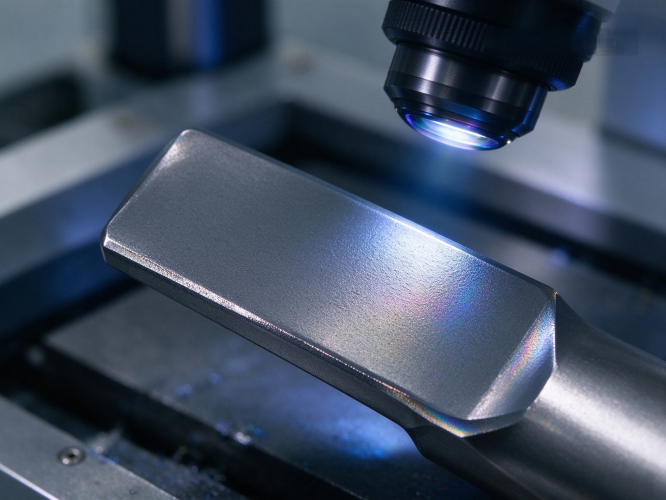
Zirconium carbide is also available in sputtering target form for thin-film deposition applications.
A ZrC sputtering target can be used in physical vapour deposition (PVD) processes to produce zirconium carbide-containing thin films on suitable substrates.
These films are of interest where surface hardness, thermal stability, electrical characteristics or specialised surface functionality are required.
Important target characteristics include:
- Chemical purity
- Density and porosity
- Phase composition
- Microstructural uniformity
- Dimensions and surface quality
During sputtering, deposition results are influenced by the target properties as well as the deposition system, power conditions, working pressure, substrate temperature and gas composition.
ZrC sputtering targets are therefore relevant to research institutions, thin-film development laboratories and specialised industrial coating processes.
5.5 Ceramic Composites and Metal-Ceramic Materials
Zirconium carbide can be used as a matrix constituent or reinforcing phase in composite material systems.
The introduction of ZrC into other material systems can modify properties such as hardness, wear resistance and high-temperature performance.
ZrC-based composites are of interest in the development of advanced structural ceramics and specialised refractory materials.
Material selection and composition must be tailored to the intended operating environment.
5.6 Functional Materials and Specialised Applications
Beyond structural applications, zirconium carbide is also investigated for functional material systems.
Its electrical conductivity, thermal behaviour and interaction with electromagnetic radiation have attracted interest in areas such as conductive ceramics and functional composite materials.
For example, ZrC-containing fibre systems have been investigated for their optical and thermal characteristics, including solar energy absorption and infrared radiation management.
These applications depend on particle characteristics, additive concentration, dispersion and the structure of the final composite.
6. Challenges and Limitations of Zirconium Carbide
Although zirconium carbide offers an attractive combination of properties, several technical challenges need to be considered during material selection and processing.
Oxidation at elevated temperatures
ZrC can oxidise in oxygen-containing environments, particularly at high temperatures. Protective coatings, composite design and controlled atmospheres may be required depending on the application.
High-temperature densification
Producing dense ZrC ceramics generally requires high processing temperatures. Conventional sintering can be challenging due to the material’s strong bonding characteristics and the presence of surface oxide layers.
Powder agglomeration
Fine zirconium carbide powders can form agglomerates during processing and storage. This may affect packing behaviour, microstructural uniformity and final component quality.
Composition control
The non-stoichiometric nature of ZrC means that carbon content and impurities can influence material properties. Consistent chemical composition is therefore important for reproducible performance.
These factors highlight the importance of selecting appropriate powder specifications, processing routes and material configurations for each application.
7. Available Forms of Zirconium Carbide
Zirconium carbide is commercially available in several physical forms to accommodate different manufacturing processes, material preparation requirements and industrial applications.
The three common forms include powder, sputtering targets and granules. Each form serves a different purpose, and selection should be based on the intended process and required material specifications.
Zirconium carbide powder is primarily used as a starting material for advanced ceramics, composite materials, powder metallurgy and specialised manufacturing processes.
Its fine particulate form makes it suitable for applications requiring controlled powder processing, mixing, forming and sintering.
Important purchasing specifications include:
- Chemical purity
- Carbon-to-zirconium ratio
- Particle size distribution
- Particle morphology
- Oxygen and other impurity levels
- Phase composition
The appropriate powder specification depends on the requirements of the final component or process.
Explore VIMATERIAL’s Zirconium Carbide Powder for material specifications and available options.
Zirconium carbide sputtering targets are used as source materials in physical vapour deposition (PVD) processes for the development of carbide-containing thin films.
They are particularly relevant to research institutions, thin-film development laboratories and specialised coating applications.
For target selection, relevant parameters include:
- Chemical purity
- Density and porosity
- Microstructural uniformity
- Target dimensions and geometry
- Surface condition
- Mounting and bonding requirements
The required specification should be determined according to the deposition equipment, process conditions and intended thin-film characteristics.
Explore VIMATERIAL’s Zirconium Carbide Sputtering Targets for further product information.
Zirconium carbide granules are a granular form of ZrC designed for applications where a defined particle form is preferred over fine powder.
Compared with fine powders, granular materials can offer different handling, feeding and material-loading characteristics, depending on their particle size and morphology.
The suitability of ZrC granules depends on the requirements of the specific manufacturing or processing method.
Important selection parameters include:
- Chemical purity
- Granule size and size distribution
- Particle shape and morphology
- Chemical composition
- Surface condition
- Compatibility with the intended process
When selecting zirconium carbide granules, it is important to consider the feeding method, processing equipment and required material characteristics.
Explore VIMATERIAL’s Zirconium Carbide Granules for available specifications and material options.
8. How to Select the Right Zirconium Carbide Material
Selecting an appropriate zirconium carbide material requires consideration of the intended application and processing conditions.
For powder-based applications, particle size distribution, purity, chemical composition and morphology are important selection criteria.
For sputtering applications, target purity, density, dimensions and microstructural uniformity should be evaluated together with the deposition requirements.
For high-temperature ceramic applications, the operating atmosphere, temperature, mechanical loading, oxidation behaviour and compatibility with other material phases should also be considered.
A clear understanding of these requirements helps establish a suitable material specification and reduces uncertainty during subsequent processing.
9. Conclusion
Zirconium carbide (ZrC) is a versatile refractory ceramic material that combines a high melting point, high hardness, electrical conductivity and useful thermal properties.
Its applications extend across advanced ceramics, high-temperature engineering, wear-resistant materials, ceramic composites and thin-film deposition.
At the same time, oxidation behaviour, powder processing, composition control and ceramic densification remain important considerations when translating its material properties into practical engineering solutions.
For manufacturers, research institutions and material developers, selecting the appropriate zirconium carbide form and specification is an essential part of achieving consistent processing results and application performance.
VIMATERIAL supplies advanced materials for industrial and research applications, including zirconium carbide powder and zirconium carbide sputtering targets. Contact our team to discuss your material requirements and identify a suitable specification for your project.
10. Frequently Asked Questions (FAQ)
1. What is zirconium carbide used for?
Zirconium carbide is used in advanced ceramics, refractory materials, wear-resistant components, ceramic composites and specialised coatings. It is also used in sputtering targets for thin-film deposition.
2. What is the chemical formula of zirconium carbide?
The chemical formula of zirconium carbide is ZrC, and its CAS number is 12070-14-3.
3. What is the melting point of zirconium carbide?
Zirconium carbide has a reported melting point of approximately 3,400–3,540 °C, depending on its composition and reference data.
4. Is zirconium carbide electrically conductive?
Yes. Zirconium carbide is an electrically conductive ceramic with metallic electrical characteristics. Its electrical conductivity is related to its electronic band structure and the interaction between zirconium and carbon orbitals.
5. Does zirconium carbide resist oxidation at high temperatures?
Zirconium carbide can oxidise in oxygen-containing environments at elevated temperatures. Protective coatings or controlled atmospheres may be required for certain applications.
6. What specifications should be considered when purchasing zirconium carbide powder?
Key specifications include purity, particle size distribution (D50), carbon content, oxygen levels and particle morphology. The appropriate grade depends on the intended application.
References
- [1] Harrison, R. W., & Lee, W. E. (2016). Processing and properties of ZrC, ZrN and ZrCN ceramics: A review. Advances in Applied Ceramics, 115(5).
- [2] Peterson, G. R., Carr, R. E., & Marinero, E. E. (2023). Zirconium Carbide for Hypersonic Applications, Opportunities and Challenges. Materials, 16(18), 6158.
- [3] Davey, T., & Chen, Y. (2022). Vacancy ordering in substoichiometric zirconium carbide: A review. International Journal of Ceramic Engineering & Science, 4(3), 134–157.
- [4] Ul-Hamid, A. (2020). Microstructure, properties and applications of Zr-carbide, Zr-nitride and Zr-carbonitride coatings: A review. Materials Advances, 1, 1012–1037.
- [5] Zhou, Y. (2024). From properties of zirconium carbide to the reverse design of ultra-high temperature CMCs. Journal of the American Ceramic Society, 107(11), 7023–7037.
- [6] Lin, Y. C., et al. (2026). Oxidation fronts and oxide scale growth modeling in spark plasma sintered ZrC ultra-high temperature ceramic. Journal of the European Ceramic Society, 46(4), Article 117976.
Further Reading
- Ultra-High Temperature Ceramics (UHTCs): Materials for Extreme High-Temperature Applications
- Hafnium Diboride vs Zirconium Diboride: Properties and High-Temperature Applications
- Zirconia Powder Specifications: Purity, Particle Size and Crystal Phase
- High Purity Titanium Carbide: The “Ultra-Hard Pioneer” Powering Advanced Technologies
- Titanium Carbide in Cemented Carbides: Role and Applications
Looking for Zirconium Carbide Materials?
VIMATERIAL supplies zirconium carbide in different forms to meet the requirements of industrial manufacturing, advanced materials development and scientific research.
Whether you require specific purity levels, particle sizes, granule specifications or target dimensions, our team can help you identify a suitable material option.
Contact VIMATERIAL to discuss your technical requirements or request a quotation.