


1. What Are Ultra-High Temperature Ceramics?
Ultra-High Temperature Ceramics (UHTCs) are a special class of ceramic materials capable of maintaining their physical and chemical stability under extreme conditions, including temperatures above 2,000°C and highly reactive environments such as atomic oxygen atmospheres. These materials exhibit excellent high-temperature mechanical properties, oxidation resistance, and thermal shock resistance.
UHTCs are primarily composed of refractory borides and carbides with melting points exceeding 3,000°C. Typical materials include hafnium diboride (HfB₂), zirconium diboride (ZrB₂), hafnium carbide (HfC), zirconium carbide (ZrC), and tantalum carbide (TaC). Due to their exceptional thermochemical stability, these materials possess a unique combination of properties, including high hardness, high elastic modulus, low vapor pressure, moderate thermal expansion coefficients, and excellent strength retention at elevated temperatures.
Properties of Common Ultra-High Temperature Ceramics
| Material | Density (g/cm³) | Melting Point (°C) | Thermal Expansion Coefficient (10⁻⁶/K) | Modulus (GPa) |
|---|---|---|---|---|
| TiC | 4.93 | 3147 | 7.74 | 470 |
| ZrC | 6.9 | 3530 | 7.2 | 400 |
| HfC | 12.6 | 3890 | 5.6 | — |
| TaC | 14.3 | 3985 | 7.1 | 560 |
| TiB₂ | 4.5 | 3025 | 8.1 | 560 |
| ZrB₂ | 5.8 | 3245 | 6.9 | 540 |
| HfB₂ | 10.5 | 3250 | 5.7 | — |
Because of these characteristics, UHTCs are considered ideal candidates for applications involving hypersonic flight, atmospheric re-entry, trans-atmospheric vehicles, and rocket propulsion systems. They are commonly proposed for critical aerospace components such as nose tips, wing leading edges, and engine hot-section parts. As a result, UHTCs have become a major focus of research and development worldwide.
2. Main Types of Ultra-High Temperature Ceramics
At present, the most important UHTCs are transition-metal borides, carbides, and nitrides. These materials generally have melting points above 3,000°C and offer excellent high-temperature strength, creep resistance, thermal stability, oxidation resistance, thermal shock resistance, and ablation resistance.
2.1 Boride Ceramics
The most common ultra-high temperature borides include hafnium diboride (HfB₂), zirconium diboride (ZrB₂), tantalum diboride (TaB₂), and titanium diboride (TiB₂).
These materials are characterized by strong covalent bonding, which contributes to their high melting points, high hardness, excellent strength, low evaporation rates, and good thermal and electrical conductivity.
Among them, ZrB₂ and HfB₂ have been studied most extensively. However, their relatively poor oxidation resistance remains one of the primary challenges limiting broader applications.
To improve oxidation performance, silicon carbide (SiC) is often added to form ZrB₂–SiC composites. During high-temperature oxidation, a protective borosilicate layer forms on the surface, significantly enhancing oxidation resistance and allowing the material to maintain protective behavior at temperatures exceeding 1,600°C.
Titanium diboride (TiB₂) offers excellent mechanical properties, wear resistance, chemical stability, and high-temperature performance. Its relatively low density and low coefficient of thermal expansion make it particularly attractive for aerospace applications.
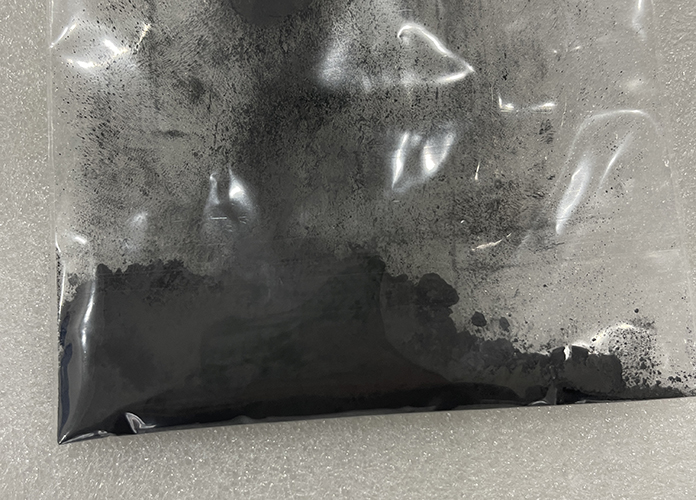
2.2 Carbide Ceramics
Important carbide-based UHTCs include zirconium carbide (ZrC), hafnium carbide (HfC), tantalum carbide (TaC), and titanium carbide (TiC).
These materials exhibit extremely high melting points and do not undergo solid-state phase transformations during heating and cooling. They also possess excellent thermal shock resistance and retain significant strength at elevated temperatures. However, carbide UHTCs generally suffer from low fracture toughness and limited oxidation resistance.
Zirconium carbide (ZrC) is considered a promising material due to its relatively low cost, high melting point, high hardness, and excellent electrical and thermal conductivity.
Hafnium carbide (HfC) possesses one of the highest melting points among known ceramic materials. Combined with its exceptional hardness and relatively low thermal expansion coefficient, it is well suited for extreme operating environments. Its major drawback is insufficient oxidation resistance.
Tantalum carbide (TaC) combines a very high melting point with low density, high hardness, and excellent high-temperature properties. It has already been used in cutting tools, electronic materials, abrasives, missile structures, and solid rocket motor throat liners. Its superior ablation resistance and thermal shock performance make it highly promising for thermal protection systems operating at ultra-high temperatures.
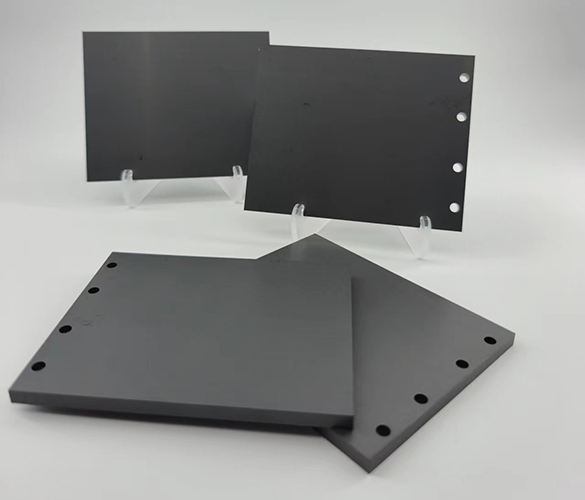
2.3 Nitride Ceramics
Representative nitride UHTCs include zirconium nitride (ZrN), hafnium nitride (HfN), and tantalum nitride (TaN).
These refractory nitrides exhibit very high melting points, and their thermal performance is influenced by environmental pressure. Since rocket propulsion systems often operate at pressures between 10 and 20 MPa, refractory nitrides have potential for use in high-temperature engine components.
In addition, transition-metal nitrides are widely used as hard protective coatings on cutting tools because of their outstanding hardness and wear resistance.
3. Manufacturing Processes for UHTC Composites
Despite their outstanding properties, UHTCs still face several challenges before achieving widespread engineering applications. Their extremely high melting points and strong covalent bonding result in low self-diffusion rates, making densification difficult. In addition, they often exhibit limited oxidation resistance at intermediate temperatures, relatively low fracture toughness, and poor thermal shock resistance.
To overcome these limitations, several advanced sintering technologies have been developed.
Hot Pressing (HP)
Hot pressing is the most widely used manufacturing method for UHTCs. The process simultaneously applies heat and uniaxial pressure to ceramic powders within a die, promoting particle diffusion and densification.
Advantages include lower sintering temperatures, shorter processing times, and improved material density. However, the process is relatively costly and may be sensitive to powder purity and grain growth.
Spark Plasma Sintering (SPS)
Spark Plasma Sintering uses pulsed electric current to generate rapid heating and densification of powder materials.
Compared with conventional sintering methods, SPS offers faster processing, lower sintering temperatures, and higher densification. The main limitation is that component size and geometry are often restricted.
Reactive Hot Pressing (RHP)
Reactive Hot Pressing combines in-situ chemical reactions with hot pressing to achieve simultaneous material synthesis and densification.
This approach can reduce processing temperatures, improve density, and lower manufacturing costs. A common example involves the in-situ reaction of zirconium, boron carbide, and silicon powders to produce UHTC composites.
Pressureless Sintering (PS)
Pressureless Sintering is performed under atmospheric pressure and is one of the simplest fabrication methods.
It is suitable for producing components of various sizes and shapes and allows relatively easy temperature control. However, the final density is generally lower than that achieved through pressure-assisted techniques.
Advantages and Disadvantages of Different Fabrication Methods for UHTCs
| Fabrication Method | Advantages | Disadvantages |
|---|---|---|
| Hot Pressing Sintering (HP) | Good homogeneity; capable of fabricating large-sized structural components | Relatively high sintering temperature, long processing time, and high cost |
| Spark Plasma Sintering (SPS) | Fast heating rate, low sintering temperature, short holding time, and fine grain size | Expensive sintering equipment |
| Reactive Hot Pressing Sintering (RHP) | Low sintering temperature and low raw material cost | Component composition cannot be freely adjusted |
| Pressureless Sintering (PS) | Low cost and near-net-shape manufacturing capability | High sintering temperature and significant grain growth |
4. What's the Applications of UHTCs?
With melting points exceeding 3,000°C and outstanding resistance to oxidation, ablation, and thermal shock, UHTCs are considered key materials for extreme-environment applications.
Their primary applications include:
- Rocket propulsion systems
- Reusable spacecraft
- Atmospheric re-entry vehicles
- Hypersonic aircraft
- Nose tips and leading edges
- Thermal protection systems
- Solid rocket motor throat liners
In addition to aerospace applications, UHTCs are also used in high-temperature industrial environments, including metal melting and continuous casting processes, electrodes, crucibles, heating elements, and other refractory components.
5. Conclusion
Ultra-high temperature ceramic composites have demonstrated tremendous potential for aerospace, defense, and other advanced engineering applications. Extensive research has confirmed their unique advantages in terms of mechanical strength, oxidation resistance, ablation resistance, thermal shock performance, and structural stability at extreme temperatures.
Although significant progress has been achieved, many scientific and engineering challenges remain. Further studies are required to better understand the underlying mechanisms, improve reliability and manufacturability, and address practical application issues.
Despite these challenges, ongoing advances in materials science and processing technologies continue to drive the development of UHTCs, paving the way for their broader adoption in future high-temperature engineering systems.
Frequently Asked Questions (FAQs)
Q1: What are ultra-high-temperature ceramics?
A: Ultra-high-temperature ceramics (UHTCs) are advanced materials that remain stable above 2,000°C. They are used in extreme environments such as hypersonic flight and rocket systems.
Q2: Can ceramics withstand high temperatures?
A: Yes. Many ceramics can withstand very high temperatures, and advanced types like SiC or UHTCs can operate above 2,000°C with good stability.
Q3: What material can withstand 3000 degrees Celsius?
A: Some UHTCs, such as HfC, TaC, ZrC, HfB₂, and ZrB₂, can withstand temperatures around or above 3,000°C.