


Titanium diboride (TiB₂) is a transition metal boride ceramic recognised for its high hardness, exceptional melting point, electrical conductivity and thermal stability. These properties make it an important engineering material for applications involving high temperatures, mechanical wear and demanding operating environments.
Unlike conventional oxide ceramics, titanium diboride combines ceramic-like hardness with metallic electrical conductivity. This distinctive combination makes it suitable for advanced ceramics, conductive components, wear-resistant materials and functional thin films.
Understanding the physical, mechanical, thermal and electrical properties of titanium diboride is essential when selecting the material for industrial manufacturing, ceramic processing or thin-film deposition. The assessment of Titanium Diboride Properties is crucial in determining its suitability for various applications.
1. Physical Properties of Titanium Diboride
Titanium diboride has a hexagonal crystal structure and a relatively high density compared with many conventional engineering ceramics. Its physical properties are closely related to its chemical composition and crystal structure.
Chemical Composition and Crystal Structure
The chemical formula of titanium diboride is TiB₂. It consists of titanium and boron atoms in a 1:2 atomic ratio.
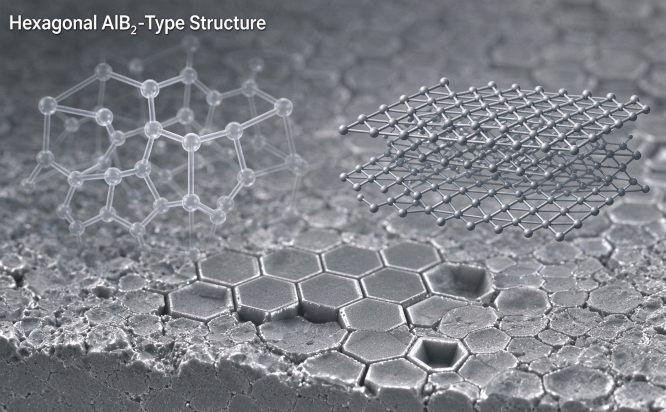
TiB₂ crystallises in the hexagonal AlB₂-type structure, belonging to the P6/mmm space group. Its crystal structure consists of alternating titanium and boron layers.
The strong bonding within this structure contributes to its high hardness, high melting point and excellent thermal stability.
Density and Appearance
Titanium diboride has a theoretical density of approximately 4.52 g/cm³. It is generally supplied as a grey or grey-black powder and can be processed into dense ceramic components and sputtering targets.
The actual density of sintered TiB₂ products depends on powder characteristics, sintering conditions and the resulting porosity.
Melting Point
One of the most notable properties of TiB₂ is its exceptionally high melting point.
Reported values are approximately 2,900–3,225°C, depending on the measurement method, material composition and reference source.
This property makes TiB₂ suitable for high-temperature applications, including refractory components, metallurgical equipment and advanced ceramic materials.
However, a high melting point does not automatically indicate resistance to oxidation in air. Oxidation behaviour must be evaluated separately when selecting TiB₂ for high-temperature applications.
2. Mechanical Properties of Titanium Diboride
The mechanical performance of TiB₂ is primarily characterised by its high hardness, wear resistance and elastic stiffness.
Hardness
Titanium diboride is a hard ceramic material with reported microhardness values generally ranging from approximately 25 to 35 GPa.
Its high hardness makes it suitable for applications requiring resistance to abrasion, surface damage and mechanical wear.
TiB₂ is therefore used in the development of:
- Cutting tools and machining components.
- Wear-resistant ceramic parts.
- Wire-drawing and extrusion dies.
- Sandblasting nozzles.
- Protective coatings and ceramic composites.
It is important to distinguish between the hardness of bulk TiB₂ ceramics and that of TiB₂ thin films. Their measured values can differ due to grain structure, porosity, film composition, residual stress and testing conditions.
Elastic Modulus and Mechanical Strength
TiB₂ has a high elastic modulus, reflecting its strong atomic bonding and resistance to elastic deformation.
This characteristic is valuable in structural ceramic applications where dimensional stability and resistance to deformation are required.
However, like many hard ceramics, monolithic TiB₂ has limited fracture toughness compared with ductile metals.
For this reason, TiB₂ is frequently investigated in composite systems. Combining it with materials such as SiC, TiC or other suitable ceramic phases can help tailor the mechanical properties and improve performance under demanding operating conditions.
Wear Resistance
The high hardness of titanium diboride contributes to its resistance to abrasive and mechanical wear.
In cutting tools and industrial components, TiB₂-based materials can help reduce surface degradation and improve service performance.
Its effectiveness depends on the component design, surface finish, operating temperature, contact conditions and the presence of other material phases.
3. Thermal Properties of Titanium Diboride
Thermal performance is another important reason for using TiB₂ in advanced engineering applications.
High-Temperature Stability
The high melting point and strong atomic bonding of TiB₂ allow it to maintain structural stability at elevated temperatures.
It is therefore considered for high-temperature ceramic components, refractory applications and molten metal handling equipment.
Its performance under actual operating conditions also depends on the surrounding atmosphere and exposure duration.
Thermal Conductivity
Unlike many conventional ceramic materials, titanium diboride has relatively good thermal conductivity.
This characteristic allows heat to be transferred through the material and makes TiB₂ useful in applications requiring a combination of electrical and thermal functionality.
Thermal conductivity values reported in technical literature can vary depending on sample density, grain structure, temperature and measurement methods. Consequently, application-specific material data should be used for engineering calculations.
Thermal Expansion
TiB₂ has a relatively low coefficient of thermal expansion, with reported values around 8.1 × 10⁻⁶ K⁻¹ under certain measurement conditions.
A relatively low thermal expansion coefficient can be beneficial in applications involving temperature fluctuations and thermal cycling.
However, thermal expansion compatibility between TiB₂ and other materials remains important when designing ceramic composites, coatings and bonded assemblies.
4. Electrical Properties of Titanium Diboride
One of the distinguishing characteristics of TiB₂ is its ability to conduct electricity despite being a ceramic material.
Electrical Resistivity
Titanium diboride exhibits metallic electrical conductivity, with reported electrical resistivity values generally around 10–30 μΩ·cm.
Its relatively low electrical resistivity makes it suitable for conductive ceramic components, electrodes and functional materials.
Electrical resistivity is influenced by material purity, density, microstructure, temperature and impurity content.
Electrical Conductivity in Ceramic Applications
The electrical conductivity of TiB₂ enables its use in applications where conventional insulating ceramics are unsuitable.
Typical application areas include:
- Conductive ceramic components.
- Electrode materials.
- Conductive ceramic composites.
- Specialised electrical contacts.
- Functional thin-film materials.
TiB₂ can also be combined with other ceramics, such as boron nitride (BN), to produce electrically functional composite materials.
TiB₂ in Thin-Film Deposition
Titanium diboride can be processed into sputtering targets for physical vapour deposition (PVD).
During magnetron sputtering, energetic ions bombard the target surface, releasing sputtered species that deposit onto a substrate.
The resulting TiB₂-based films can exhibit high hardness, wear resistance and electrical functionality, depending on their composition and deposition conditions.
The properties of the deposited film are affected by factors such as working pressure, sputtering power, substrate temperature, film stoichiometry and microstructure.
5. Chemical Stability and Oxidation Resistance
Chemical stability is an important consideration when evaluating TiB₂ for industrial applications.
Titanium diboride exhibits good resistance to wear and attack by certain molten metals, particularly aluminium under suitable operating conditions.
This makes it valuable in aluminium electrolysis and other molten metal applications.
Oxidation Behaviour
Although TiB₂ has a very high melting point, it can oxidise when exposed to oxygen at elevated temperatures.
Oxidation behaviour depends on temperature, exposure time, oxygen partial pressure and material characteristics.
The oxidation products and resulting surface layers influence the material’s resistance to further oxidation.
Therefore, the oxidation resistance of TiB₂ should be evaluated under the actual operating atmosphere rather than inferred from its melting point alone.
Corrosion Resistance
TiB₂ offers good chemical stability in various environments, although its resistance depends on the specific chemical medium and operating conditions.
Its resistance to molten aluminium attack is particularly important in metallurgical applications.
For chemical processing applications, compatibility testing is recommended when the material is exposed to aggressive acids, alkalis or oxidising environments.
6. Summary of Titanium Diboride Properties
The following table summarises the key properties of titanium diboride.
| Property | Typical Value or Characteristic |
|---|---|
| Chemical Formula | TiB₂ |
| Molecular Weight | 69.49 g/mol |
| Crystal Structure | Hexagonal, AlB₂-type |
| Space Group | P6/mmm |
| Density | Approximately 4.52 g/cm³ |
| Melting Point | Approximately 2,900–3,225°C |
| Microhardness | Approximately 25–35 GPa |
| Electrical Resistivity | Approximately 10–30 μΩ·cm |
| Thermal Expansion Coefficient | Approximately 8.1 × 10⁻⁶ K⁻¹ |
| Appearance | Grey to grey-black |
| Electrical Behaviour | Metallic electrical conductivity |
| Chemical Behaviour | Good chemical stability and resistance to molten aluminium under suitable conditions |
Note: Values are representative literature data, not guaranteed specifications for every commercial TiB₂ grade. Actual values vary with composition, microstructure, sample density, temperature and measurement methods.
7. How Do the Properties of TiB₂ Influence Its Applications?
The combination of physical, mechanical, thermal and electrical properties determines where titanium diboride can be used effectively.
| Key Property | Related Applications |
|---|---|
| High Hardness | Cutting tools, wear-resistant components and ceramic composites |
| High Melting Point | High-temperature ceramics and refractory components |
| Electrical Conductivity | Conductive ceramics, electrodes and functional thin films |
| Thermal Conductivity | Thermal management components and conductive ceramics |
| Resistance to Molten Aluminium | Aluminium electrolysis and metallurgical equipment |
| Chemical Stability | Specialised ceramic components and industrial applications |
The material form also influences how these properties are utilised.
For example, TiB₂ powder is mainly used as a raw material in ceramic processing and composite manufacturing, while TiB₂ sputtering targets are used to produce functional thin films through PVD processes.
8. Frequently Asked Questions
1. What is the density of titanium diboride?
The theoretical density of TiB₂ is approximately 4.52 g/cm³. The actual density of manufactured ceramic components depends on their porosity and processing conditions.
2. What is the melting point of TiB₂?
The reported melting point of titanium diboride is approximately 2,900–3,225°C. Values vary between technical references and measurement conditions.
3. How hard is titanium diboride?
TiB₂ has a reported microhardness of approximately 25–35 GPa, depending on sample composition, density and measurement conditions.
4. Is titanium diboride electrically conductive?
Yes. TiB₂ exhibits metallic electrical conductivity, with reported electrical resistivity values around 10–30 μΩ·cm.
5. Is TiB₂ resistant to oxidation?
TiB₂ has good thermal stability, but it can oxidise at elevated temperatures in oxygen-containing environments. Its oxidation behaviour depends on temperature, exposure time and atmospheric conditions.
6. What are the main applications of titanium diboride?
Its main applications include advanced ceramics, cutting tools, wear-resistant components, aluminium electrolysis, conductive ceramics and PVD thin-film deposition.
7. What is the difference between TiB₂ powder and TiB₂ sputtering targets?
TiB₂ powder is used in ceramic manufacturing, composite preparation and other powder processing applications. Sputtering targets are solid materials used in PVD systems to deposit TiB₂-based thin films onto substrates.
References
- [1] Munro, R. G. (2000). Material Properties of Titanium Diboride. Journal of Research of the National Institute of Standards and Technology, 105(5), 709–720.
- [2] National Institute of Standards and Technology (NIST). Titanium Diboride (TiB₂) – Property Data Summary. NIST Structural Ceramics Database.
- [3] McLeod, A. D., Haggerty, J. S., & Sadoway, D. R. (1984). Electrical Resistivities of Monocrystalline and Polycrystalline TiB₂. Journal of the American Ceramic Society, 67(11), 705–708.
- [4] Oxidation Kinetics of Overstoichiometric TiB₂ Thin Films Grown by DC Magnetron Sputtering. (2022). Corrosion Science, 206, 110493.
- [5] In-situ Synchrotron X-ray Diffraction and Thermal Expansion of TiB₂ up to ~3050 °C. Journal of the European Ceramic Society. (2023).
Further Reading
- Titanium Diboride (TiB₂): Properties, Applications and Material Forms
- Zirconium Carbide Synthesis and Sintering Methods
- Titanium Carbide TiC Powder: Particle Size, Purity and Selection
- Hafnium Diboride vs Zirconium Diboride: Properties and High-Temperature Applications
- Ultra-High Temperature Ceramics (UHTCs): Materials for Extreme High-Temperature Applications
Titanium Diboride Materials from VIMATERIAL
VIMATERIAL supplies titanium diboride materials for advanced ceramic manufacturing, thin-film deposition and industrial research applications.
TiB₂ Powder Specifications
| Purity | Particle Size |
|---|---|
| 99% | D50 < 1 μm |
| 99.5% | -200 Mesh |
| 99.5% | -325 Mesh |
TiB₂ Sputtering Target Specifications
| Purity | Available Dimensions |
|---|---|
| 99.5% | Ø 50.8 × 3.175 mm |
| 99.5% | 690 × 145 × 10 mm |
Round and rectangular sputtering targets are available. Custom dimensions and target bonding services can also be provided according to customer requirements.
Contact VIMATERIAL to discuss your required TiB₂ purity, particle size, target dimensions and application specifications.