


Titanium diboride (TiB₂) is a high-performance ceramic material known for its exceptional hardness, high melting point, electrical conductivity and resistance to wear and molten metal corrosion. Combining the characteristics of ceramics and metallic materials, it is widely investigated and used in applications requiring high thermal stability, mechanical strength and electrical performance.
With its unique combination of physical and chemical properties, titanium diboride is used in advanced ceramics, aluminium metallurgy, cutting tools, wear-resistant coatings and functional thin films. It is also an important material for research and development in high-temperature engineering and electronic applications.
Titanium diboride is commercially available in several forms, including powder, sputtering targets and sintered ceramic components. The appropriate material form depends on the intended manufacturing process and application requirements.
VIMATERIAL supplies high-purity TiB₂ powder and sputtering targets with different specifications. Custom particle sizes, target dimensions and target bonding services are available to support industrial production and research applications.
1. What Is Titanium Diboride (TiB₂)?
Titanium diboride is an inorganic compound consisting of titanium and boron, with the chemical formula TiB₂ and CAS number 12045-63-5.
It belongs to the family of transition metal diborides and has a hexagonal crystal structure of the AlB₂ type (space group P6/mmm). Its crystal structure consists of alternating titanium and boron atomic layers, with strong chemical bonding contributing to its high hardness, thermal stability and mechanical properties.
Unlike conventional oxide ceramics, TiB₂ exhibits metallic electrical conductivity. This combination of ceramic hardness and electrical functionality makes it particularly useful in applications where conventional ceramics or metals may not provide the required balance of properties.
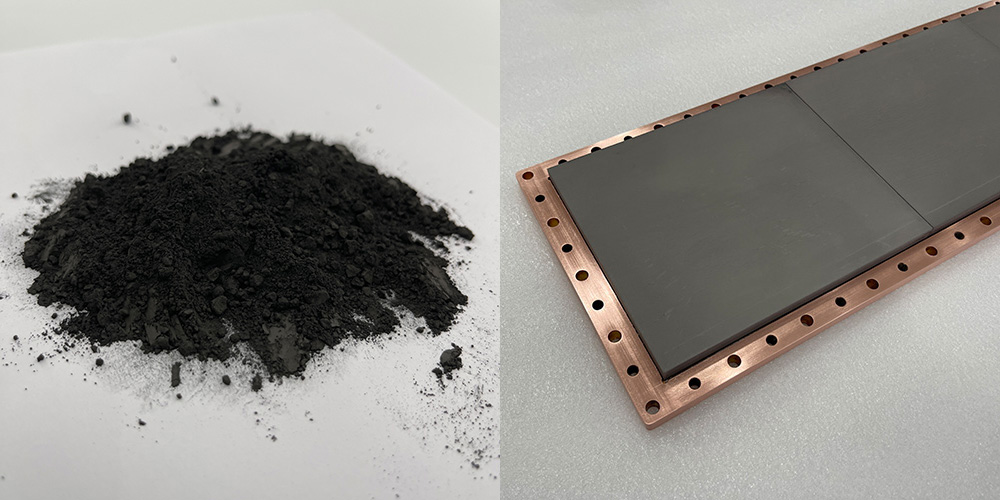
Titanium diboride is generally supplied as a grey or grey-black powder, although it can also be processed into dense ceramic components and sputtering targets.
2. Physical and Chemical Properties of Titanium Diboride
The performance of TiB₂ is determined by its crystal structure, chemical composition, purity and microstructure. Its most important characteristics include high hardness, a high melting point, electrical conductivity and resistance to wear and molten metal attack.
| Property | Typical Value |
|---|---|
| Chemical Formula | TiB₂ |
| CAS Number | 12045-63-5 |
| Molecular Weight | 69.49 g/mol |
| Crystal Structure | Hexagonal (AlB₂-type) |
| Space Group | P6/mmm |
| Density | Approximately 4.52 g/cm³ |
| Melting Point | Approximately 2,900–3,225°C |
| Microhardness | Approximately 25–35 GPa |
| Electrical Resistivity | Approximately 10–30 μΩ·cm |
| Appearance | Grey to grey-black |
Note: These are representative material values. Actual properties depend on composition, microstructure, sample preparation and measurement conditions.
2.1 High Hardness and Wear Resistance
Titanium diboride is one of the hardest known ceramic materials, with reported microhardness values generally ranging from approximately 25 to 35 GPa.
Its high hardness makes it suitable for applications involving abrasive wear, surface friction and mechanical contact. It is therefore used in advanced ceramic components, cutting tools, wear-resistant parts and protective coating research.
When incorporated into ceramic or metal matrix composites, TiB₂ particles can also contribute to improved hardness and wear resistance.
2.2 High Melting Point and Thermal Stability
TiB₂ has an exceptionally high melting point, making it suitable for applications involving elevated temperatures.
Its thermal stability is particularly valuable in refractory materials, high-temperature ceramic components and metallurgical equipment.
However, its behaviour in high-temperature environments depends on the surrounding atmosphere. Oxidation can occur when TiB₂ is exposed to air at elevated temperatures, so operating temperature, exposure time and protective conditions must be considered during material selection.
2.3 Electrical and Thermal Conductivity
Unlike many conventional ceramic materials, titanium diboride exhibits good electrical conductivity.
Its relatively low electrical resistivity makes it useful in conductive ceramics, electrodes and certain functional coating applications.
TiB₂ also has good thermal conductivity, allowing heat to be transferred through the material. This combination of electrical and thermal properties is particularly valuable in applications requiring both conductivity and high-temperature resistance.
2.4 Chemical Stability and Corrosion Resistance
Titanium diboride exhibits good chemical stability in various environments and is resistant to attack by molten aluminium under suitable operating conditions.
Its resistance to molten metal corrosion makes it an important material in aluminium metallurgy, particularly in wettable cathode applications and equipment used for molten metal handling.
Its chemical stability also contributes to its use in wear-resistant components and specialised ceramic composites.
Nevertheless, corrosion resistance depends on the chemical medium, temperature and exposure conditions. Compatibility should be evaluated for each specific application.
3. Main Applications of Titanium Diboride
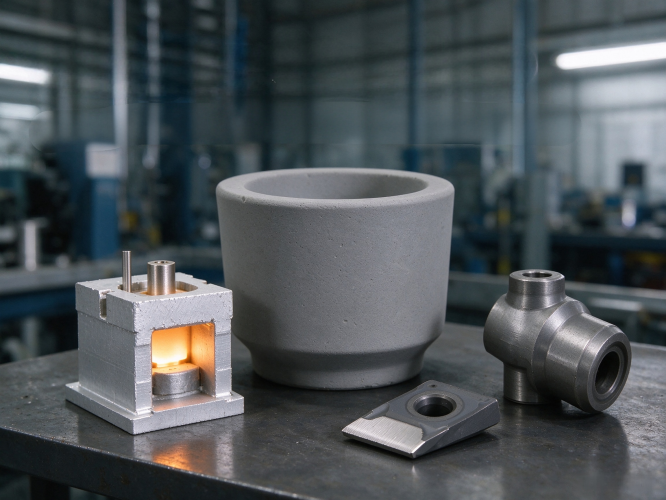
The combination of mechanical, thermal and electrical properties gives TiB₂ a wide range of potential industrial applications.
3.1 Advanced Ceramics and Composite Materials
Titanium diboride is widely used as a raw material in advanced ceramic manufacturing.
It can be combined with other ceramic materials, including silicon carbide (SiC), titanium carbide (TiC), titanium nitride (TiN) and aluminium oxide (Al₂O₃), to develop composite materials with tailored mechanical and thermal properties.
Depending on composition and processing conditions, these composites can offer:
- High hardness and wear resistance.
- Improved high-temperature performance.
- Electrical conductivity.
- Enhanced resistance to molten metal corrosion.
- Tailored mechanical properties.
Typical applications include high-temperature components, refractory parts, wear-resistant components and specialised engineering ceramics.
3.2 Aluminium Metallurgy and Wettable Cathodes
One of the established industrial application areas of TiB₂ is aluminium electrolysis.
Titanium diboride has good wettability with molten aluminium under suitable operating conditions, along with electrical conductivity and resistance to molten aluminium attack.
These characteristics make it suitable for wettable cathode coatings and components used in aluminium reduction cells.
TiB₂-based materials can help improve the operating characteristics of aluminium electrolysis systems, including metal drainage and cathode performance.
3.3 Cutting Tools and Wear-Resistant Components
Due to its high hardness and wear resistance, TiB₂ is used in the development of advanced cutting tools and engineering components.
It can be incorporated into ceramic composites or applied as a functional coating to improve surface hardness and resistance to mechanical wear.
Potential applications include:
- Cutting tools and machining components.
- Wire-drawing dies.
- Extrusion dies.
- Sandblasting nozzles.
- Mechanical sealing components.
- Wear-resistant industrial parts.
The final performance depends on the material composition, manufacturing process and operating conditions.
3.4 Electrical and Conductive Ceramics
TiB₂ combines ceramic hardness with metallic electrical conductivity, making it useful in conductive ceramic applications.
It is used in the development of conductive components, electrodes and specialised ceramic assemblies.
One example is conductive boron nitride (BN) composites, which are used in components such as evaporation boats for vacuum aluminium coating equipment.
In these applications, TiB₂ contributes to the electrical functionality of the composite material.
3.5 Thin Films and Surface Coatings
Titanium diboride can also be deposited as a thin film using physical vapour deposition (PVD), including magnetron sputtering.
TiB₂ sputtering targets provide a source material for depositing titanium-boron-containing films onto substrates.
Depending on deposition conditions and film composition, these coatings can exhibit:
- High hardness.
- Wear resistance.
- Electrical conductivity.
- Thermal stability.
- Functional surface properties.
Research into TiB₂-based thin films covers cutting tool coatings, protective surface treatments and specialised electronic and functional coating applications.
4. Titanium Diboride Powder vs Sputtering Targets
TiB₂ is available in different material forms to accommodate different manufacturing and processing requirements.
The two important commercial forms are titanium diboride powder and titanium diboride sputtering targets.
4.1 Titanium Diboride Powder
TiB₂ powder is primarily used as a raw material for ceramic manufacturing, composite material preparation and specialised industrial processes.
Its suitability for a particular application depends on several factors:
- Chemical purity.
- Particle size and particle size distribution.
- Oxygen and other impurity contents.
- Particle morphology.
- Dispersion and processing characteristics.
Fine and submicron powders are often considered for applications requiring controlled microstructures and fine ceramic grains. Coarser powder grades may be selected for other powder processing and composite manufacturing requirements.
VIMATERIAL offers TiB₂ powder with purities of 99% and 99.5%; specifications can be customized to meet the requirements of specific applications.
4.2 Titanium Diboride Sputtering Targets
TiB₂ sputtering targets are used as source materials in physical vapour deposition processes.
During magnetron sputtering, energetic ions bombard the target surface, causing atoms and other sputtered species to be released and deposited onto a substrate.
The resulting thin film properties depend on several factors, including target composition, deposition conditions, substrate temperature, working pressure and film growth characteristics.
Important considerations when selecting TiB₂ sputtering targets include:
- Material purity.
- Target dimensions and geometry.
- Target density and microstructural uniformity.
- Surface finish.
- Compatibility with the sputtering system.
- Backing plate and bonding requirements.
VIMATERIAL supplies 99.5% purity TiB₂ sputtering targets in round and rectangular configurations.
Custom dimensions and shapes are available according to customer drawings and equipment requirements. Target bonding services can also be provided.
5. Manufacturing and Processing of Titanium Diboride
The manufacturing process of TiB₂ depends on the final material form and required performance.
Powder synthesis and ceramic densification are two important stages in the production of titanium diboride materials.
5.1 TiB₂ Powder Synthesis
Several methods can be used to synthesise titanium diboride powder.
Carbothermal Reduction
Carbothermal reduction uses titanium oxide, boron-containing raw materials and carbon as a reducing agent. The reaction takes place at elevated temperatures and produces TiB₂ powder.
It is an important approach for producing titanium diboride on an industrial scale.
Self-Propagating High-Temperature Synthesis (SHS)
SHS uses the heat released by an exothermic chemical reaction to sustain the synthesis process.
The method can offer relatively short reaction times and reduced external energy requirements, depending on the reaction system and processing conditions.
Borothermal Reduction
Borothermal reduction involves the reaction of titanium-containing compounds with boron or boron-containing materials to form TiB₂.
The selection of synthesis conditions and raw materials affects the final phase composition, purity and particle characteristics.
5.2 Ceramic Densification and Sintering
After powder synthesis, TiB₂ powder can be processed into dense ceramic components through different sintering techniques.
Common methods include:
- Hot Pressing (HP): Combines high temperature and applied pressure to promote densification.
- Spark Plasma Sintering (SPS): Uses pulsed electrical current and pressure to achieve rapid heating and densification.
- Pressureless Sintering: Uses sintering additives and controlled thermal processing to promote densification without external pressure.
The final density, grain size and mechanical properties depend on the starting powder, additives and sintering conditions.
5.3 Sputtering Target Manufacturing
TiB₂ sputtering targets are generally manufactured using powder processing and consolidation techniques.
The production process can involve powder preparation, forming, sintering, machining and final quality inspection.
For bonded targets, the TiB₂ target body is joined to a suitable backing plate using an appropriate bonding process.
Dimensional accuracy, material uniformity and bonding quality are important considerations for target performance during sputtering.
6. How to Select the Right Titanium Diboride Material?
Selecting an appropriate TiB₂ grade requires an understanding of the intended application and processing conditions.
The following factors can help guide material selection.
| Selection Factor | What to Consider |
|---|---|
| Purity | Select a purity grade according to impurity tolerance and application requirements. |
| Particle Size | Consider D50, mesh grade and particle size distribution for powder applications. |
| Chemical Composition | Evaluate phase composition and relevant impurity elements. |
| Material Form | Choose powder, sputtering target or ceramic component according to the manufacturing process. |
| Target Dimensions | Match target geometry and dimensions to the deposition equipment. |
| Bonding Requirements | Consider backing plate material and bonding specifications where required. |
For powder applications, particle size and chemical purity are particularly important because they influence powder processing and the properties of the final material.
For sputtering applications, target geometry, density, composition and bonding quality should be considered alongside the requirements of the deposition system.
Providing the intended application, required purity, particle size or target dimensions can help determine the most suitable specification.
7. Frequently Asked Questions
1. What is the chemical formula of titanium diboride?
The chemical formula of titanium diboride is TiB₂. It consists of titanium and boron in a 1:2 atomic ratio.
2. What are the main properties of TiB₂?
TiB₂ is characterised by high hardness, a high melting point, good electrical and thermal conductivity, and resistance to wear and molten metal corrosion.
3. Is titanium diboride electrically conductive?
Yes. Unlike many conventional ceramic materials, TiB₂ has metallic electrical conductivity. This makes it useful in conductive ceramics, electrodes and certain thin-film applications.
4. What is titanium diboride powder used for?
TiB₂ powder is used in advanced ceramic manufacturing, ceramic composites, conductive ceramic components, wear-resistant materials and specialised high-temperature applications.
5. What is the difference between TiB₂ powder and TiB₂ sputtering targets?
TiB₂ powder is primarily used as a raw material for powder processing, ceramic manufacturing and composite preparation.
TiB₂ sputtering targets are solid materials used as sources in PVD deposition processes to produce thin films on substrates.
6. Can titanium diboride sputtering targets be customised?
Yes. TiB₂ sputtering targets can be manufactured in different shapes and dimensions according to equipment and customer requirements.
VIMATERIAL supplies round and rectangular TiB₂ targets and offers custom dimensions and bonding services.
7. What purity grades of TiB₂ powder are available?
VIMATERIAL currently offers TiB₂ powder in 99% and 99.5% purity grades, with particle size specifications including D50 < 1 μm, -200 Mesh and -325 Mesh.
8. Does VIMATERIAL provide TiB₂ target bonding services?
Yes. VIMATERIAL can provide bonding services for TiB₂ sputtering targets. Backing plate requirements and bonding specifications can be discussed according to the customer’s equipment and application.
References
- [1] Munro, R. G. (2000). Material Properties of Titanium Diboride. Journal of Research of the National Institute of Standards and Technology, 105(5), 709–720.
- [2] National Institute of Standards and Technology (NIST). Titanium Diboride (TiB₂) – Property Data Summary. NIST Ceramics Data Portal.
- [3] Review of Transition-Metal Diboride Thin Films. Vacuum, 196 (2022), 110567.
- [4] Padamata, S. K., Singh, K., Haarberg, G. M., et al. (2022). Wettable TiB₂ Cathode for Aluminum Electrolysis: A Review. Journal of Sustainable Metallurgy, 8, 613–624.
Further Reading
- High Purity Titanium Carbide: The “Ultra-Hard Pioneer” Powering Advanced Technologies
- Zirconium Carbide Synthesis and Sintering Methods
- Titanium Carbide TiC Powder: Particle Size, Purity and Selection
- Hafnium Diboride vs Zirconium Diboride: Properties and High-Temperature Applications
- Ultra-High Temperature Ceramics (UHTCs): Materials for Extreme High-Temperature Applications
Titanium Diboride Materials from VIMATERIAL
VIMATERIAL supplies titanium diboride materials for industrial applications, material development and research purposes.
Our available product range includes:
- 99% purity, D50 < 1 μm.
- 99.5% purity, -200 Mesh.
- 99.5% purity, -325 Mesh.
- 99.5% purity.
- Round and rectangular configurations.
- Custom dimensions according to drawings.
- Target bonding services available.
Whether you require fine TiB₂ powder for advanced ceramic processing or customised sputtering targets for thin-film deposition, VIMATERIAL can support your material sourcing requirements.
Contact VIMATERIAL to discuss your required purity, particle size, target dimensions and bonding specifications.