
Lithium Manganese Iron Phosphate (LMFP) is an olivine-type phosphate cathode material used in the development of advanced lithium-ion batteries. Its chemical composition is generally expressed as LiMnₓFe₁₋ₓPO₄, combining manganese and iron within a phosphate-based crystal structure.
The synthesis process plays an important role in determining the composition, particle morphology, phase purity and electrochemical performance of LMFP cathode materials. Factors such as raw material selection, precursor uniformity, reaction conditions and heat treatment can influence the final material properties.
Currently, LMFP is mainly prepared through solid-state and liquid-phase synthesis routes. Each approach has different advantages and limitations in terms of process complexity, production consistency, energy consumption and manufacturing scalability.
This article examines the main LMFP synthesis methods, including high-temperature solid-state synthesis, carbothermal reduction, coprecipitation, sol-gel processing and hydrothermal or solvothermal synthesis.
1. Overview of LMFP Synthesis
The preparation of LMFP generally involves combining lithium, iron, manganese and phosphate sources, followed by chemical reactions and heat treatment to obtain the desired olivine-type structure.
The selection of raw materials and synthesis route influences how uniformly manganese and iron are distributed throughout the final product.
Two main synthesis approaches are commonly investigated:
- Solid-state synthesis: Uses solid raw materials that are mixed, milled and thermally treated to produce LMFP.
- Liquid-phase synthesis: Uses reactions in a liquid medium to prepare homogeneous precursors, followed by drying and heat treatment.
Both approaches aim to produce LMFP with suitable chemical composition, phase purity and particle characteristics for cathode applications.
2. Solid-State Synthesis of LMFP
Solid-state synthesis is a widely studied preparation route for phosphate cathode materials. It involves mixing solid lithium, iron, manganese and phosphate-containing precursors, followed by mechanical processing and high-temperature treatment.
Two important approaches are high-temperature solid-state synthesis and carbothermal reduction.
2.1 High-Temperature Solid-State Method
The high-temperature solid-state method is one of the established approaches for producing LMFP cathode materials.
A typical process includes the following stages:
1. Raw Material Preparation
Lithium, iron, manganese and phosphate sources are selected according to the target chemical composition. The raw materials must meet suitable purity requirements to minimise unwanted impurities.
2. Mixing and Milling
The selected materials are mixed and mechanically processed through ball milling or similar methods to improve contact between the different precursor particles.
Uniform mixing is particularly important because manganese and iron need to be distributed consistently throughout the material.
3. Precursor Preparation
The mixed materials may undergo further milling and spray drying to obtain a more uniform precursor powder suitable for subsequent thermal treatment.
4. High-Temperature Sintering
The precursor is heated under a controlled atmosphere, commonly an inert or reducing atmosphere, to promote the formation of the LMFP crystal structure.
Temperature, holding time and atmosphere need to be carefully controlled to support phase formation and limit unwanted secondary phases.
5. Post-Treatment
After sintering, the material is cooled, crushed, milled and classified as required. Additional processes such as sieving and magnetic impurity removal may be used to improve powder quality.
The resulting LMFP powder is then evaluated for chemical composition, particle size distribution and phase purity.
2.2 Carbothermal Reduction Method
Carbothermal reduction is another solid-state synthesis approach used for phosphate cathode materials.
In this process, carbon-containing materials are introduced as reducing agents during thermal treatment.
The carbon participates in the reduction reactions and can also contribute to the formation of a conductive carbon coating, depending on the precursor formulation and processing conditions.
The main process stages generally include:
- Preparation and mixing of lithium, iron, manganese and phosphate precursors.
- Addition and uniform distribution of a suitable carbon source.
- Mechanical mixing or milling.
- Thermal treatment under a controlled atmosphere.
- Crushing, milling and particle classification.
Carbothermal reduction offers potential advantages in controlling particle characteristics and improving electronic conductivity through carbon-related processing.
However, carbon content, precursor uniformity and thermal conditions require careful optimisation. Excessive carbon or unsuitable processing conditions can negatively affect powder characteristics and electrode performance.
3. Liquid-Phase Synthesis of LMFP
Liquid-phase synthesis involves dissolving or dispersing precursor materials in a suitable liquid medium before chemical reactions produce an LMFP precursor.
Compared with conventional solid-state processing, liquid-phase methods can improve the uniformity of precursor mixing at a finer scale.
This is particularly relevant to LMFP because manganese and iron distribution can influence the final material composition and electrochemical behaviour.
Common liquid-phase approaches include coprecipitation, sol-gel processing and hydrothermal or solvothermal synthesis.
3.1 Coprecipitation Method
Coprecipitation is a liquid-phase preparation method that uses soluble precursor salts to produce a solid precursor through controlled precipitation reactions.
A typical process involves:
1. Solution Preparation
Suitable lithium, iron, manganese and phosphate-containing precursors are dissolved or dispersed in an appropriate reaction medium.
2. Precipitation
A precipitating agent or pH adjustment is used to initiate the formation of solid precursor particles.
3. Precursor Collection
The resulting precipitate is separated from the liquid phase through filtration or another suitable solid-liquid separation process.
4. Washing and Drying
The precursor is washed to remove residual soluble substances and then dried.
5. Heat Treatment
The dried precursor undergoes thermal treatment to promote the formation of the LMFP phase.
Coprecipitation can provide good control over precursor composition and particle characteristics. However, reaction conditions, pH, mixing efficiency and precipitation kinetics must be carefully controlled.
Wastewater treatment and solid-liquid separation are also important considerations in industrial production.
3.2 Sol-Gel Method
The sol-gel method is based on the formation of a homogeneous solution or sol, which gradually develops into a gel through controlled chemical reactions.
For LMFP preparation, suitable lithium, iron, manganese and phosphate precursors are dissolved or dispersed in a liquid medium, often with the assistance of complexing agents.
The main stages include:
- Dissolving or dispersing the precursor materials.
- Mixing the solution to improve compositional uniformity.
- Forming a sol through controlled chemical reactions.
- Promoting gel formation.
- Drying the gel.
- Calcining the resulting material to obtain LMFP.
The sol-gel method can provide good control over precursor homogeneity and elemental distribution.
However, the process may require relatively long processing times and careful control of solution chemistry, gel formation and drying conditions.
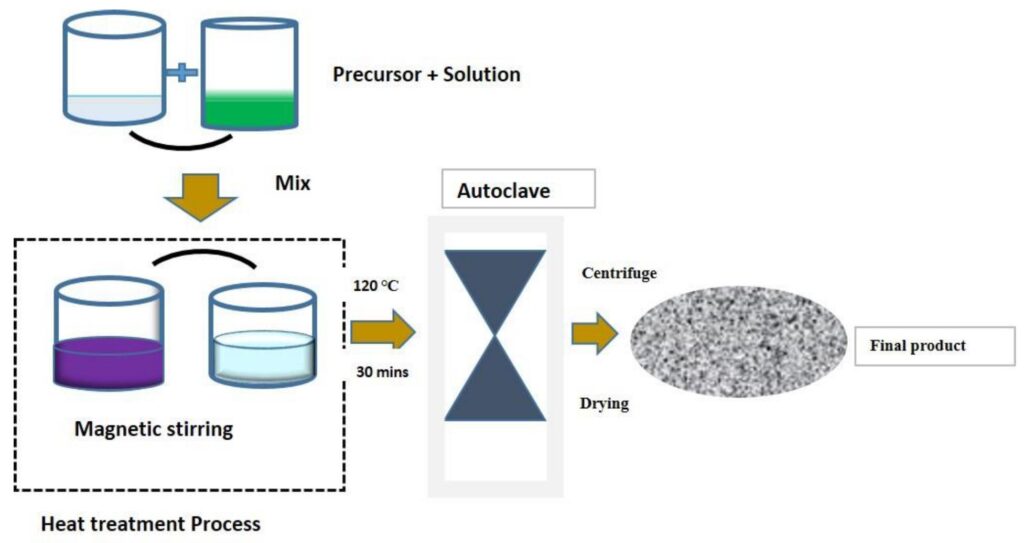
3.3 Hydrothermal and Solvothermal Methods
Hydrothermal and solvothermal synthesis involve chemical reactions in sealed vessels under controlled temperature and pressure conditions.
Hydrothermal synthesis generally uses water as the reaction medium, while solvothermal synthesis uses other suitable solvents.
A typical preparation process involves:
- Dissolving or dispersing the required precursor materials in the reaction medium.
- Adding suitable complexing or reaction-control agents when necessary.
- Transferring the mixture into a sealed reaction vessel.
- Conducting the reaction under controlled temperature and pressure.
- Recovering and washing the resulting precursor or product.
- Drying and applying further heat treatment when required.
These methods can offer control over crystal growth, particle morphology and precursor characteristics.
However, equipment requirements, reaction conditions and batch processing can make large-scale manufacturing more challenging.
4. Spray Drying in LMFP Production
Spray drying is an important powder-processing technique used in the preparation of cathode material precursors.
It converts a liquid feed containing dissolved or dispersed precursor materials into dry powder through atomisation and rapid solvent evaporation.
A typical spray-drying process includes:
- Preparation of a homogeneous precursor slurry or solution.
- Atomisation into fine droplets.
- Rapid drying through contact with heated gas.
- Collection of the resulting powder.
Spray drying can help improve powder handling, precursor distribution and particle morphology.
It is often incorporated into a broader synthesis process rather than treated as a standalone chemical synthesis route. The resulting powder may still require subsequent calcination to form the desired LMFP crystal structure.
5. Comparison of Different LMFP Synthesis Methods
The choice of synthesis route depends on the required material characteristics, production scale, equipment availability and manufacturing costs.
| Synthesis Method | Main Advantages | Main Limitations |
|---|---|---|
| High-Temperature Solid-State Method | Relatively straightforward process; suitable for large-scale production | Mixing uniformity and particle-size control can be challenging |
| Carbothermal Reduction | Provides a reducing environment; carbon can contribute to improved conductivity | Carbon content and thermal conditions require careful control |
| Coprecipitation | Good precursor composition control and elemental distribution | Requires careful pH control, filtration and wastewater treatment |
| Sol-Gel Method | Good precursor homogeneity and compositional control | Longer processing time and more complex solution chemistry |
| Hydrothermal / Solvothermal Method | Offers control over crystal growth and particle morphology | Requires specialised equipment and controlled reaction conditions |
| Spray Drying | Supports powder formation and precursor handling | Usually requires additional thermal processing |
No single synthesis route is suitable for every LMFP formulation. The final material quality depends on the complete production process, including precursor preparation, thermal treatment and post-processing.
6. Key Factors Affecting LMFP Synthesis Quality
Regardless of the selected synthesis method, several factors influence the quality and consistency of the final LMFP powder.
6.1 Raw Material Purity
The purity of lithium, iron, manganese and phosphate precursors affects the chemical composition and phase purity of the final material.
Unwanted impurities may participate in secondary reactions or remain in the product, potentially affecting electrochemical performance.
6.2 Manganese-to-Iron Distribution
The distribution of manganese and iron is particularly important for LMFP.
Non-uniform mixing may produce local variations in composition, resulting in inconsistent electrochemical behaviour.
A well-controlled synthesis process should promote uniform distribution of both transition metals throughout the material.
6.3 Particle Size and Morphology
Particle size influences lithium-ion diffusion distance, specific surface area and electrode processing behaviour.
Smaller particles can shorten lithium-ion diffusion paths, potentially improving reaction kinetics. However, excessively small particles may increase specific surface area and affect powder handling, compaction and electrode processing.
Therefore, particle size and morphology need to be optimised together.
6.4 Thermal Treatment Conditions
Sintering temperature, holding time and atmosphere influence phase formation, crystallinity, particle growth and carbon-related reactions.
Insufficient thermal treatment may result in incomplete phase formation, while excessive treatment can promote particle growth or unwanted changes in material characteristics.
6.5 Post-Processing and Powder Consistency
Crushing, milling, sieving and classification help control the final powder characteristics.
These processes influence particle-size distribution, agglomeration and the consistency of the finished material.
Consistent post-processing is important for achieving reproducible powder properties across production batches.
7. How to Evaluate the Quality of LMFP Powder?
The synthesis route alone cannot determine whether an LMFP powder is suitable for a specific battery application.
The final material should be evaluated through appropriate physical, chemical and structural characterisation methods.
Common evaluation parameters include:
- Chemical Composition: Determines the lithium, manganese, iron and phosphorus content.
- Phase Purity: X-ray diffraction (XRD) is commonly used to identify the crystal structure and detect secondary phases.
- Particle Size Distribution: Laser diffraction can be used to measure particle-size distribution.
- Particle Morphology: Scanning electron microscopy (SEM) helps examine particle shape, size and agglomeration.
- Specific Surface Area: BET analysis provides information about the accessible surface area of the powder.
- Electrochemical Performance: Charge-discharge testing evaluates specific capacity, rate capability and cycling behaviour.
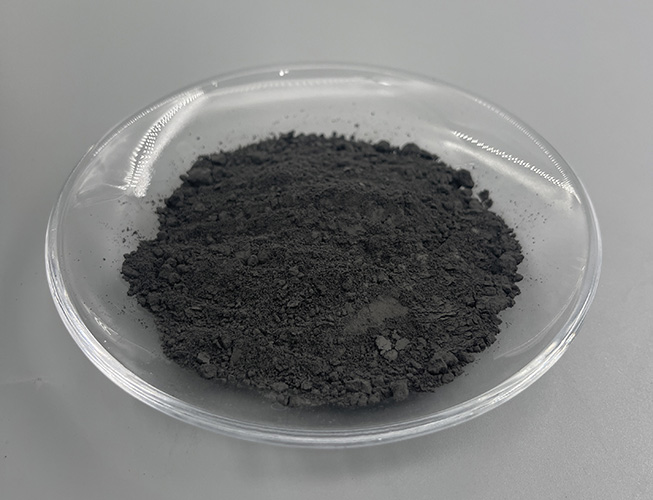
These measurements provide complementary information about the material. A suitable evaluation programme should consider both powder characteristics and electrochemical performance.
8. Conclusion
LMFP cathode materials can be prepared through several synthesis routes, mainly divided into solid-state and liquid-phase processes.
High-temperature solid-state synthesis offers a relatively straightforward approach for large-scale production, while carbothermal reduction provides an additional route for controlling reducing conditions and carbon-related processing.
Liquid-phase methods, including coprecipitation, sol-gel and hydrothermal or solvothermal synthesis, offer opportunities to improve precursor homogeneity and control particle characteristics, although they may involve more complex processing and equipment requirements.
The quality of the final LMFP powder depends on more than the synthesis method itself. Raw material purity, manganese-to-iron distribution, particle morphology, thermal treatment and post-processing all contribute to the final material properties.
As LMFP technology develops, continued optimisation of synthesis processes and powder quality control will remain important for improving the consistency and electrochemical performance of phosphate-based cathode materials.
Frequently Asked Questions (FAQ)
1. What are the main LMFP synthesis methods?
The main approaches are solid-state and liquid-phase synthesis. Solid-state methods include high-temperature solid-state synthesis and carbothermal reduction, while liquid-phase methods include coprecipitation, sol-gel and hydrothermal or solvothermal synthesis.
2. What is the difference between solid-state and liquid-phase synthesis?
Solid-state synthesis uses mechanically mixed solid precursors followed by thermal treatment. Liquid-phase synthesis uses reactions in a liquid medium to prepare more homogeneous precursors before drying and heat treatment.
3. Why is precursor uniformity important in LMFP production?
Uniform precursor composition helps achieve consistent manganese and iron distribution. This is important because local compositional variations can affect the final crystal structure and electrochemical performance.
4. What is the role of carbon in LMFP synthesis?
Carbon can act as a reducing agent during carbothermal processing and may contribute to the formation of a conductive carbon coating. Appropriate carbon content and distribution are important for controlling material properties.
5. What factors affect the quality of LMFP powder?
Important factors include raw material purity, manganese-to-iron ratio, phase purity, particle size distribution, morphology, specific surface area and thermal treatment conditions.
6. How is LMFP powder characterised?
Common methods include X-ray diffraction (XRD), scanning electron microscopy (SEM), laser particle-size analysis, BET specific surface area measurement and electrochemical testing.
References
- [1] Sun, K., Luo, S.-H., Du, N., Wei, Y., & Yan, S. (2024). Research Progress of Lithium Manganese Iron Phosphate Cathode Materials: From Preparation to Modification. Electroanalysis, 36(8), e202400120.
- [2] Lei, Z., Naveed, A., Lei, J., Wang, J., Yang, J., Nuli, Y., Meng, X., & Zhao, Y. (2017). High Performance Nano-Sized LiMn₁₋ₓFeₓPO₄ Cathode Materials for Advanced Lithium-Ion Batteries. RSC Advances, 7, 43708–43715.
- [3] Progress on Lithium Manganese Iron Phosphate Cathode Materials. (2025). Journal of Alloys and Compounds, 1016, 178901.
- [4] Phase Formation and Crystallization of LiMnₓFe₁₋ₓPO₄-C Olivine Material with Different Mn²⁺ Contents Fabricated at Lower Calcination Temperatures. (2015). Rare Metals, 41, 3142–3149.
- [5] Reed, S., Scanlan, K., & Manthiram, A. (2024). Scalable, Low-Cost Synthesis of High Volumetric Capacity LiMn₀.₅Fe₀.₅PO₄ Cathode for Lithium-Ion Batteries. Journal of Materials Chemistry A, 12, 21341–21349.
Further Reading
- LMFP vs LFP: What’s the Difference and Why LMFP Is Gaining Momentum
- LMFP vs NCM Cathode Materials: Key Differences for Next-Generation Lithium-Ion Batteries
- LATP in Solid-State Batteries: Electrolyte, Electrode Coating and Separator Applications
- NFPP Sodium-Ion Battery Cathode: Properties, Advantages, Synthesis and Applications
- Sodium-Ion Battery Materials: Key Components, Advantages and Future Trends
Looking for High-Quality Battery Materials?
Are you developing lithium-ion battery materials or researching advanced phosphate-based cathodes?
VIMATERIAL supplies a wide range of inorganic materials for battery research, industrial production and advanced material development.
Contact our team to discuss your material requirements, technical specifications and customised supply solutions.
Contact VIMATERIAL for further information.