


As the global battery industry continues to evolve, lithium iron phosphate (LFP) is no longer the only mainstream cathode material. A newer option, lithium manganese iron phosphate (LMFP), is quickly gaining attention. Driven by the rapid growth of electric vehicles (EVs) and energy storage systems, manufacturers and material suppliers are constantly looking for solutions that balance performance, safety, and cost. This is exactly where the comparison between LMFP vs LFP becomes highly relevant. So what exactly sets these two materials apart—and why is LMFP increasingly seen as a promising upgrade? In this article, we will explore the differences between LMFP vs LFP and the benefits of each.
What Are LFP and LMFP?
Let’s break it down in simple terms:
- LFP (Lithium Iron Phosphate) is a well-established cathode material known for its excellent safety, long cycle life, and cost-effectiveness. It has been widely adopted in EVs and stationary energy storage systems.
- LMFP (Lithium Manganese Iron Phosphate) builds on LFP by introducing manganese (Mn) into the structure, improving certain electrochemical properties.
👉 In short: LMFP = an enhanced version of LFP
This seemingly small modification leads to meaningful improvements, particularly in energy density and low-temperature performance—two critical factors for modern battery applications.
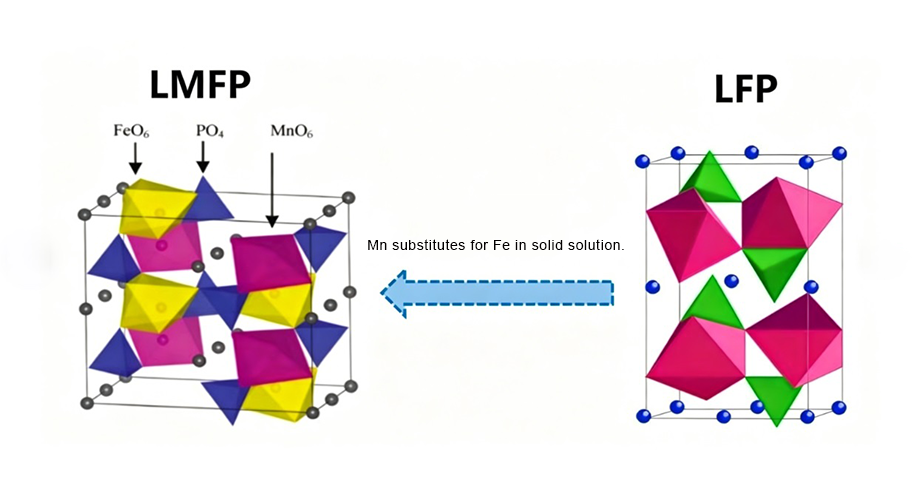
Understanding the nuances of LMFP vs LFP can significantly influence future battery technology and applications.
Key Differences Between LMFP and LFP
1. Energy Density: A Clear Advantage for LMFP
Energy density is one of the most important factors in battery performance, especially for electric vehicles.
- LFP: typically 140–180 Wh/kg
- LMFP: can reach 180–230 Wh/kg
This means LMFP can store more energy within the same weight or volume.
For EV manufacturers, this directly translates into longer driving range without increasing battery size, making LMFP highly attractive for next-generation vehicles.
2. Voltage Platform: Higher Output Potential
Another key improvement comes from voltage:
- LFP: ~3.4V
- LMFP: ~4.0V
A higher voltage platform can improve:
- Energy efficiency
- Power output
- Overall system performance
While higher voltage requires more advanced system design (e.g., electrolyte optimization), it also unlocks better performance potential—especially for high-demand applications.
3. Safety: Both Are Strong Performers
Safety remains one of the biggest advantages of phosphate-based cathodes.
- LFP: extremely stable, very low risk of thermal runaway
- LMFP: also highly stable, though slightly more reactive due to higher voltage
That said, both materials are significantly safer than nickel-rich chemistries (such as NCM or NCA).
In real-world applications, LMFP still meets strict safety requirements, making it suitable for automotive and energy storage use.
4. Low-Temperature Performance: LMFP Gains Ground
In colder regions like Germany and Northern Europe, battery performance in winter is a major concern.
- LFP: noticeable performance drop in low temperatures
- LMFP: improved conductivity due to manganese, leading to better cold-weather performance
This makes LMFP particularly appealing for EV markets where winter reliability is essential.
5. Cost and Scalability: LFP Still Leads—for Now
From a cost perspective:
- LFP: highly optimized supply chain, large-scale production, lower cost
- LMFP: still in earlier commercialization stages, slightly higher processing complexity
However, manganese is abundant and relatively inexpensive. As production scales and technology matures, LMFP is expected to become increasingly cost-competitive.
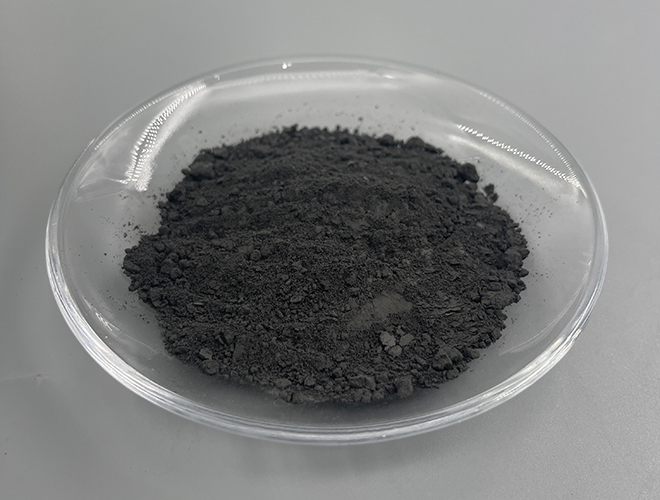
Quick Comparison Table: LMFP vs LFP
| Category | LFP (Lithium Iron Phosphate) | LMFP (Lithium Manganese Iron Phosphate) |
|---|---|---|
| Energy Density | 140–180 Wh/kg | 180–230 Wh/kg |
| Voltage Platform | ~3.4V | ~4.0V |
| Safety | Excellent thermal stability | Very good, slightly lower |
| Low-Temperature Performance | Moderate | Better performance in cold climates |
| Cost | Lower, mature supply chain | Slightly higher (declining trend) |
| Cycle Life | Long cycle life | Comparable, still improving |
| Market Maturity | Highly mature | Emerging, fast-growing |
| Typical Applications | Entry EVs, energy storage | Mid/high-end EVs, cold regions |
Application Scenarios: Choosing the Right Material
Where LFP Still Dominates
LFP continues to be a strong choice for:
- Entry-level electric vehicles
- Large-scale energy storage systems
- Cost-sensitive applications
Its strengths—safety, long lifespan, and affordability—make it highly reliable for mainstream use.
Where LMFP Shows Strong Potential
LMFP is increasingly preferred in scenarios where performance matters more:
- Mid-to-high-end electric vehicles
- Long-range EV platforms
- Cold climate markets (e.g., Germany, Scandinavia)
With its improved energy density and better low-temperature performance, LMFP offers a compelling balance between cost and performance.
Market Trends: LMFP Is Moving Toward the Mainstream
The shift from LFP to LMFP is not about replacement—but evolution.
- LFP will remain dominant in the short term
- LMFP is emerging as a next-generation upgrade path
As the EV market demands:
- Longer driving range
- Better winter performance
- Reduced reliance on nickel and cobalt
LMFP is becoming a strategic focus for battery manufacturers and material suppliers.
Final Thoughts
To summarize:
- LFP = proven, safe, cost-effective, widely adopted
- LMFP = higher performance, better range, strong growth potential
Rather than replacing LFP, LMFP builds on its foundation—offering a practical and scalable improvement.
From a materials supplier perspective, LMFP represents more than just a technical upgrade. It is a forward-looking solution aligned with the evolving needs of the European battery market—especially in applications where performance and environmental adaptability are key.
Frequently Asked Questions about LMFP and LFP
Q1: What is the difference between LFP and LMFP batteries?
A: The main difference between LFP (Lithium Iron Phosphate) and LMFP (Lithium Manganese Iron Phosphate) batteries lies in performance and composition. LMFP enhances LFP by adding manganese, resulting in higher energy density (180–230 Wh/kg vs. 140–180 Wh/kg), a higher voltage platform (~4.0V vs. ~3.4V), and better low-temperature performance. While LFP remains more cost-effective and widely used due to its mature supply chain, LMFP offers improved range and efficiency, making it a promising option for next-generation electric vehicles and colder climate applications.
Q2: What does LMFP mean?
A: LMFP is a cathode material for lithium-ion batteries, short for Lithium Manganese Iron Phosphate. It is modified by introducing manganese (Mn) into LFP (lithium iron phosphate), resulting in higher energy density and better low-temperature performance, making it suitable for electric vehicles and energy storage.
Q3: Is Tesla using LiFePO4?
A: Yes—Tesla does use lithium iron phosphate (LiFePO₄ or LFP) batteries, but not in all of its vehicles.
- LFP batteries are mainly used in standard-range (RWD) versions of Model 3 and some Model Y models.
- Higher-end versions (Long Range and Performance) typically use nickel-based batteries (like NCA/NCM) for higher energy density and longer range.
In short: Tesla uses LFP for lower-cost, entry-level models, while premium models still rely on higher-energy chemistries.