


YSZ material (ytria-stabilized Zirconia) is an advanced ceramic material made by adding yttrium oxide (Y₂O₃) to zirconium dioxide (ZrO₂). This addition helps control the crystal phases of zirconia and can improve its stability, mechanical performance, and functional properties.
YSZ is widely used in thermal barrier coatings, solid oxide fuel cells (SOFCs), oxygen sensors, advanced ceramics, and other applications where thermal insulation, high-temperature performance, or oxygen-ion conductivity is required.
However, YSZ material is not a single, fixed-composition material. Its properties depend on the yttria content, powder characteristics, crystal phase, and processing conditions. Understanding these factors is essential when selecting YSZ materials for a specific application.

What Is the Structure of YSZ?
YSZ consists primarily of zirconium dioxide (ZrO₂) and yttrium oxide (Y₂O₃). Pure zirconia undergoes temperature-dependent crystal phase transformations. Adding yttria helps stabilise certain zirconia phases over a wider temperature range.
The stabilisation process involves the substitution of some Zr⁴⁺ ions with Y³⁺ ions in the zirconia lattice. To maintain charge neutrality, oxygen vacancies are created. These defects play an important role in the oxygen-ion conductivity of YSZ.
YSZ can exhibit cubic, tetragonal, and, depending on composition and processing conditions, monoclinic phases. The proportions and stability of these phases influence the material’s mechanical, thermal, and electrical properties.
Common YSZ Grades
YSZ grades are commonly identified by their nominal yttria content in mol%. The following table provides a general comparison.
| Material Grade | Nominal Y₂O₃ Content | General Characteristics |
|---|---|---|
| 3Y-YSZ | 3 mol% | Commonly associated with high strength and fracture toughness in appropriately processed structural ceramics. |
| 5Y-YSZ | 5 mol% | Higher yttria content; properties depend on phase composition and microstructure. |
| 8Y-YSZ | 8 mol% | Higher degree of stabilisation; commonly used in oxygen-ion-conducting applications. |
These are general descriptions rather than universal performance specifications. The exact phase composition and properties depend on the material formulation and manufacturing process.
For a more detailed comparison, see 3Y-TZP vs 5Y-YSZ vs 8Y-YSZ.
Key Properties of Yttria-Stabilized Zirconia
The properties of YSZ material make it suitable for both structural ceramics and functional ceramic components. The relative importance of each property depends on the yttria content, microstructure, and intended use.
1. Mechanical Properties
YSZ can provide high hardness, wear resistance, and fracture toughness when appropriately formulated and processed. These properties make selected grades suitable for wear-resistant components, precision ceramic parts, and other demanding engineering applications.
Mechanical performance is strongly influenced by crystal phase, grain size, porosity, and sintering conditions. Not every YSZ grade provides the same combination of strength and toughness.
2. Thermal Properties
YSZ material has a high melting temperature and relatively low thermal conductivity compared with many other engineering ceramics. Its thermal expansion behaviour can also make it suitable for ceramic coatings on metallic substrates.
These characteristics are particularly important in thermal barrier coating systems used to protect components exposed to elevated temperatures.
The maximum usable temperature is application-dependent. It cannot be determined from the material name alone because phase stability, coating microstructure, thermal cycling, and exposure conditions also affect performance.
3. Oxygen-Ion Conductivity
One of the most important functional properties of YSZ material is its ability to conduct oxygen ions at elevated temperatures.
Yttria addition creates oxygen vacancies in the zirconia lattice. At suitable operating temperatures, oxygen ions can move through the crystal structure by migrating between available lattice sites.
This property makes selected YSZ compositions suitable for solid oxide fuel cell electrolytes, oxygen sensors, and other high-temperature electrochemical devices.
YSZ generally has low electronic conductivity under appropriate operating conditions, which is important for its use as an electrolyte. Its ionic conductivity depends on composition, temperature, and microstructure.
4. Chemical Stability
YSZ material offers good chemical stability in many high-temperature and industrial environments. However, its resistance to corrosion, chemical attack, and long-term degradation depends on the surrounding atmosphere, temperature, contaminants, and operating conditions.
For demanding applications, chemical compatibility should be assessed under the actual service conditions rather than assumed from the material designation alone.
How Is YSZ Produced?
YSZ production involves controlling the chemical composition, powder characteristics, and subsequent processing conditions. The appropriate manufacturing route depends on whether the final product is a powder, dense ceramic component, coating, or thin film.
1. Powder Synthesis
Zirconia and yttria can be combined through different powder-processing routes. Common approaches include solid-state mixing and reaction, co-precipitation, and sol-gel processing.
The synthesis route influences chemical homogeneity, particle size, agglomeration, and phase distribution. These characteristics can affect the sintering behaviour and final performance of the material.
2. Forming and Sintering
For bulk ceramic components, YSZ powder is typically shaped using a suitable forming method and then sintered to achieve the required density and microstructure.
Important processing variables include forming pressure, particle-size distribution, sintering temperature, holding time, and atmosphere. These parameters influence porosity, grain growth, phase composition, and mechanical properties.
3. Thin-Film Deposition
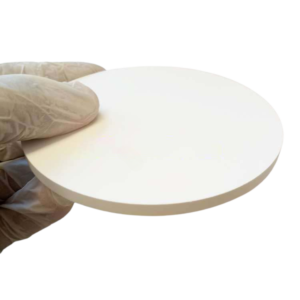
YSZ thin films can be produced using deposition techniques such as physical vapour deposition, including sputtering, depending on the required film structure and application.
In this process, a suitable YSZ sputtering target can be used to deposit a thin ceramic layer onto a substrate. Film properties depend on target composition, deposition parameters, substrate temperature, and post-deposition treatment.
Powder synthesis, ceramic sintering, and thin-film deposition are different manufacturing processes; the appropriate route depends on the intended product form.
What Are YSZ Materials Used For?
YSZ serves different functions across energy, aerospace, electronics, and engineering ceramics. Its applications are determined by the combination of phase stability, thermal properties, mechanical performance, and ionic conductivity.
| Application | Function of YSZ | Important Selection Factors |
|---|---|---|
| Thermal Barrier Coatings | Provides thermal insulation and protects high-temperature components. | Thermal conductivity, phase stability, coating microstructure, and thermal cycling. |
| Solid Oxide Fuel Cells (SOFCs) | Functions as an oxygen-ion-conducting electrolyte in suitable designs. | Ionic conductivity, composition, density, and operating temperature. |
| Oxygen Sensors | Supports oxygen-ion transport for electrochemical oxygen measurement. | Conductivity, electrode compatibility, and temperature. |
| Advanced Structural Ceramics | Provides hardness, wear resistance, and fracture toughness in selected grades. | Yttria content, grain size, density, and phase composition. |
| Ceramic Coatings and Thin Films | Provides functional ceramic layers for specialised applications. | Target composition, film quality, and deposition conditions. |
| Specialised High-Pressure Applications | Can be used where its properties meet specific process requirements. | Purity, particle size, phase composition, and process compatibility. |
YSZ is not interchangeable across these applications. A grade suitable for a structural ceramic may not be the best choice for an oxygen-conducting electrolyte or a specialised high-pressure process.
YSZ for HPHT Diamond Synthesis
For high-pressure, high-temperature (HPHT) diamond synthesis, YSZ powder selection requires attention to the specific process and material requirements. Yttria content, chemical purity, particle size, powder density, and crystal phase may all be relevant.
The appropriate grade should be evaluated against the actual process conditions rather than selected solely on the basis of nominal yttria content.
For application-specific guidance, see How to Choose Yttria-Stabilized Zirconia Powder for HPHT Diamond Synthesis.
How to Choose the Right YSZ Material?
When evaluating YSZ materials for industrial or research use, consider the following parameters together.
| Selection Parameter | What to Check | Why It Matters |
|---|---|---|
| Yttria Content | Nominal mol% and verified composition. | Influences phase stability and material properties. |
| Crystal Phase | Cubic, tetragonal, monoclinic, or measured phase proportions. | Helps determine suitability for the intended function. |
| Chemical Purity | Total purity and relevant impurity limits. | Important for reproducibility and sensitive applications. |
| Particle Size | D10, D50, D90, or another specified size range. | Affects packing, dispersion, forming, and sintering. |
| Product Form | Powder, granules, or sputtering target. | Must match the intended manufacturing or deposition process. |
| Processing Conditions | Forming, sintering, coating, or operating conditions. | Determines the final microstructure and performance. |
For powder applications, particle-size distribution is often more informative than a single average particle-size value. For sputtering applications, target dimensions, purity, composition, density, and bonding requirements may also need to be specified.
Stabilisation is another key factor in zirconia selection. Read Stabilized Zirconia: Stability Is the Key for a closer look at the relationship between stabiliser content, phase stability, and material performance.
YSZ Materials from VIMATERIAL
VIMATERIAL supplies yttria-stabilized zirconia materials for industrial, technical, and research applications.
Available product forms include:
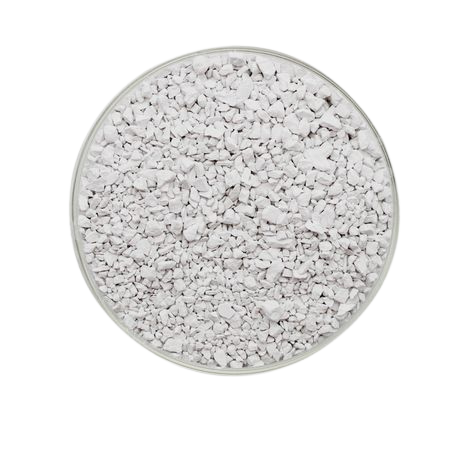
- YSZ powder: For ceramic processing, material development, and other powder-based applications.
- YSZ granules: For applications requiring a granular feedstock.
- YSZ sputtering targets: For thin-film deposition and specialised coating processes.
Depending on the product form, available specifications include different yttria contents, purity levels, particle sizes, dimensions, and other customised requirements.
For product details, see Yttria-Stabilized Zirconia (YSZ) Powder and Granular Powder or YSZ Sputtering Targets.
If you are selecting YSZ material for a specific application, provide the required yttria content, purity, particle size or dimensions, and intended use so that the material specifications can be evaluated accordingly.
Frequently Asked Questions (FAQs)
1. What does YSZ stand for?
YSZ stands for yttria-stabilized zirconia. It is a ceramic material based on zirconium dioxide (ZrO₂) stabilised by adding yttrium oxide (Y₂O₃).
2. Is YSZ a ceramic material?
Yes. YSZ is an advanced oxide ceramic used in structural components, thermal barrier coatings, solid oxide fuel cells, oxygen sensors, and other specialised applications.
3. What is the difference between zirconia and YSZ?
Zirconia is zirconium dioxide (ZrO₂). YSZ is zirconia modified with yttria to control its crystal phase stability and functional properties. Their performance differs depending on composition and processing.
4. Is YSZ electrically conductive?
YSZ is primarily known for its oxygen-ion conductivity at elevated temperatures, rather than conventional electronic conductivity. This makes suitable grades useful as electrolytes in high-temperature electrochemical devices.
5. What is the difference between 3Y-YSZ and 8Y-YSZ?
3Y-YSZ contains a nominal 3 mol% yttria, while 8Y-YSZ contains a nominal 8 mol%. The different stabiliser levels influence phase composition and properties. The appropriate grade depends on the intended application and verified material specifications.
6. What are the main applications of YSZ?
Major applications include thermal barrier coatings, solid oxide fuel cells, oxygen sensors, advanced structural ceramics, and specialised ceramic coatings. Specific grades are selected according to the required mechanical, thermal, or ionic-conduction properties.
7. Which YSZ specifications should be checked before purchasing?
Key parameters include yttria content, chemical purity, crystal phase, particle-size distribution, and product form. Depending on the application, density, dimensions, and processing requirements may also be important.
References
- [1] Cheong, A. C. H., & Sivanesan, S. (2023). Perspective Chapter: The Application of Yttria-Stabilized Zirconia (YSZ). IntechOpen.
- [2] Zakaria, Z., et al. (2020). A review on recent status and challenges of yttria stabilized zirconia modification to lowering the temperature of solid oxide fuel cells operation. International Journal of Energy Research, 44(2), 631–650.
- [3] Goodenough, J. B. (2003). Oxide-Ion Electrolytes. Annual Review of Materials Research, 33, 91–128.
- [4] Solid oxide fuel cells. Chemical Society Reviews (2003).
- [5] Chen, L. B. (2006). Yttria-Stabilized Zirconia Thermal Barrier Coatings—A Review. Surface Review and Letters, 13(5), 535–544.
Further Reading
- Yttria-Stabilized Zirconia Powder for HPHT Diamond Synthesis: How to Choose the Right Grade
- Everything You Need to Know About Zirconium Powder: Uses, Risks, and Strength vs Titanium
- Everything You Need to Know About Yttrium Oxide Granulated Powder
- High-Purity Yttrium Oxide: A Rare Earth Gem from Advanced Technology to Wide-Ranging Applications
- Stabilized Zirconia: “Stability Is the Key to Longevity”
Need Yttria-Stabilized Zirconia for Your Application?
VIMATERIAL supplies yttria-stabilized zirconia (YSZ) in powder, granule, and sputtering target forms for industrial, technical, and research applications.
Depending on your requirements, we can discuss material composition, yttria content, purity, particle size, and product dimensions to help identify a suitable specification.
Looking for a specific YSZ grade or a customised material solution? Contact VIMATERIAL to discuss your requirements.