


Metal powders and ceramic powders are widely used in advanced manufacturing, powder metallurgy, coatings, electronics, energy systems, and other industrial applications. Although both are supplied in particulate form, their chemical composition, physical properties, processing requirements, and end-use applications can differ significantly.
Understanding the differences between metal powder and ceramic powder helps engineers, researchers, and material buyers identify suitable materials for their specific requirements. The right choice depends not only on the material itself, but also on operating temperature, electrical and thermal requirements, mechanical loads, processing methods, and the properties of the final component.
The discussion of Metal Powder vs Ceramic Powder is essential for understanding material selection in various applications.
What Is Metal Powder?
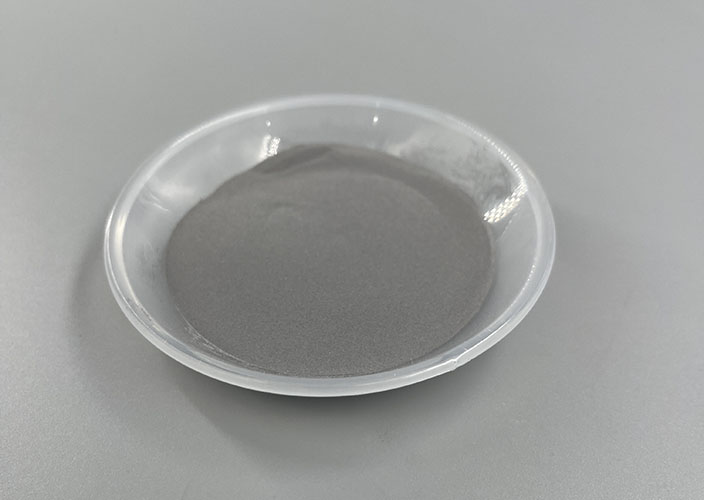
Metal powder consists of fine particles of a metallic element or alloy. Depending on its composition and manufacturing route, it may be produced through gas atomization, water atomization, mechanical processing, chemical reduction, or other powder production methods.
Common metal powders include aluminum, copper, nickel, titanium, iron, stainless steel, and their alloys. Their properties vary according to composition, particle size, morphology, purity, and surface condition.
Metal powders are used in powder metallurgy, metal additive manufacturing, thermal spraying, metal injection molding, and the preparation of specialized components.
Typical characteristics of metal powders include:
- Electrical and thermal conductivity: Many metal powders are based on materials with good electrical and thermal conductivity, although performance depends on the metal, alloy, oxidation, and final processing conditions.
- Mechanical performance: Metal-based materials can provide useful combinations of strength, ductility, toughness, and fatigue resistance after suitable processing.
- Processing flexibility: Metal powders can be consolidated, sintered, melted, or deposited using different manufacturing technologies.
- Composition-dependent properties: Alloying elements and powder characteristics influence the behavior of the resulting material.
What Is Ceramic Powder?
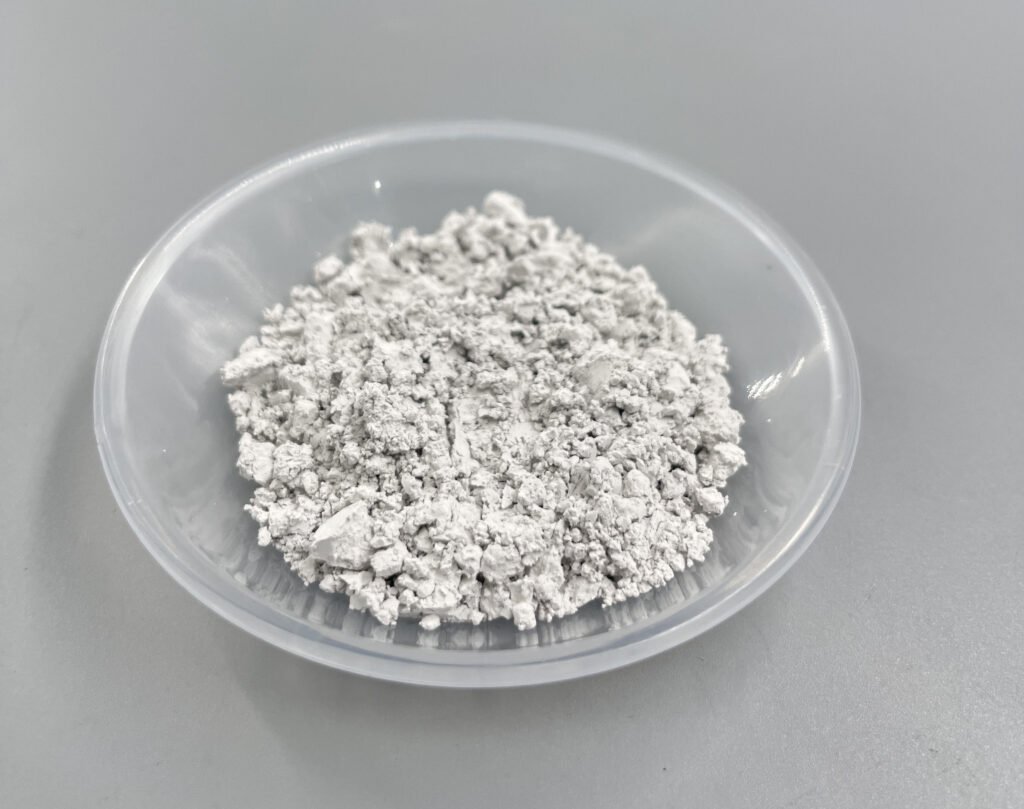
Ceramic powder consists of fine particles of inorganic, non-metallic compounds. These materials commonly include oxides, nitrides, carbides, borides, and other advanced ceramic compounds.
Examples include aluminum oxide (Al₂O₃), aluminum nitride (AlN), silicon dioxide (SiO₂), titanium carbide (TiC), boron carbide (B₄C), and zirconium dioxide (ZrO₂).
Ceramic powders are used to manufacture technical ceramics, refractory components, wear-resistant materials, thermal management components, electronic materials, and specialized coatings. Depending on the material, they may be processed through pressing, sintering, slurry-based forming, spray drying, or other ceramic manufacturing methods.
Typical characteristics of ceramic powders include:
- High-temperature capability: Many technical ceramics retain useful properties at elevated temperatures, although the applicable temperature range varies by composition and environment.
- Hardness and wear resistance: Several ceramic compounds provide high hardness and abrasion resistance.
- Chemical stability: Some ceramics offer strong resistance to oxidation, corrosion, or chemical attack under specified conditions.
- Electrical insulation or functional conductivity: Many oxide ceramics are electrical insulators, while selected nitrides, carbides, and other ceramic compounds exhibit electrical or semiconductor properties.
- Brittleness: Many conventional ceramics have lower fracture toughness than structural metals, making crack resistance and component design important considerations.
Metal Powder vs Ceramic Powder: Key Differences
Metal powders and ceramic powders should not be compared solely by their material categories. The specific chemical composition, particle characteristics, and processing method determine the properties of the final product.
The following table summarizes their typical differences.
| Comparison Factor | Metal Powder | Ceramic Powder |
|---|---|---|
| Material composition | Metallic elements and metal alloys | Inorganic, non-metallic compounds such as oxides, nitrides, carbides, and borides |
| Electrical properties | Many metal-based materials are electrically conductive | Can be insulating, semiconducting, or conductive, depending on composition |
| Thermal properties | Many metals provide good thermal conductivity | Thermal conductivity varies widely; some ceramics are effective thermal insulators, while others conduct heat efficiently |
| Mechanical behavior | Can combine strength, ductility, and toughness after suitable processing | Often provide high hardness and wear resistance; many conventional ceramics are relatively brittle |
| High-temperature performance | Depends on melting point, oxidation resistance, creep behavior, and alloy composition | Many technical ceramics offer high-temperature stability, depending on composition and operating environment |
| Chemical resistance | Varies with metal or alloy composition and environmental conditions | Varies with ceramic chemistry and exposure conditions; some ceramics offer excellent chemical stability |
| Common processing routes | Pressing and sintering, melting, metal additive manufacturing, thermal spraying, and metal injection molding | Powder forming, pressing, sintering, slurry processing, spray drying, and selected coating or additive manufacturing processes |
| Typical applications | Structural components, conductive parts, metal additive manufacturing, and metal-based coatings | Wear-resistant components, refractory products, electrical insulation, thermal management, and functional coatings |
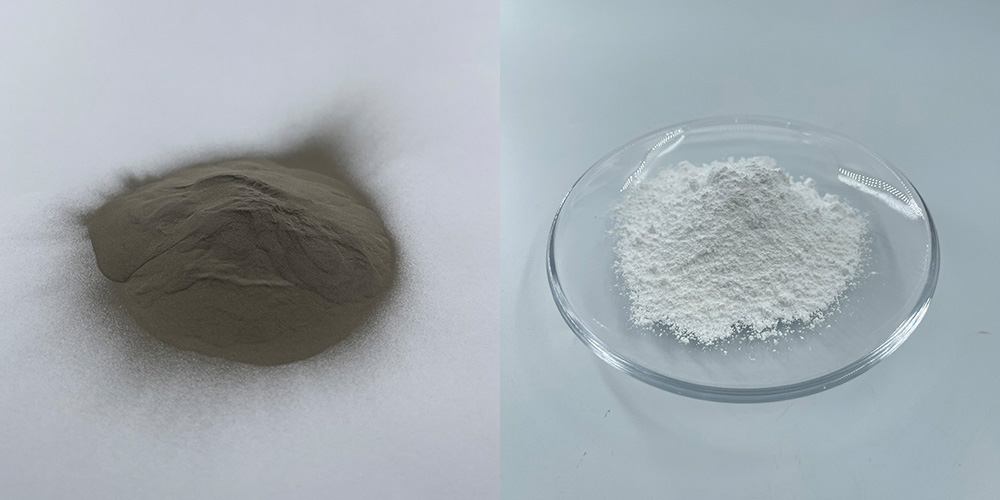
These are general tendencies rather than universal rules. For example, aluminum nitride is valued for its thermal conductivity and electrical insulation, while titanium carbide combines high hardness with electrical conductivity. Material selection should therefore be based on the properties of the specific compound or alloy.
Common Applications of Metal Powders
Metal powders are selected when the manufacturing process or final component requires metallic composition, suitable mechanical properties, electrical conductivity, or a particular alloy chemistry.
Additive Manufacturing
Metal powders are used in powder-based additive manufacturing processes to produce components with complex geometries. Common materials include stainless steel, titanium alloys, aluminum alloys, and nickel-based alloys.
Important powder characteristics include particle size distribution, morphology, flowability, apparent density, chemical composition, and oxygen content. The required specifications depend on the equipment and manufacturing process.
Powder Metallurgy
In powder metallurgy, metal powders are formed and consolidated, commonly through pressing and sintering, to manufacture components with controlled composition and geometry.
The method is used for a variety of industrial parts, including components requiring repeatable dimensions or specialized material compositions.
Thermal Spray Coatings
Metal and alloy powders can be used in thermal spraying to deposit coatings on component surfaces. Depending on the coating material and process, these coatings may provide wear resistance, corrosion protection, or other functional properties.
Conductive and Functional Components
Copper, silver, nickel, and other metal powders can be used in selected conductive materials, electronic applications, and functional coatings. The final electrical performance depends on the material composition, particle characteristics, and consolidation or deposition process.
Common Applications of Ceramic Powders
Ceramic powders are used where a particular combination of hardness, thermal stability, chemical resistance, electrical behavior, or functional properties is required.
Technical Ceramics
Oxide ceramics such as aluminum oxide and zirconium dioxide are used in technical ceramic components. Depending on the composition and design, these materials can provide hardness, wear resistance, electrical insulation, or chemical stability.
Thermal Management and Electrical Insulation
Aluminum nitride powder is used to manufacture ceramic materials that combine electrical insulation with high thermal conductivity. Such materials are relevant to electronic packaging and thermal management applications.
The performance of the final component depends on powder purity, particle characteristics, forming conditions, sintering, and the resulting microstructure.
Wear-Resistant Materials and Hard Coatings
Ceramic compounds such as titanium carbide and boron carbide are valued for their hardness and wear resistance. They can be used in selected wear-resistant components, composite materials, and coating systems.
In metal-ceramic composites, a ceramic phase may provide hardness and wear resistance, while a metallic phase can contribute toughness or other processing and performance benefits. The resulting properties depend on the phase composition, microstructure, and manufacturing route.
Refractory and High-Temperature Applications
Selected ceramic powders are used to manufacture refractory products and components exposed to elevated temperatures. Suitability depends on the material’s thermal stability, oxidation behavior, chemical compatibility, and the conditions of service.
Can Metal Powder and Ceramic Powder Be Used Together?
Yes. Metal powders and ceramic powders can be combined to produce metal-ceramic composites, cermets, and other engineered materials.
In these materials, the two phases are selected to provide complementary properties. For example, a hard ceramic phase may improve wear resistance, while a metallic binder can contribute toughness and support consolidation.
The material system must be designed around the intended application. Important factors include:
- Phase composition: The type and proportion of metallic and ceramic phases influence the final properties.
- Particle characteristics: Particle size, distribution, and morphology affect mixing, packing, and processing.
- Interface compatibility: Interactions between the phases influence bonding, microstructure, and performance.
- Manufacturing route: Pressing, sintering, spray drying, thermal spraying, and hot isostatic pressing may be relevant to different material systems.
- Final performance requirements: Hardness, fracture resistance, density, thermal conductivity, and chemical stability should be evaluated as appropriate.
Combining metal and ceramic powders does not automatically produce a better material. The composition and processing conditions must be matched to the application.
How to Choose Between Metal Powder and Ceramic Powder?
Before selecting a powder, define the requirements of the intended application and the manufacturing process.
Step 1: Identify the Main Performance Requirement
Determine whether the application prioritizes electrical conductivity, thermal conductivity, hardness, wear resistance, chemical stability, mechanical toughness, or high-temperature performance.
Step 2: Define the Processing Method
A powder suitable for additive manufacturing may require different particle characteristics from a powder intended for pressing and sintering, thermal spraying, or slurry processing.
Confirm the relevant particle size distribution, morphology, flowability, purity, and other process-specific requirements.
Step 3: Check the Operating Environment
Consider operating temperature, atmosphere, moisture exposure, chemical contact, mechanical loading, and thermal cycling. These conditions can significantly influence material suitability.
Step 4: Confirm Material Specifications
Review the chemical formula or alloy designation, purity, impurity limits, particle size, packaging, and available inspection documentation. For demanding applications, confirm which analytical methods and acceptance criteria are required.
Step 5: Evaluate the Final Component
Powder properties alone do not determine final performance. Processing conditions, porosity, microstructure, interfaces, and post-processing can all influence the finished component.
Where necessary, evaluate representative samples using application-relevant testing before moving to larger-scale production.
Frequently Asked Questions
1. Is metal powder always electrically conductive?
No. Many metal powders are based on electrically conductive metals, but oxidation, surface condition, particle contacts, and the final processing method can affect the electrical performance of a consolidated component.
2. Are ceramic powders always electrical insulators?
No. Many oxide ceramics are electrical insulators, but some ceramic compounds, including selected carbides and nitrides, can be electrically conductive or semiconducting. The specific chemical composition must be considered.
3. Which powder is better for high-temperature applications?
There is no universal answer. Many ceramics offer high-temperature stability, while selected metals and alloys are also suitable for elevated-temperature service. The correct choice depends on temperature, atmosphere, mechanical load, oxidation behavior, and chemical compatibility.
4. Can ceramic powder be used in additive manufacturing?
Yes. Ceramic powders can be used in selected additive manufacturing processes. The required powder characteristics and post-processing steps depend on the equipment, ceramic composition, and intended component.
5. What powder properties should buyers check before placing an order?
Key parameters may include chemical composition, purity, particle size distribution, morphology, moisture content, oxygen content, flowability, and packaging requirements. Not every parameter is relevant to every material or process, so specifications should be defined according to the intended application.
6. What is the difference between ceramic powder and cermet powder?
Ceramic powder contains ceramic material, whereas cermet powder combines a ceramic phase with a metallic phase. Cermets are designed to achieve a balance of properties, such as ceramic hardness and metallic-phase toughness, depending on the formulation and processing route.
Conclusion
Metal powders and ceramic powders serve different but sometimes complementary roles in advanced manufacturing. Metal powders are commonly selected for metallic composition, conductivity, and processable mechanical properties, while ceramic powders are used for properties such as hardness, wear resistance, thermal stability, electrical insulation, or specialized functional behavior.
The most suitable material depends on the complete set of application requirements rather than a simple metal-versus-ceramic classification. Evaluating composition, powder characteristics, processing compatibility, and final component performance provides a more reliable basis for material selection.
References
- [1] European Powder Metallurgy Association (EPMA). What Is Powder Metallurgy?
- [2] Fraunhofer Institute for Silicate Research ISC. Ceramic Materials – Technical Ceramics for High Temperature Applications.
- [3] Fraunhofer Institute for Ceramic Technologies and Systems IKTS. Ceramic Materials.
- [4] International Organization for Standardization (ISO). ISO 4497:2020 — Metallic Powders: Determination of Particle Size by Dry Sieving.
- [5] International Organization for Standardization (ISO). ISO 13320:2020 — Particle Size Analysis: Laser Diffraction Methods.
Further Reading
- Everything You Need to Know About Zirconium Powder: Uses, Risks, and Strength vs Titanium
- Indium Powder: Properties, Production Methods, Applications, and Buying Guide
- Hafnium powder: the “hidden champion” in the field of high-performance materials
- Aluminum Nitride Powder: Purity, Particle Size and Quality Control
- Titanium Carbide TiC Powder: Particle Size, Purity and Selection
Need a Custom Material Solution?
VIMATERIAL supplies advanced materials for industrial and research applications, including selected metal powders, ceramic powders, carbides, nitrides, oxides, and other inorganic materials. Purity, particle size, and other specifications can be discussed according to material availability and project requirements.
Contact VIMATERIAL to discuss your material specifications and application requirements.