Catalogries

Chemical Name:
Boron Carbide
Formula:
B4C
Product No.:
050600
CAS No.:
12069-32-8
EINECS No.:
235-111-5
Form:
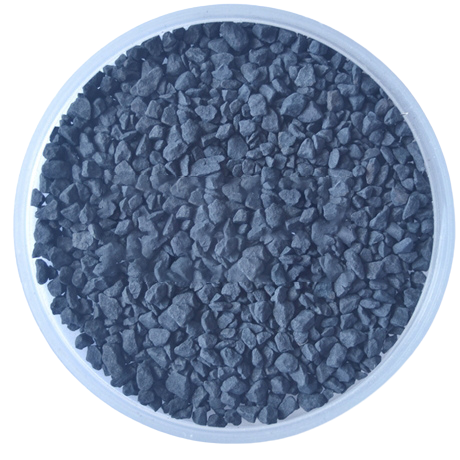
Powder
HazMat:
Product ID Formula Purity Dimension Quantity Price in € Inquiry
050600PD001 B4C 99% <500 nm 100g 801.00 Inquire
050600PD002 B4C 99% D50<15μm 100g POR Inquire
050600PD003 B4C 99% -200Mesh 500g 166.00 Inquire
050600PD004 B4C 99% -325Mesh 500g 166.00 Inquire
Product ID
050600PD001
Formula
B4C
Purity
99%
Dimension
<500 nm
Quantity
100g
Price in €
801.00
Product ID
050600PD002
Formula
B4C
Purity
99%
Dimension
D50<15μm
Quantity
100g
Price in €
POR
Product ID
050600PD003
Formula
B4C
Purity
99%
Dimension
-200Mesh
Quantity
500g
Price in €
166.00
Product ID
050600PD004
Formula
B4C
Purity
99%
Dimension
-325Mesh
Quantity
500g
Price in €
166.00

Boron Carbide Powder (B4C) is an advanced ceramic material known for its exceptional hardness, low density, excellent wear resistance, and high thermal stability. As one of the hardest known engineering ceramic materials, boron carbide is widely used in abrasive processing, wear-resistant components, advanced ceramics, and neutron absorption applications.

VIMATERIAL supplies high-purity boron carbide powder with low impurity levels and controlled particle size distribution. Available in small packages with low minimum order quantities (MOQs) and short lead times, our B4C powder supports laboratory research, material development, and industrial manufacturing requirements.

We also provide technical support for customized specifications and new material development. Contact our team to discuss your application and powder requirements.

Characteristics

Property Specification
Chemical Name Boron Carbide
Chemical Formula B₄C
CAS Number 12069-32-8
Molecular Weight 55.25 g/mol
Appearance Black to dark gray powder
Density 2.52 g/cm³
Hardness 9–9.5 Mohs
Melting Point 2450°C
Crystal Structure Rhombohedral (hexagonal setting)

Note: The values above are typical reference properties. Actual specifications may vary depending on composition, purity, and production conditions.

Key Properties

  • Exceptional Hardness and Wear Resistance: Boron carbide is among the hardest engineering ceramic materials, with a Mohs hardness of approximately 9–9.5. Its excellent abrasion resistance makes it particularly suitable for grinding, lapping, polishing, and wear-resistant ceramic components.
  • Low Density and High Specific Strength: With a density of approximately 2.52 g/cm³, boron carbide offers a combination of low weight and high hardness. This makes it an attractive material for lightweight protective ceramics and high-performance structural applications.
  • High Melting Point and Thermal Stability: Boron carbide has a melting point of approximately 2450°C and maintains its material characteristics under demanding thermal conditions. It is used in refractory formulations and advanced ceramic systems requiring high-temperature performance.
  • Chemical Stability and Neutron Absorption: Boron carbide exhibits good chemical stability and has a high neutron absorption capability due to its boron content. These characteristics make it useful in nuclear shielding materials, neutron absorber components, and specialized industrial applications.

Applications of Boron Carbide Powder

Boron carbide powder is used in a wide range of advanced ceramic and industrial applications.

  • Abrasives and Surface Finishing: Widely used in grinding, lapping, polishing, and abrasive blasting for processing hard materials such as ceramics, metals, gemstones, and composites.
  • Wear-Resistant Ceramics: Used in the production of sandblasting nozzles, waterjet cutting components, ceramic bearings, and other abrasion-resistant parts.
  • Refractory Materials: Incorporated into refractory formulations and carbon-bonded materials to improve high-temperature performance and oxidation resistance.
  • Nuclear Applications: Used in neutron-absorbing materials, control rod components, and radiation shielding systems due to its high neutron absorption capability.
  • Lightweight Protective Ceramics: Applied in the development of lightweight ceramic armor and protective composite systems.
  • Advanced Ceramic Manufacturing: Used as a raw material for hot-pressed, sintered, and reaction-bonded boron carbide components.

Why Choose VIMATERIAL?

VIMATERIAL focuses on the supply and development of inorganic chemical materials, providing boron carbide powder solutions for research institutions, material developers, and industrial manufacturers.

  • Controlled Particle Size: Uniform particle size distribution to support consistent processing and application performance.
  • Small MOQ: Flexible order quantities for laboratory testing, sample evaluation, and small-scale production.
  • Short Lead Times: Efficient order processing to support customer procurement schedules.
  • Customized Development: Technical support for customized specifications and new product development.

Quality Control

Quality is controlled throughout the production and inspection process, from raw material selection and processing to final product testing.

Our quality management procedures include:

  • Raw material inspection and selection
  • Control of key processing parameters
  • Particle size distribution inspection
  • Chemical composition and impurity analysis
  • Final product inspection before shipment

Product samples can be provided for customer evaluation and re-inspection according to specific requirements.

Learn more about our Quality Control System.

Packaging and Storage

Packaging

Boron carbide powder is available in the following packaging options:

  • Double vacuum-sealed bags
  • Sealed bottles
  • Outer carton packaging for transportation protection
  • Customized packaging according to order requirements

Storage

  • Store in a dry, clean environment.
  • Keep containers tightly sealed when not in use.
  • Protect the powder from moisture and contamination.
  • Avoid exposure to incompatible substances and corrosive environments.
  • Follow the handling and storage recommendations provided in the relevant Safety Data Sheet (SDS).

Frequently Asked Questions

Q1. What is boron carbide powder used for?

B4C powder is mainly used in abrasive processing, wear-resistant ceramics, refractory materials, nuclear shielding, and lightweight protective ceramic systems.

Q2. How hard is boron carbide?

Boron carbide has a Mohs hardness of approximately 9–9.5, making it one of the hardest known engineering ceramic materials.

Q3. What is the melting point of B4C?

The melting point of boron carbide is approximately 2450°C.

Q4. Can VIMATERIAL provide small quantities of B4C powder?

Yes. VIMATERIAL supports small MOQs and small-package options for research, sample testing, and specialized manufacturing requirements.

Q5. Why is boron carbide used in nuclear applications?

Boron carbide has a high neutron absorption capability due to the presence of boron, making it suitable for neutron absorber components and nuclear shielding systems.

Recommended Product

QUALITY ASSURANCE

VI HALBLEITERMATERIAL GmbH (VIMATERIAL) employs a stringent quality assurance system to ensure the reliability of our product quality. Strict quality control is implemented throughout the entire production chain, and for defective products, we strictly enforce the principle of rework and redo. Each batch is released only after passing detailed specification tests.

Every batch of our materials is independently tested, and, if necessary, we send samples to certified companies for testing. We provide these documents and analysis certificates with the shipment to certify that our products meet the required standards.

Need More Help?

Contact our team of experts today and let us help you with your business!

Contact Us

Contact Us

Contact Us