

Aluminum nitride (AlN) powder is used in applications where thermal performance, electrical insulation and material compatibility are important. It is used as a raw material for aluminum nitride ceramics and as a thermally conductive filler in polymer-based materials, including thermal interface materials (TIMs).
However, not all AlN powders are suitable for the same application. Purity, particle size distribution, particle morphology, surface condition and moisture control can influence processing behaviour and the performance of the final product.
Choosing the right aluminum nitride powder therefore requires more than comparing purity grades. The specification should match the intended application, processing method and final performance requirements.
Why Aluminum Nitride Powder Specifications Matter?
Aluminum nitride powder is available in different purity grades, particle sizes and morphologies. Each parameter describes a different aspect of the material and should be evaluated in relation to the intended use.
For example, fine AlN powder may be suitable for processes requiring small particles and relatively uniform distribution. Coarser or spherical AlN particles may be more appropriate for selected thermally conductive composites where particle packing, flow behaviour and filler loading are important.
For ceramic production, powder characteristics must also be compatible with the forming and sintering process. For polymer composites, dispersion, viscosity and the interaction between the powder and the surrounding matrix can be equally important.
A suitable specification should therefore consider the complete processing route rather than one parameter in isolation.
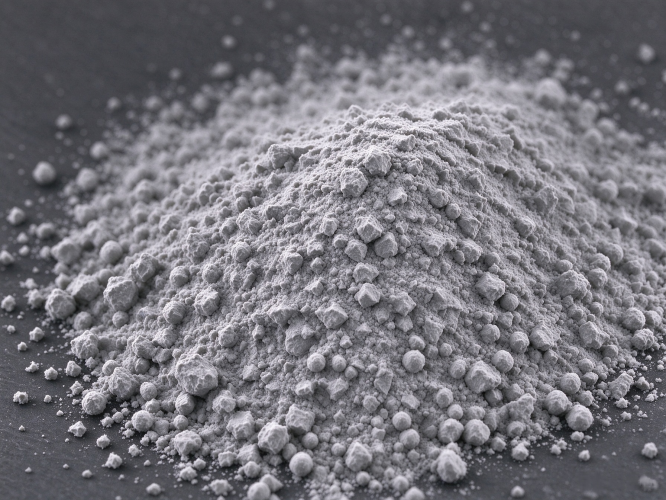
Aluminum Nitride Powder Purity
Purity is one of the first parameters to evaluate when selecting AlN powder. Available grades may include 99%, 99.5%, 99.9% and 99.95%, depending on the powder type and specification.
Higher nominal purity can be important where impurities may affect electrical insulation, ceramic processing or the properties of the final composite. However, the purity value alone does not fully describe powder quality.
What to check beyond the purity percentage
When evaluating an aluminum nitride powder specification, consider the following:
- Chemical composition: Confirm how the stated purity is defined and which impurities are included in the analysis.
- Oxygen content: Oxygen may be present in the powder or associated with surface oxidation. Its significance depends on the application and processing conditions.
- Metallic impurities: Trace elements may matter in applications with strict electrical, optical or electronic requirements.
- Batch consistency: Consistent composition and particle characteristics help reduce variation between production batches.
- Test method: Analytical methods and reporting bases should be clear when specifications are compared.
The nominal purity grade should not be treated as a substitute for a complete chemical specification. For demanding applications, request the relevant impurity limits and batch-specific test results.
Aluminum Nitride Powder Particle Size
Particle size affects powder handling, dispersion, packing and processing. The appropriate size depends on whether AlN is being used for ceramic production, a thermal interface material or another composite application.
Aluminum nitride powder is commonly specified in terms of nanoscale, submicron or micron-sized particles. These categories are useful for initial screening, but the actual particle size distribution should guide the final selection.
Fine and submicron AlN powder
Fine AlN powder can be useful where small particles are required for dispersion, ceramic processing or composite formulation.
When selecting fine powder, consider:
- The particle size distribution rather than only the smallest reported size.
- The tendency of fine particles to agglomerate during storage or processing.
- The mixing method and its ability to disperse the powder.
- The surface condition and moisture-control requirements.
- The influence of the powder on the viscosity and processing behaviour of the final formulation.
A smaller nominal particle size does not automatically result in better thermal conductivity or better overall performance. The outcome depends on the matrix, particle distribution, loading level and processing conditions.
Micron-sized AlN powder
Micron-sized aluminum nitride powders are used in applications where a larger particle size is compatible with the required processing and final structure.
Depending on the application, micron-sized powders may offer practical advantages in handling and formulation. The suitability of a particular grade should still be confirmed through particle size distribution, morphology and processing trials.
Spherical aluminum nitride powder
Spherical AlN powder is particularly relevant to selected thermally conductive composite formulations. Compared with irregular particles, spherical particles can provide different packing and flow characteristics.
The actual benefit depends on the particle size distribution, surface treatment, loading level and properties of the matrix. Spherical morphology should therefore be evaluated as part of the complete formulation rather than as an independent guarantee of performance.
For a more detailed discussion, see our knowledge base article on Spherical Aluminum Nitride Powder: Properties and Applications.
Understanding D50 and D90
D50 and D90 are important parameters in aluminum nitride powder specifications. They describe points in a particle size distribution, not the minimum and maximum particle sizes.
| Parameter | Meaning | Why It Matters |
|---|---|---|
| D50 | The particle size at which 50% of the measured distribution falls below that size, on the stated measurement basis. | Provides a representative measure of particle size. |
| D90 | The particle size at which 90% of the measured distribution falls below that size, on the stated measurement basis. | Helps assess the coarser portion of the distribution. |
| Particle Size Range | A specified or measured interval, depending on the method used. | Helps establish whether a powder fits a processing requirement. |
| Morphology | The shape and surface characteristics of particles. | Influences packing, flow, dispersion and contact between particles. |
For example, a specification of D50 = 1–5 μm indicates the specified range for the median particle size. It does not mean that every particle falls between 1 and 5 μm.
D90 provides additional information about the distribution. Two powders with similar D50 values may have different D90 values and therefore different proportions of larger particles.
When comparing suppliers, confirm the measurement method and whether the reported distribution is based on volume, number or another measurement basis. Results obtained using different methods may not be directly comparable.
Typical Aluminum Nitride Powder Specifications
Aluminum nitride powders can be supplied in different combinations of purity, particle size and morphology. The following examples illustrate the types of specifications that may be used when defining an AlN powder requirement.
| Powder Type | Purity | Representative Particle Size Specification |
|---|---|---|
| Fine AlN Powder | 99.5% | Below 200 nm |
| Fine AlN Powder | 99.5% | D50 below 1 μm |
| Micron-Sized AlN Powder | 99.9% | D50: 1–5 μm |
| Micron-Sized AlN Powder | 99.9% | D50: 10–20 μm |
| Micron-Sized AlN Powder | 99.95% | D50: 5–10 μm |
| Spherical AlN Powder | 99% | D50: 30–40 μm |
| Spherical AlN Powder | 99% | D50: 45–55 μm |
| Spherical AlN Powder | 99% | D50: 70–80 μm |
| Spherical AlN Powder | 99% | D50: 90–105 μm |
Note: These are representative specification combinations, not universal industry grades or a guarantee of current stock availability. Actual specifications should be confirmed for the required product, including the applicable test method and batch documentation.
When requesting a quotation, specify both purity and particle size. If spherical morphology, oxygen content, surface treatment or another parameter is critical, state it separately rather than assuming it is included in the nominal grade.
How Particle Morphology Affects Powder Selection
Particle morphology describes the shape and surface characteristics of powder particles. For aluminum nitride, fine or irregular particles and spherical particles can behave differently during processing.
Irregular or fine particles
Fine and irregular particles may be useful where a small particle size is needed for a particular ceramic or composite process. Their behaviour depends on the degree of agglomeration, surface condition and particle size distribution.
Fine powders may require more attention to dispersion and handling. A nominally small particle size is not sufficient to establish whether a powder will mix uniformly in a particular formulation.
Spherical particles
Spherical AlN particles may be selected for applications where packing, flow and filler distribution are important. In thermal interface materials, particle shape and size distribution can influence the amount of filler that can be incorporated and the rheology of the resulting compound.
A combination of particle sizes may also be considered when the formulation requires a balance between packing and processability. However, the optimum distribution depends on the matrix and the intended manufacturing process.
Before selecting a powder based on morphology, confirm the particle size distribution, surface treatment, purity and application-specific processing requirements.
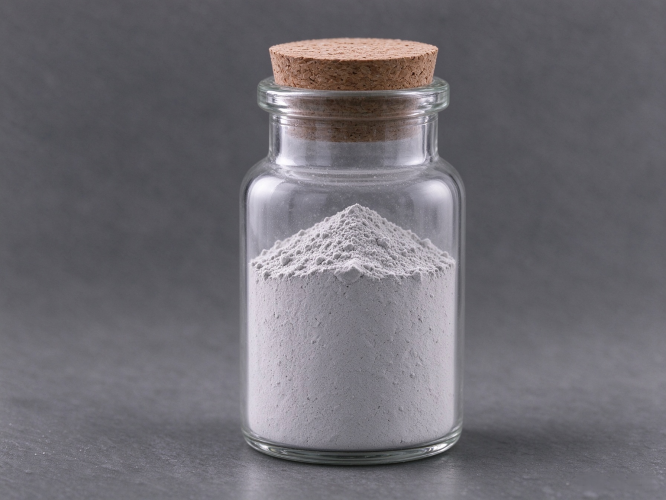
Surface Condition, Oxygen Content and Moisture Control
Aluminum nitride powder requires appropriate moisture control during storage and processing. Contact with moisture can lead to hydrolysis, so packaging integrity, storage conditions and handling procedures are important considerations.
Surface condition is particularly relevant when the powder is used as a filler in polymers or other formulated materials. Surface modification, including suitable silane-based treatments, may be used in some products to improve compatibility with the matrix or reduce moisture-related problems.
The effect of surface treatment depends on the treatment chemistry and the application. It should not be assumed that all AlN powders have been surface-treated or that a treated powder is suitable for every formulation.
When evaluating a powder, confirm:
- Whether surface treatment has been applied.
- Whether oxygen content is specified and how it is measured.
- What packaging and storage conditions are recommended.
- Whether the powder requires specific moisture-control measures during processing.
- Whether the treatment is compatible with the intended matrix and manufacturing process.
For moisture-sensitive applications, storage and handling requirements should be agreed before material delivery.
Quality Control Checklist for Aluminum Nitride Powder
A useful AlN powder specification should make the material easy to identify, compare and qualify. The following checklist can support technical evaluation and purchasing decisions.
| Quality Parameter | What to Confirm |
|---|---|
| Material Identity | Aluminum nitride (AlN) and the applicable product grade. |
| Purity | Nominal purity, reporting basis and relevant impurity limits. |
| Particle Size | Specified size range or target value. |
| Particle Size Distribution | D50, D90 and the measurement method, where applicable. |
| Morphology | Fine, irregular, spherical or another defined particle form. |
| Oxygen Content | Required limit and test method, if relevant. |
| Surface Treatment | Treatment type and whether it is included. |
| Moisture Control | Packaging, storage and handling requirements. |
| Batch Documentation | Available certificate of analysis (CoA) and applicable test results. |
| Application Suitability | Compatibility with the intended ceramic process or composite formulation. |
Not every application requires the same level of testing. For a general-purpose filler, particle size, purity and processing behaviour may be the main priorities. For electronic materials or advanced ceramics, tighter impurity limits, oxygen content and batch consistency may be necessary.
The key is to define acceptance criteria before ordering, rather than relying on a general material description.
How to Choose the Right Aluminum Nitride Powder?
The most effective selection process starts with the final application and works backwards to the powder specification.
For aluminum nitride ceramics: Focus on chemical purity, oxygen content, particle size distribution and consistency with the intended forming and sintering process. Powder specifications alone cannot guarantee the properties of the finished ceramic.
For thermal interface materials: Consider particle morphology, particle size distribution, surface treatment, dispersion and the effect of filler loading on viscosity and processability. The thermal conductivity of the finished compound must be evaluated separately from that of the powder or ceramic material.
For polymer-based thermal composites: Check matrix compatibility, moisture control, particle packing and the processing method. A powder that performs well in one resin or polymer system may not behave identically in another.
For applications with strict material requirements: Define purity, impurity limits, particle size, testing methods and documentation requirements before qualification. Where necessary, assess a sample under the actual processing conditions.
A clear specification reduces uncertainty during supplier evaluation and helps ensure that the selected AlN powder is suitable for the intended process.
Frequently Asked Questions
1. What purity grades are available for aluminum nitride powder?
Aluminum nitride powder may be specified at different purity levels, such as 99%, 99.5%, 99.9% and 99.95%. Availability depends on the product grade. The required purity should be selected according to the application and relevant impurity limits.
2. What is the difference between D50 and D90 for AlN powder?
D50 is the median particle size of the measured distribution, while D90 is the size below which 90% of the measured distribution falls on the stated measurement basis. Both values help describe particle size distribution, but neither alone defines the complete distribution.
3. Is finer aluminum nitride powder always better?
No. Fine powder may be suitable for some ceramic and composite processes, but it can also present challenges involving agglomeration, dispersion and viscosity. The appropriate size depends on the processing method and the required properties of the final material.
4. What is spherical aluminum nitride powder used for?
Spherical AlN powder is used in selected thermally conductive composite formulations, including some thermal interface materials. Its morphology can influence packing and flow behaviour, but the actual performance depends on particle size distribution, surface condition, filler loading and matrix compatibility.
5. Why is oxygen content important in aluminum nitride powder?
Oxygen content can affect the suitability of AlN powder for certain ceramic and electronic applications. The acceptable level depends on the process and performance requirements, so oxygen limits should be specified where they are important to the application.
6. How should aluminum nitride powder be stored?
AlN powder should be kept in appropriate, well-sealed packaging under the supplier’s recommended storage conditions to limit moisture exposure. Follow the product-specific handling instructions and applicable safety documentation.
7. What information should I provide when requesting an AlN powder quotation?
Provide the required purity, particle size or D50/D90 range, morphology, intended application and estimated quantity. Also identify any requirements for oxygen content, surface treatment, batch documentation, packaging or moisture control.
Conclusion
Selecting aluminum nitride powder requires a balanced assessment of purity, particle size distribution, morphology, surface condition and moisture control. The best specification is the one that meets the technical requirements of the intended application and remains consistent throughout processing.
By defining these parameters clearly, material buyers and engineers can compare AlN powder grades more effectively, reduce qualification uncertainty and identify a suitable material for ceramic production or thermally conductive composite applications.
References
- [1] Du, P., et al. (2026). “From Powder to Performance: A Review on the Synthesis and Densification of AlN for Advanced Thermal Management.” Journal of the American Ceramic Society, 109(4), e70689. https://doi.org/10.1111/jace.70689
- [2] Lin, L., Wu, H., Li, Y., Wang, J., & Wu, S. (2024). “Effect of Particle Size on Rheology, Curing Kinetics, and Corresponding Mechanical and Thermal Properties of Aluminum Nitride (AlN) Ceramic by Digital Light Processing (DLP)-Based Vat Photopolymerization.” Journal of the European Ceramic Society, 44(1), 184–192. https://doi.org/10.1016/j.jeurceramsoc.2023.08.048
- [3] Ognjanović, S. M., & Winterer, M. (2018). “Optimizing Particle Characteristics of Nanocrystalline Aluminum Nitride.” Powder Technology, 326, 488–497. https://doi.org/10.1016/j.powtec.2017.12.009
Further Reading
- Aluminum Nitride (AlN) — The “Heat-Dissipating, Electrically Insulating All-Rounder” of the Electronics Industry
- How to Make Aluminium Nitride Powder?
- Hexagonal Boron Nitride (h-BN): A Versatile High-Performance Material Across Multiple Industries
- Advanced Silicon Nitride (Si3N4): Performance, Applications, and Prospects
- AlON Powder: Properties, Synthesis Methods and Applications
Need a Custom Aluminum Nitride Powder Specification?
VIMATERIAL supports material selection based on application requirements, including purity, particle size and powder form. Contact our team to discuss your required AlN specification, quantity and documentation needs.