


High-purity sputtering targets are one of the most critical materials in semiconductor manufacturing. Their purity, density, and microstructural uniformity directly affect thin-film quality, chip performance, and overall production yield. Inferior sputtering targets can introduce impurities and defects into deposited films, potentially causing electrical failures or even short circuits in semiconductor devices. Therefore, when discussing sputtering targets for semiconductor applications, the focus is almost always on high-purity sputtering targets.
Characteristics and Classification of High-Purity Sputtering Targets
The performance and reliability of sputtering targets depend not only on the purity of the raw materials but also on precise manufacturing processes and strict quality control throughout production.
Key Characteristics of High-Purity Targets
Ultra-High Purity Requirements
Purity Standards
Material purity is the most important quality indicator for sputtering targets and is commonly expressed using the “N” purity grading system:
- 5N (99.999%) – Suitable for general industrial coating and decorative applications.
- 6N (99.9999%) – Widely used in semiconductor manufacturing and advanced display technologies.
- 7N (99.99999%) – Required for cutting-edge semiconductor fabrication and ultra-high-performance electronic devices.
Higher purity generally translates into improved electrical performance, enhanced process stability, and lower defect rates.

Why Purity Matters?
In semiconductor manufacturing, trace impurities can significantly increase thin-film resistivity, degrade device reliability, and reduce chip yield.
For display panels, insufficient material purity may cause film non-uniformity, negatively affecting optical performance and display quality.
Challenges in Achieving High Purity
Producing ultra-high-purity targets requires the removal of trace impurities such as oxygen, sulfur, silicon, carbon, and metallic contaminants. Equally important is preventing secondary contamination introduced during refining, handling, or processing.
Relationship Between Microstructure and Performance
Fine Grain Structure
- A fine and uniform grain structure provides several advantages:
- Higher mechanical strength
- Improved toughness
- More uniform sputtering behavior
- Better thin-film consistency
Grain Boundary Control
Uniform grain boundaries improve thermal conductivity, electrical conductivity, and mechanical stability while enhancing sputtering uniformity during deposition.
High Density and Excellent Homogeneity
High Density
High-performance sputtering targets typically achieve densities exceeding 99% of theoretical density, offering several benefits:
- Higher sputtering efficiency
- Reduced particle generation
- Fewer gas inclusions and voids
- Improved deposition stability
Composition Uniformity
Uniform elemental distribution throughout the target is particularly critical for alloy sputtering targets, ensuring stable sputtering rates and consistent film composition.
Types of High-Purity Sputtering Targets
Metallic Targets
Common metallic sputtering targets include: Aluminum (Al), Copper (Cu), Titanium (Ti), Molybdenum (Mo).
Typical applications include:
Aluminum: conductive films and reflective coatings
Copper: integrated circuit interconnects
Titanium: diffusion barrier layers in semiconductor devices
Molybdenum: back electrodes for thin-film solar cells
Ceramic Targets
Typical ceramic targets include: Oxides (such as ITO), Nitrides (such as aluminum nitride), Carbides (such as silicon carbide).
These materials provide excellent wear resistance, corrosion resistance, and chemical stability.
Applications include:
ITO (Indium Tin Oxide): display panels and touch screens
Aluminum Nitride: high thermal conductivity coatings
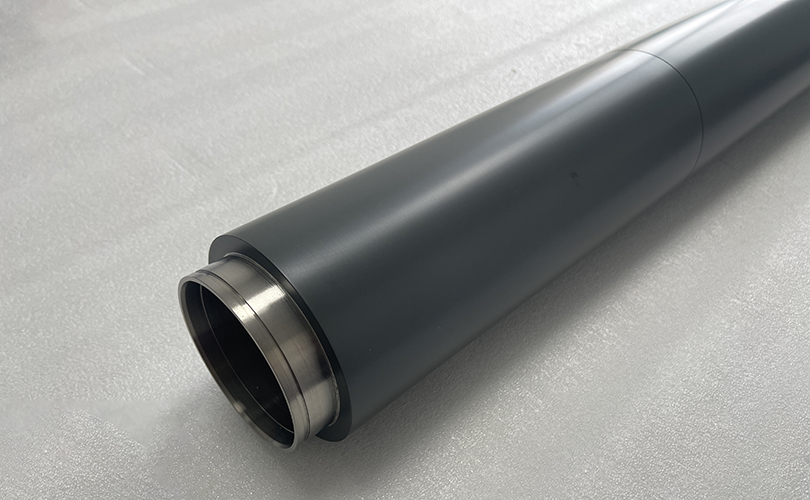
Composite and Alloy Targets
Composite sputtering targets combine multiple phases or alloy compositions to improve mechanical strength, thermal stability, corrosion resistance, and functional performance.
Common examples include: Chromium-silicon (Cr-Si), Nickel-chromium (Ni-Cr).
These materials are widely used in functional coatings and electronic thin films.
Major Application Areas
Semiconductor Manufacturing
High-purity sputtering targets are extensively used in Physical Vapor Deposition (PVD) processes for depositing conductive layers, diffusion barriers, and interconnects during integrated circuit fabrication.
Photovoltaic Industry
Thin-film solar cells require high-purity targets to produce transparent conductive oxides and light-absorbing layers with excellent electrical and optical properties.
Display Technology
TFT-LCD and OLED displays rely on high-purity ITO, aluminum, and other sputtering targets to form transparent electrodes and conductive films.
Decorative and Functional Coatings
Sputtering targets are also widely used to manufacture wear-resistant, corrosion-resistant, decorative, and optical coatings for cutting tools, automotive components, and consumer products.
Core Manufacturing Process of High-Purity Sputtering Targets
Producing high-purity sputtering targets requires rigorous control throughout every manufacturing stage—from raw material purification to final inspection.
Raw Material Purification
Chemical Purification
Common purification techniques include:
- Distillation for separating volatile impurities
- Ion exchange for selectively removing dissolved contaminants
Physical Purification
Physical refining methods include:
- Zone refining, commonly used for ultra-high-purity metals
- Condensation processes for gas purification
Impurity Control
Purification is typically performed under high-vacuum conditions to minimize contamination from the surrounding environment and processing equipment.
Target Fabrication
Powder Metallurgy
The powder metallurgy process generally includes:
- Powder production through gas atomization or water atomization
- Cold Isostatic Pressing (CIP)
- Hot Isostatic Pressing (HIP) for densification and pore elimination
Casting Process
High-purity metallic targets may also be produced by:
- Vacuum melting
- Precision casting
- Homogenization annealing to reduce residual stress and improve compositional uniformity
Surface Finishing
Precision Machining
Targets are machined to precise dimensions through cutting, milling, grinding, and polishing.
Surface Cleaning
Chemical cleaning removes machining residues and surface contaminants before shipment.
Surface Roughness Control
Polishing and precision inspection ensure that the target surface meets stringent flatness and roughness specifications.
Quality Inspection and Verification
Purity Analysis
Common analytical methods include:
- Glow Discharge Mass Spectrometry (GDMS)
- Inductively Coupled Plasma Mass Spectrometry (ICP-MS)
Microstructure Characterization
Microstructural evaluation typically involves:
- Electron Backscatter Diffraction (EBSD)
- Scanning Electron Microscopy (SEM)
These techniques analyze grain size, grain orientation, porosity, and microstructural uniformity.
Mechanical Testing
Mechanical properties such as hardness and strength are tested to ensure reliable performance during sputtering.
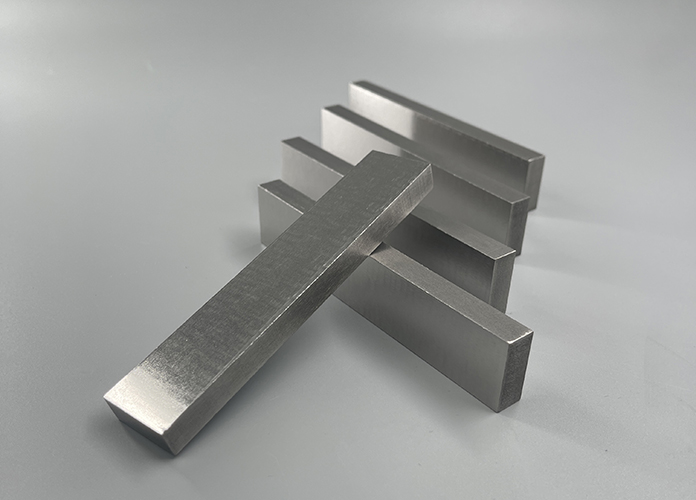
How High-Purity Sputtering Targets Work?
Sputtering targets play a fundamental role in semiconductor wafer fabrication by depositing ultra-thin functional films onto silicon wafers.
Although these thin films may appear to be protective layers, their primary purpose is to provide electrical conductivity and functional material properties. Since silicon itself has limited conductivity for many device structures, conductive metallic layers are deposited to create interconnects and other critical circuit features.
During the sputtering process, energetic ions generated within a vacuum chamber bombard the surface of the sputtering target. The impact ejects atoms from the target surface, which then travel through the vacuum and condense onto the silicon wafer, forming a highly uniform thin film. This Physical Vapor Deposition (PVD) process is widely used to produce conductive, barrier, and functional coatings in semiconductor manufacturing.
Technical Challenges in High-Purity Target Manufacturing
Despite continuous technological advances, producing high-performance sputtering targets still presents several significant challenges.
Achieving Ultra-High Purity
Sources of Contamination
Impurities may originate from:
- Raw materials
- Refining equipment
- Processing environments
- Manufacturing tools
Even trace contamination can affect thin-film quality.
High Energy Consumption
As purity requirements increase from 5N to 6N and beyond, purification becomes exponentially more complex, resulting in substantially higher production costs and energy consumption.
Maintaining Uniformity in Large-Scale Production
High-Density Challenges
Completely eliminating pores and internal defects remains difficult, especially in large sputtering targets.
Large-Diameter Target Stability
As target dimensions increase, controlling residual stress, deformation, and microcracking becomes increasingly challenging.
Sintering and Densification
Precise control of temperature, pressure, and holding time is essential during sintering. Even minor deviations can introduce porosity, cracking, or non-uniform grain growth.
Thermal stress generated during cooling can also lead to deformation or cracking if not carefully managed.
Surface Quality and Secondary Contamination
Surface quality directly influences sputtering performance.
Common challenges include:
- Surface defects caused by machining
- Tool wear contamination
- Residual polishing compounds
- Particle contamination during final cleaning and packaging
Maintaining an ultra-clean manufacturing environment throughout the final processing stages is essential to ensure consistent target quality and reliable thin-film deposition.