


Aluminum nitride (AlN) and aluminum oxide (Al₂O₃), commonly known as alumina, are two widely used technical ceramic materials. Both offer excellent electrical insulation, good thermal stability and useful mechanical properties. However, they differ significantly in thermal conductivity, thermal expansion, processing requirements and material cost.
The main advantage of aluminum nitride is its ability to combine high thermal conductivity with electrical insulation. This makes it particularly suitable for electronic substrates, power modules and thermal management components where efficient heat dissipation is essential.
Alumina, on the other hand, offers a more economical solution for applications requiring reliable electrical insulation, hardness, wear resistance and chemical stability without exceptionally high thermal conductivity.
Understanding the differences between these two ceramics helps engineers select the appropriate material according to thermal, electrical, mechanical and economic requirements.
1. Aluminum Nitride vs Alumina: Key Differences
Aluminum nitride and alumina belong to different ceramic material groups and have distinct crystal structures.
Aluminum nitride has a hexagonal wurtzite crystal structure. Its strong atomic bonding supports efficient phonon transport, contributing to its high thermal conductivity.
Alumina is an oxide ceramic. Its most commonly used technical form is alpha-alumina (α-Al₂O₃), which has a corundum crystal structure and provides high hardness, mechanical strength and chemical stability.
The following table summarises their typical properties.
| Property | Aluminum Nitride (AlN) | Alumina (Al₂O₃) |
|---|---|---|
| Chemical Formula | AlN | Al₂O₃ |
| Material Type | Nitride ceramic | Oxide ceramic |
| Crystal Structure | Hexagonal wurtzite | Corundum (α-Al₂O₃) |
| Thermal Conductivity | 140–180 W/(m·K) | 20–35 W/(m·K) |
| Electrical Insulation | Excellent | Excellent |
| Thermal Expansion Coefficient | 4.0–5.5 × 10⁻⁶/K | 7–9 × 10⁻⁶/K |
| Mechanical Hardness | High | Very high |
| Chemical Stability | Good, but sensitive to moisture under certain conditions | Excellent in many common environments |
| Relative Material Cost | Higher | Lower |
Note: Values are representative ranges for dense ceramic materials. Actual properties depend on purity, density, porosity, grain structure, additives, temperature and manufacturing conditions.
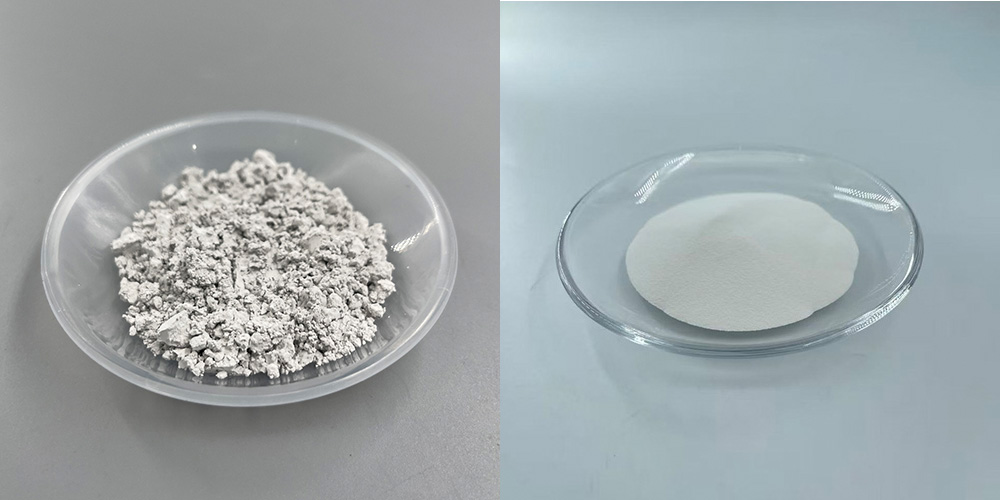
2. Thermal Conductivity: The Main Advantage of Aluminum Nitride
Thermal conductivity is often the deciding factor when choosing between AlN and Al₂O₃.
2.1 Aluminum Nitride
Aluminum nitride is known for its high thermal conductivity.
Its theoretical thermal conductivity is approximately 320 W/(m·K). Commercial dense AlN ceramics commonly achieve approximately 140–180 W/(m·K), although specially optimised grades can reach higher values.
This performance allows AlN to transfer heat efficiently while maintaining electrical insulation.
Typical applications include:
- Power semiconductor substrates.
- High-power electronic modules.
- LED packaging and heat dissipation components.
- High-frequency electronic devices.
- Thermally conductive ceramic components.
The thermal conductivity of AlN ceramics is influenced by oxygen content, lattice defects, impurities and microstructure. Oxygen incorporated into the AlN lattice can increase phonon scattering and reduce thermal conductivity.
Sintering conditions, additives and final ceramic density also influence the thermal performance of the finished component.
2.2 Alumina
High-purity dense alumina generally has a thermal conductivity of approximately 20–35 W/(m·K), depending on composition, purity and microstructure.
Although its thermal conductivity is considerably lower than that of AlN, alumina provides sufficient heat transfer for many conventional electrical and structural applications.
Its main advantages include:
- Reliable electrical insulation.
- Good mechanical strength.
- High hardness and wear resistance.
- Good chemical stability.
- Established manufacturing processes.
- Relatively low material cost.
For components that do not experience particularly high heat loads, alumina can provide an effective balance between thermal performance and manufacturing cost.
2.3 Thermal Conductivity Comparison
| Material | Typical Thermal Conductivity | General Suitability |
|---|---|---|
| Aluminum Nitride (AlN) | 140–180 W/(m·K) | High-performance thermal management |
| High-Purity Alumina (Al₂O₃) | 20–35 W/(m·K) | General-purpose insulating ceramics |
The difference becomes particularly important in compact electronic systems, where available cooling space is limited and heat must be transferred efficiently through an electrically insulating component.
It is also important to distinguish the thermal conductivity of a ceramic material from that of its starting powder. Powder characteristics influence processing and densification, while the final thermal conductivity depends on the properties of the finished ceramic.
For more information about the relationship between powder characteristics and ceramic performance, see our guide to AlN Powder: Purity, Particle Size and Quality Control.
3. Electrical Insulation: Both Materials Perform Well
High thermal conductivity alone is not sufficient for many electronic applications. The material must also prevent unwanted electrical current from passing between conductive components.
Both AlN and Al₂O₃ are electrical insulators and are widely used in applications requiring electrical isolation.
3.1 Electrical Properties of AlN
Aluminum nitride combines high thermal conductivity with high electrical resistivity.
This combination makes it suitable for electronic applications where heat needs to pass through an insulating ceramic layer.
Typical applications include:
- Insulating substrates for power electronics.
- Semiconductor packaging.
- LED thermal management.
- Electrical isolation components.
- High-power electronic assemblies.
Its relatively low thermal expansion coefficient can also help reduce thermal mismatch with certain semiconductor materials.
3.2 Electrical Properties of Al₂O₃
Alumina is a well-established electrical insulating ceramic.
It provides high electrical resistivity, good dielectric performance and reliable insulation in a wide range of operating environments.
Common applications include:
- Electrical insulators.
- Ceramic spacers and supports.
- Insulating tubes and components.
- Electronic packaging.
- High-voltage insulation parts.
Alumina is often selected when dependable electrical insulation is required without the need for exceptionally high thermal conductivity.
3.3 Which Material Is Better for Electrical Insulation?
Neither material is universally better in every electrical application.
AlN is particularly attractive when electrical insulation and efficient heat dissipation are both required.
Alumina is often the more economical option when electrical insulation is the primary requirement.
The final selection should also consider dielectric strength, operating voltage, component geometry, frequency, temperature and the relevant test conditions.
4. Thermal Expansion and Mechanical Properties
Thermal expansion is another important consideration, especially in electronic assemblies that experience repeated heating and cooling.
Aluminum nitride has a relatively low coefficient of thermal expansion, typically around 4.0–5.5 × 10⁻⁶/K.
This is relatively close to the thermal expansion coefficients of silicon and certain semiconductor materials, making AlN useful in electronic packaging where thermal compatibility is important.
Alumina generally has a higher thermal expansion coefficient, approximately 7–9 × 10⁻⁶/K.
The difference can influence thermal stress at interfaces between ceramic substrates, metal layers, semiconductor dies and other joined materials.
Mechanical Property Comparison
Both materials offer good mechanical performance, but their suitability depends on the component design and operating environment.
| Property | Aluminum Nitride (AlN) | Alumina (Al₂O₃) |
|---|---|---|
| Thermal Expansion | Lower | Higher |
| Hardness | High | Very high |
| Wear Resistance | Good | Excellent |
| Thermal Shock Behaviour | Depends on grade and component design | Depends on grade and component design |
| Main Engineering Advantage | Heat transfer with electrical insulation | Mechanical durability and cost-effective insulation |
Alumina is particularly well established in wear-resistant and structural ceramic applications.
AlN offers a useful combination of thermal conductivity, electrical insulation and mechanical stability.
Mechanical properties depend on ceramic composition, density, grain structure and manufacturing conditions. Actual values should be compared using grade-specific technical data.
5. Cost Comparison: Why Is Aluminum Nitride More Expensive?
Cost is one of the most important differences between aluminum nitride and alumina.
Alumina is generally less expensive because its raw materials are widely available and its manufacturing processes are mature. It can be produced in a broad range of grades and component geometries using established ceramic processing technologies.
Aluminum nitride is usually more expensive. Its production and processing require tighter control of purity, oxygen content and moisture exposure.
Achieving high thermal conductivity also depends on suitable powder characteristics, sintering additives and carefully controlled densification conditions.
Several factors influence the final cost of AlN components:
Raw Material Purity: High-purity AlN powder with controlled oxygen and impurity levels generally requires more demanding production and quality control.
Particle Size and Distribution: Powder particle size and distribution influence forming, packing and sintering behaviour. Different applications may require submicron or micron-scale powders.
Sintering and Densification: AlN requires carefully controlled processing to achieve high density and good thermal conductivity. The manufacturing route and additives can influence both production cost and final properties.
Component Dimensions and Geometry: Thin substrates, complex shapes and large ceramic components may require additional processing and tighter dimensional control.
Quality Requirements: Applications in power electronics and semiconductor packaging may require strict control of thermal conductivity, electrical properties, dimensional tolerances and material consistency.
Alumina is therefore usually the more economical choice for general-purpose insulating components.
AlN becomes more attractive when its higher thermal conductivity can solve a specific engineering problem or improve the thermal performance of the overall system.
Rather than comparing material prices alone, engineers should consider the total cost of the component and the thermal management system.
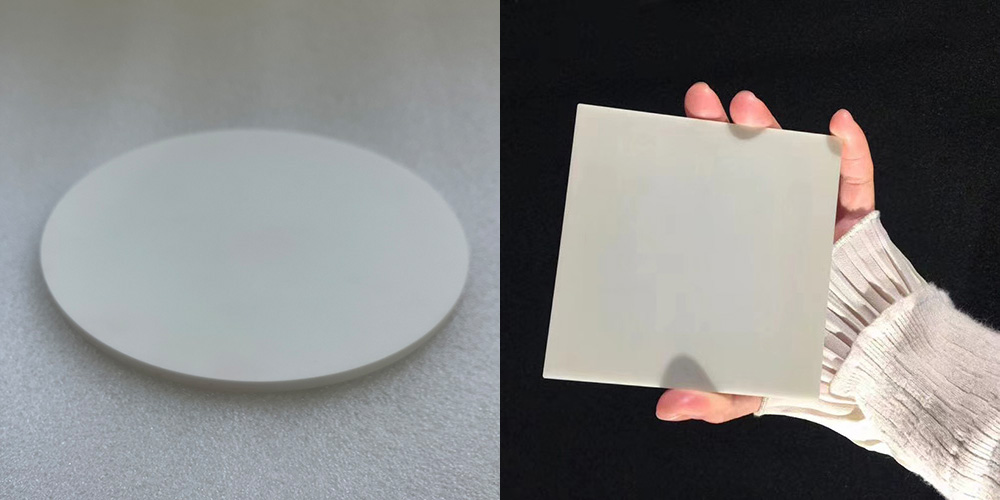
6. Typical Applications: When Should You Choose AlN or Al₂O₃?
The best material depends on the operating conditions and performance requirements of the final component.
| Application | Recommended Material | Main Reason |
|---|---|---|
| High-Power Semiconductor Substrates | AlN | High thermal conductivity and electrical insulation |
| LED Packaging | AlN | Efficient heat dissipation |
| Power Electronic Modules | AlN | Thermal management and electrical isolation |
| General Electrical Insulators | Al₂O₃ | Reliable insulation and lower cost |
| Wear-Resistant Ceramic Components | Al₂O₃ | High hardness and wear resistance |
| Ceramic Tubes and Supports | Al₂O₃ | Established processing and good chemical stability |
| Thermally Conductive Insulating Components | AlN | Higher heat transfer capability |
| General-Purpose Technical Ceramics | Al₂O₃ | Balanced performance and cost |
Choose Aluminum Nitride When:
- High thermal conductivity is a critical requirement.
- Heat must be dissipated through an electrically insulating component.
- Low thermal expansion is beneficial for the assembly.
- The application involves power electronics, semiconductor packaging or thermal management.
- The performance benefits justify the higher material and processing costs.
Choose Alumina When:
- Electrical insulation is the primary requirement.
- Moderate thermal conductivity is sufficient.
- High hardness and wear resistance are important.
- Chemical stability is a major consideration.
- Cost control is more important than maximum heat transfer.
What About Other Thermal Management Materials?
AlN and alumina are not the only ceramic materials used for thermal management.
For polymer-based applications such as thermal gels, thermal pads and electronic encapsulation materials, aluminum nitride powder can also be used as a thermally conductive and electrically insulating filler.
Spherical AlN powder is particularly relevant to formulations where particle packing and flowability are important.
Read more:
7. Aluminum Nitride Powder: Key Selection Factors
For manufacturers producing AlN ceramic components, powder quality is an important part of the material selection process.
The properties of the starting powder influence forming, sintering, densification and the performance of the final ceramic.
The main parameters to consider include:
- Purity: The total purity and impurity profile should be appropriate for the intended application.
- Oxygen Content: Oxygen can influence the thermal conductivity of the final AlN ceramic.
- Particle Size: Particle size distribution affects powder packing, forming behaviour and sintering.
- Morphology: Particle shape and surface characteristics can influence flowability, dispersion and packing density.
- Moisture Sensitivity: AlN can react with moisture, so packaging, storage and exposure conditions should be considered.
The most suitable powder grade should be selected according to the intended processing method and required properties of the final component.
For a more detailed evaluation of these parameters, see our guide:
8. Frequently Asked Questions
1. Is Aluminum Nitride More Thermally Conductive Than Alumina?
Yes. Dense aluminum nitride ceramics typically have thermal conductivity of approximately 140–180 W/(m·K), while high-purity alumina ceramics commonly fall around 20–35 W/(m·K). Exact values depend on grade, density, microstructure and processing conditions.
2. Is AlN a Better Electrical Insulator Than Al₂O₃?
Both materials provide excellent electrical insulation.
AlN is particularly advantageous when high thermal conductivity and electrical insulation are required in the same component. Alumina remains a reliable and economical insulating ceramic for many applications.
3. Why Is Aluminum Nitride More Expensive Than Alumina?
AlN generally involves more demanding powder production, oxygen control and sintering processes.
High-performance AlN ceramics require careful control of purity, microstructure and density, which contributes to higher manufacturing costs.
4. Can Alumina Replace Aluminum Nitride?
In some applications, yes.
If the required thermal conductivity is moderate, alumina may be a suitable and more economical alternative.
However, it may not provide sufficient heat transfer for high-power electronic components or compact thermal management systems.
5. Is Aluminum Nitride Powder Suitable for Thermal Interface Materials?
Yes. AlN powder is used as a thermally conductive and electrically insulating filler in polymer-based thermal interface materials.
Particle size, morphology, surface characteristics and loading level all influence the performance of the finished formulation.
6. Does Higher-Purity AlN Powder Always Provide Higher Thermal Conductivity?
Not necessarily.
Purity is important, but thermal conductivity also depends on oxygen content, lattice defects, sintering conditions, density and microstructure.
A complete evaluation should consider these factors together.
7. Which Material Is Better for Semiconductor Applications?
The choice depends on the specific component.
AlN is often preferred for semiconductor substrates and packaging that require high thermal conductivity and electrical isolation.
Alumina remains widely used for insulating supports, packages and other components where its thermal performance is sufficient.
9. Conclusion
Aluminum nitride and alumina both play important roles in advanced ceramic applications, but they address different engineering priorities.
Aluminum nitride is the stronger choice when high thermal conductivity must be combined with electrical insulation. Its relatively low thermal expansion also makes it attractive for selected electronic and semiconductor applications.
Alumina offers a more economical solution for general electrical insulation, wear-resistant components and structural ceramics. Its mature manufacturing processes and balanced properties make it suitable for a wide range of industrial applications.
The right choice depends on the component’s thermal, electrical, mechanical and processing requirements, together with the overall manufacturing cost.
References
- [1] Wang, S. F., et al. (2024). Relations among composition, microstructure, and mechanical and dielectric properties from 1 MHz to 100 GHz of aluminum nitride substrates. Journal of Alloys and Compounds, 1005, 176147.
- [2] The quantitative investigation of the lattice oxygen and grain edge oxygen on the thermal conductivity of aluminum nitride ceramics. (2023). Journal of the European Ceramic Society, 43(2), 313–320.
- [3] Huda, N., Whitney, M. A., Razmpoosh, M. H., Gerlich, A. P., Wen, J. Z., & Corbin, S. F. (2021). How phase (α and γ) and porosity affect specific heat capacity and thermal conductivity of thermal storage alumina. Journal of the American Ceramic Society, 104(3), 1436–1447.
- [4] Ying, F., et al. (2025). Removing lattice oxygen and manipulating the microstructure to obtain high thermal conductivity aluminum nitride ceramics. Ceramics International, 51, 60683–60695.
Further Reading
- Aluminum Nitride (AlN): Properties, Uses and Applications
- AlN Powder Specifications: Purity, Particle Size and Quality Control
- How to Make Aluminium Nitride Powder?
- Spherical Aluminum Nitride Powder: Properties, Particle Sizes and Applications
- What Is Aluminum Oxynitride (AlON)? Properties, Structure and Applications
Need Aluminum Nitride Powder for Your Application?
VIMATERIAL supplies aluminum nitride powder for advanced ceramic processing and thermal management applications.
Available specifications include different purity levels and particle size ranges, including fine, submicron, micron-sized and spherical AlN powder.
Contact our team to discuss your required purity, particle size, oxygen content, packaging and application requirements.