


Aluminium oxynitride (AlON) is an advanced transparent polycrystalline ceramic composed of aluminum, oxygen, and nitrogen. It is best known for combining optical transparency with high hardness, mechanical strength, thermal stability, and chemical resistance.
Because of this combination of properties, AlON is used or investigated for demanding applications such as infrared windows, transparent armor, aerospace optics, high-temperature observation windows, semiconductor equipment, and protective optical components.
This article explains what AlON is, why it can be transparent, its key properties, and where it is used.
What Does AlON Stand For?
AlON stands for aluminum oxynitride.
From a crystal-chemical perspective, aluminium oxynitride is associated with the AlN–Al₂O₃ system and can be regarded as an aluminum oxynitride solid-solution system rather than simply a conventional single stoichiometric compound.
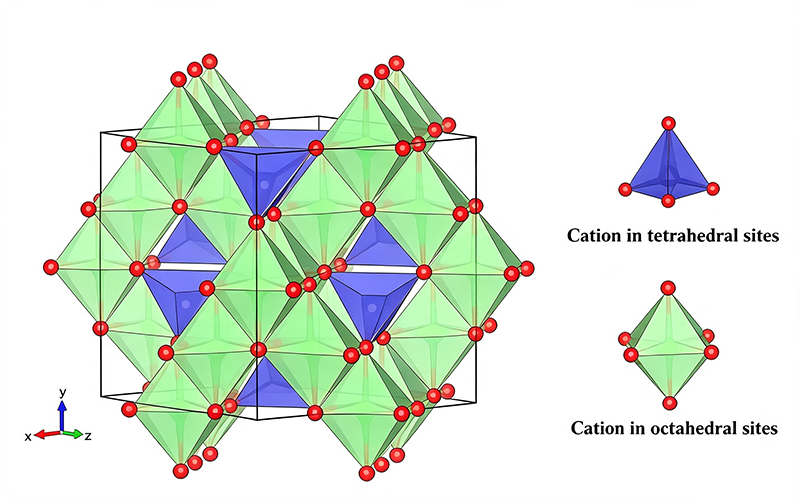
Several aluminum oxynitride phases have been identified, but the phase most relevant to transparent ceramic applications is γ-AlON, which has a spinel-type crystal structure.
Therefore, when engineers and researchers refer to AlON transparent ceramic, they generally mean material based on the γ-AlON phase.
What Is γ-AlON?
γ-AlON is a spinel-structured aluminium oxynitride phase in the AlN–Al₂O₃ system.
Research into this system began decades ago, with early work suggesting the existence of a spinel-type phase. Subsequent studies confirmed aluminum oxynitride phases and investigated their crystal structures and phase relationships.
Today, γ-AlON is particularly important because it can be processed into dense, transparent polycrystalline ceramic.
Why Is AlON Transparent?
Most conventional ceramics are opaque because pores, grain boundaries, impurities, and microstructural defects scatter visible and infrared light.
Transparent AlON is produced by controlling these factors during powder preparation and ceramic processing.
The key requirements include:
- High-purity raw materials
- Fine and well-dispersed powder
- Controlled phase composition
- High densification
- Very low residual porosity
- Controlled grain structure
- Proper surface finishing
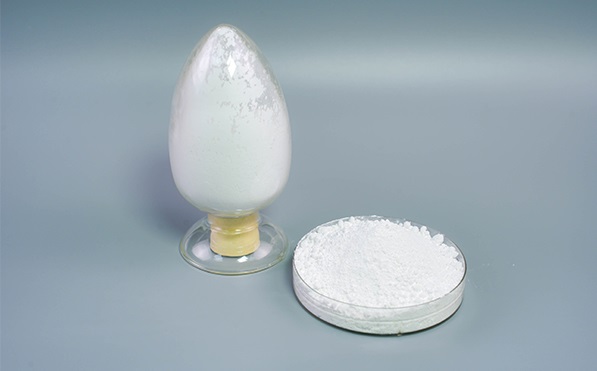
AlON powder itself is not transparent. Individual powder particles scatter light, so the powder appears opaque. Transparency develops after the material is processed into a highly dense ceramic with controlled microstructure.
For more information, see [AlON Powder: Properties, Synthesis Methods and Applications].
Key Properties of Aluminium Oxynitride
AlON is attractive because several useful properties are combined in one ceramic material.
Optical Transparency
AlON transparent ceramic provides high optical transmission over a broad wavelength range, extending from the visible region toward the infrared.
The supplied technical data reports optical transmission above 80% over approximately 0.2–6.0 μm under suitable conditions, while a representative comparison gives about 85% transmission in the 3–5 μm range.
High Hardness
AlON has high hardness and good resistance to scratching and abrasion.
This is important for protective windows and transparent armor exposed to mechanical contact, dust, sand, and wear.
Mechanical Strength
AlON combines optical transparency with useful mechanical strength.
This makes it attractive where ordinary glass may not provide sufficient resistance to impact or mechanical loading.
Thermal Stability
AlON provides good thermal stability and thermal-shock resistance, supporting applications in demanding thermal environments.
Chemical Resistance
AlON also provides good resistance to chemical attack and corrosion.
This characteristic is particularly relevant to semiconductor-processing equipment and other applications involving chemically aggressive environments.
Optical and Mechanical Isotropy
One important feature of AlON transparent ceramic is its optical and mechanical isotropy. This can be advantageous when compared with materials that depend on a specific single-crystal orientation.
AlON vs. Sapphire and Spinel
AlON is frequently considered alongside sapphire and magnesium aluminate spinel (MgAl₂O₄) for transparent optical and infrared applications.
A representative comparison from the supplied technical material is:
| Property | AlON | Sapphire | MgAl₂O₄ Spinel |
|---|---|---|---|
| Density (g/cm³) | 3.7 | 3.98 | 3.59 |
| Flexural strength (MPa) | 300 | 400 | 184 |
| Hardness (GPa) | 18.5 | 22.0 | 15.2 |
| Transmission, 3–5 μm | 85% | 85% | 85% |
| Dielectric constant | 9.3 | 9.4 | 9.2 |
| Dielectric loss | 0.0022 | 0.0005 | 0.0027 |
These values are representative and can vary with material quality, processing conditions, density, and measurement method.
Sapphire provides excellent mechanical and optical properties but can be difficult and expensive to manufacture into large or complex components. Spinel provides excellent optical performance and relatively low density but may have lower mechanical strength.
AlON offers a useful balance between optical performance, mechanical properties, and manufacturing flexibility.
Read our detailed comparison: [AlON vs. Sapphire vs. Spinel: Which Transparent Ceramic Is Better?]
How Is AlON Made?
AlON transparent ceramic can be manufactured using either a one-step or two-step approach.
In a one-step route, the starting powders are mixed, shaped, and sintered directly.
In a two-step route, high-purity AlON powder is first synthesized and then processed into the final ceramic.
The two-step approach provides better control over powder composition and microstructure and is particularly important for producing highly dense transparent ceramics.
Common AlON powder synthesis methods include:
- High-temperature solid-state reaction
- Carbothermal reduction and nitridation (CRN)
- Other specialized synthesis routes
The subsequent ceramic processing stage can involve:
- Pressureless sintering
- Hot pressing
- Microwave sintering
- Spark plasma sintering
- Other advanced densification methods
For a detailed explanation, see [How Is Transparent AlON Ceramic Made? Powder Processing, Forming and Sintering [How Is Transparent AlON Ceramic Made? Powder Processing, Forming and Sintering].
Applications of AlON
AlON transparent ceramics are used or investigated for applications where optical transmission must be combined with mechanical, thermal, or chemical performance.
Major application areas include:
- Infrared windows
- Transparent armor
- Aerospace and defense optics
- High-temperature observation windows
- POS scanner windows
- Semiconductor-processing components
- Precision optical components
- Protective windows
The combination of optical transparency, hardness, strength, and environmental resistance is particularly valuable for infrared windows and transparent protective components.
For more information, see [AlON Transparent Ceramics: Applications in Infrared Windows and Transparent Armor].
Frequently Asked Questions
Is AlON a ceramic?
Yes. Aluminum oxynitride (AlON) is an advanced polycrystalline ceramic.
Is AlON transparent?
Dense, properly processed AlON ceramic can be optically transparent. AlON powder itself is not transparent because individual particles scatter light.
What is γ-AlON?
γ-AlON is the spinel-structured aluminum oxynitride phase most commonly associated with transparent AlON ceramic.
What is AlON used for?
AlON is used or investigated for infrared windows, transparent armor, aerospace optics, high-temperature observation windows, semiconductor equipment, and protective optical components.
Is AlON the same as sapphire?
No. Sapphire is single-crystal Al₂O₃, while AlON is an aluminum oxynitride ceramic associated with the AlN–Al₂O₃ system.
Conclusion
Aluminum oxynitride (AlON) is an advanced transparent ceramic that combines optical transmission with high hardness, mechanical strength, thermal stability, and chemical resistance.
Its balanced properties make it an important material for infrared optics, transparent protection, aerospace applications, and selected semiconductor and industrial components.
For AlON performance, powder quality and ceramic processing are just as important as the material’s composition. High-purity powder, controlled phase formation, effective densification, and low residual porosity are essential for achieving high-quality transparent AlON ceramic.
References
- [1] McCauley, J. W., & Corbin, N. D. (1979). Phase relations and reaction sintering of transparent cubic aluminum oxynitride spinel (ALON). Journal of the American Ceramic Society, 62(9–10), 476–479. https://doi.org/10.1111/j.1151-2916.1979.tb19109.x
- [2] Corbin, N. D. (1989). Aluminum oxynitride spinel: A review. Journal of the European Ceramic Society, 5(3), 143–154. https://doi.org/10.1016/0955-2219(89)90030-7
- [3] McCauley, J. W., Patel, P., Chen, M., Gilde, G., Strassburger, E., Paliwal, B., Ramesh, K. T., & Dandekar, D. P. (2009). AlON: A brief history of its emergence and evolution. Journal of the European Ceramic Society, 29(2), 223–236. https://doi.org/10.1016/j.jeurceramsoc.2008.03.046
- [4] Hartnett, T. M., Bernstein, S. D., Maguire, E. A., & Tustison, R. W. (1998). Optical properties of ALON (aluminum oxynitride). Infrared Physics & Technology, 39(4), 203–211. https://doi.org/10.1016/S1350-4495(98)00007-3
Further Reading
If you’re interested in aluminum oxynitride and other advanced ceramic materials, you may also find these articles helpful:
- Why Is Barium Titanate Called the “Pillar of the Electronic Ceramics Industry”?
- Si3N4 vs SiC: A quick guide of these two ceramic materials.
- What’s boron nitride?
- Hexagonal Boron Nitride (h-BN): A Versatile High-Performance Material Across Multiple Industries
- High Purity Titanium Carbide: The “Ultra-Hard Pioneer” Powering Advanced Technologies
Need a Custom Material Solution?
Looking for high-purity aluminum oxynitride (AlON) powder or a customized AlON material solution? VIMATERIAL can provide AlON materials with tailored purity, particle size, composition, and specifications to meet your research, optical, ceramic, and advanced manufacturing requirements.
Whether you need AlON for transparent ceramics, infrared windows, protective optics, semiconductor equipment, or high-temperature applications, our technical team can help you select the appropriate material and specifications for your project.
Contact VIMATERIAL today to discuss your AlON requirements and request a customized solution or quotation.