


Barium titanate (BaTiO₃) is a typical perovskite-structured ferroelectric material. It exhibits a high dielectric constant, low dielectric loss, high resistivity, excellent insulation properties, and strong dielectric breakdown strength. In addition, BaTiO₃ shows remarkable ferroelectric and piezoelectric properties.
Due to these outstanding characteristics, BaTiO₃ is widely used in multilayer ceramic capacitors (MLCCs), thermistors (PTC/PTCR), optoelectronic devices, and ferroelectric random-access memory (FRAM). As a fundamental raw material for electronic functional ceramics, BaTiO₃ plays an essential role in the electronics industry and is therefore widely referred to as the “pillar of the electronic ceramics industry.”
Characteristics and Properties of Barium Titanate
Characteristics of Tetragonal BaTiO₃
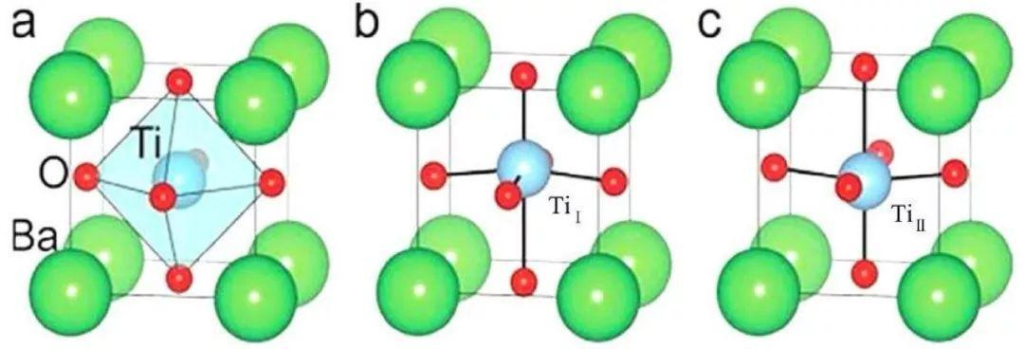
Barium titanate (BaTiO₃), a typical ABO₃-type functional material, exists mainly in two crystal phases: the cubic phase (paraelectric phase) and the tetragonal phase (ferroelectric phase).
The cubic phase has a highly symmetric structure and exhibits paraelectric behavior, functioning as an isotropic dielectric material. In contrast, the tetragonal phase possesses spontaneous polarization due to its asymmetric crystal structure. This characteristic gives BaTiO₃ excellent ferroelectric, piezoelectric, and pyroelectric properties, as well as the ability for energy harvesting.
Because of these properties, tetragonal BaTiO₃ has been widely applied in the ceramics industry, including multilayer ceramic capacitors, dynamic random-access memory, thermistors, and other electronic components.
Nanoscale Properties and Applications
When the particle size of BaTiO₃ is reduced to the nanoscale, it exhibits unique photoluminescence and photocatalytic activities, which make it promising for applications such as the degradation of organic pollutants.
These optical properties originate from the nanoscale tetragonal crystal structure. Notably, many of the physical properties of nanosized Barium titanate are strongly dependent on particle size, demonstrating a significant size effect.
Studies have shown that as the particle size decreases:
- The dielectric constant, Curie temperature, and dielectric loss tend to decrease.
- The flexural rigidity of BaTiO₃ increases.
- The photoluminescence properties are significantly affected by particle size.
Preparation Methods of Barium Titanate
The preparation of Barium titanate powders is crucial for electronic ceramic materials. Because of its extensive applications in electronic ceramics, significant attention has been devoted to the synthesis of BaTiO₃ powders.
Currently, the commonly used preparation methods include:
- Solid-state reaction method
- Hydrothermal method
- Sol–gel method
- Oxalate co-precipitation method
- Direct precipitation method
Solid-State Reaction Method
The solid-state reaction method is a traditional and low-cost technique for preparing BaTiO₃. However, it generally results in larger particle sizes and particle agglomeration, which can affect the uniformity and performance of the final ceramic material.
Hydrothermal Method
In the hydrothermal method, a Ba(OH)₂ aqueous solution containing dispersed TiO₂ particles is treated in a sealed pressure vessel using water as the reaction medium. Under controlled temperature and pressure conditions, BaTiO₃ powders are formed.
Barium titanate produced by this method typically has:
- Well-developed crystal structures
- Small particle sizes
- Uniform particle distribution
- Reduced agglomeration
Additionally, the method requires relatively low raw material costs and does not require high-temperature calcination, which helps reduce impurity contamination and particle aggregation. However, the reaction conditions are strict and require specialized equipment and technical control.
Sol–Gel Method
The sol–gel method involves the hydrolysis and condensation of metal alkoxides or inorganic salts in a specific solvent to form a gel, which is then dried and processed to obtain Barium titanate powders.
This method produces powders with:
- High chemical homogeneity
- High purity
- Small particle size
- Narrow particle size distribution
- High chemical activity
However, the sol–gel process has disadvantages such as high cost, complex processing steps, and particle agglomeration, which limit its large-scale industrial application.
What is barium titanate used for in electronics?
Multilayer Ceramic Capacitors (MLCC)
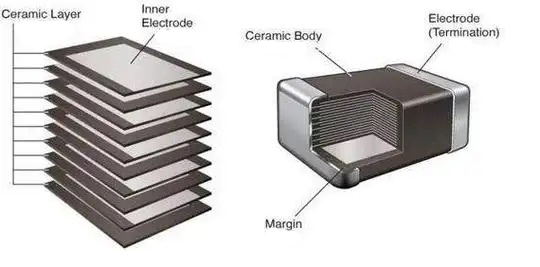
Thanks to its excellent electrical properties, Barium titanate plays a crucial role in the electronics and ceramics industries. It is widely used in the manufacture of multilayer ceramic capacitors (MLCCs), single-layer ceramic capacitors, thermistors, piezoelectric ceramics, and microwave ceramics.
As the key dielectric material in MLCCs, BaTiO₃ supports functions such as oscillation and signal filtering in electronic circuits.
Microwave Dielectric Ceramics
Microwave dielectric ceramics are a new class of electronic materials widely used in communication technologies.
BaTiO₃ can be used to produce:
- Dielectric filters
- Resonators
- Substrates
- Dielectric antennas
- Dielectric waveguide circuits
Adjusting the TiO₂ content can improve the dielectric properties of BaTiO₃ ceramics. In addition, BaTiO₃ can enhance antenna radiation efficiency and bandwidth when used in microwave antenna materials.
PTC/PTCR Thermistors
Due to its strong positive temperature coefficient effect, Barium titanate is commonly used to manufacture thermosensitive ceramic components.
A PTC/PTCR thermistor is a special device whose electrical resistance increases sharply as temperature rises. This characteristic makes it widely used for temperature sensing, circuit protection, and current limiting.
BaTiO₃-based PTC thermistors are therefore commonly applied in temperature detection and circuit protection systems.
Piezoelectric Ceramics
BaTiO₃ is one of the earliest discovered lead-free piezoelectric ceramic materials. It possesses strong capabilities for energy conversion, acoustic conversion, and signal conversion.
It can also be used to construct devices based on piezoelectric equivalent circuits, including oscillators, microwave devices, and sensors.
Although the piezoelectric performance of BaTiO₃-based ceramics still requires improvement, the growing demand for lead-free materials has renewed interest in BaTiO₃ as a potential alternative to PZT (lead zirconate titanate).
Ferroelectric Properties and Memory Devices
Ferroelectricity refers to the ability of a crystal to exhibit spontaneous polarization, where the direction of polarization can be reversed under an external electric field.
Due to its excellent ferroelectric properties, BaTiO₃ can be used in:
- Ferroelectric random-access memory (FRAM)
- Ferroelectric field-effect transistors (FFET)
- Ferroelectric dynamic random-access memory (FDRAM)
Future Prospects of Barium Titanate
With the continuous miniaturization and integration of electronic devices, higher requirements are being placed on the performance and size of electronic components. As a high-performance electronic ceramic material, BaTiO₃ plays an important role in meeting these demands.
Beyond traditional electronic applications, Barium titanate also shows great potential in emerging fields such as:
- New energy vehicles
- Smart grids
- Internet of Things (IoT)
These industries require high-performance capacitors, sensors, and electronic components, further increasing the demand for BaTiO₃ materials.
Moreover, with ongoing technological advancements, the applications of BaTiO₃ in optics, microwave technology, and biomedical engineering are expected to expand further, providing new opportunities for its development.