


Niobium disilicide (NbSi₂), also known as niobium silicide, is an intermetallic compound composed of niobium and silicon. It belongs to the transition metal silicide family and is characterised by its high melting point, relatively low density, electrical conductivity and potential for high-temperature applications.
Due to its thermal stability and oxidation behaviour, NbSi₂ has attracted interest in the development of high-temperature structural materials, protective coatings and advanced functional materials. It can also be used as a starting material in powder metallurgy, ceramic research and thin-film deposition processes.
VIMATERIAL supplies high-purity niobium disilicide powder and sputtering targets with a purity of 99.5%. Powder is available in -200 mesh and -325 mesh grades, while sputtering targets can be supplied in circular, square and rectangular shapes, with standard and customised dimensions.
1. What Is Niobium Disilicide (NbSi₂)?
Niobium disilicide is a binary intermetallic compound formed by niobium (Nb) and silicon (Si), with the chemical formula NbSi₂. It contains one niobium atom and two silicon atoms in its stoichiometric composition.
It is commonly identified by the following chemical information:
| Property | Value |
|---|---|
| Chemical name | Niobium Disilicide |
| Alternative name | Niobium Silicide |
| Chemical formula | NbSi2 |
| CAS number | 12034-80-9 |
| Molecular weight | 149.08 g/mol |
| Appearance | Grey to dark grey solid |
| Crystal structure | Hexagonal |
| Space group | P6/mmm |
| Density | Approximately 5.7 g/cm³ |
| Melting point | Approximately 1940–1950°C |
NbSi₂ is a refractory intermetallic compound with a relatively high melting point. Its combination of thermal stability, electrical properties and oxidation behaviour makes it a material of interest in high-temperature engineering and advanced materials research.
2. Physical and Chemical Properties of NbSi₂
The properties of niobium disilicide are relevant to its selection for high-temperature materials, coatings and other specialised applications.
2.1 Crystal Structure and Appearance
Niobium disilicide has a hexagonal crystal structure and typically appears as a grey solid or powder. Its crystal structure and chemical composition influence its physical and functional properties.
The material is generally characterised by relatively high hardness and limited room-temperature ductility, which are typical considerations when processing refractory intermetallic compounds.
2.2 Thermal Properties
One of the important characteristics of NbSi₂ is its high melting point, reported at approximately 1940–1950°C.
This thermal characteristic makes it relevant to research involving high-temperature materials and components exposed to elevated operating temperatures.
Its reported thermal expansion coefficient is approximately 7.3 × 10⁻⁶ K⁻¹. This property can be considered when evaluating its compatibility with other materials in composite systems and protective coatings.
2.3 Mechanical Properties
Niobium disilicide exhibits relatively high hardness. Reported values include:
- Microhardness: approximately 10.3 GPa.
- Vickers hardness: approximately 5.88–6.88 GPa.
Although its hardness is beneficial for certain material applications, its brittleness can present challenges during machining and component fabrication.
For this reason, NbSi₂ is also investigated as a constituent of multiphase niobium-silicon materials, where different phases can contribute complementary mechanical properties.
2.4 Electrical Properties
NbSi₂ is an electrically conductive intermetallic compound.
Its electrical behaviour makes it relevant to research involving functional materials, conductive coatings and thin-film systems.
The electrical properties of deposited films can vary depending on deposition conditions, film composition, microstructure and substrate characteristics.
2.5 Oxidation Resistance and Chemical Stability
An important characteristic of niobium disilicide is its oxidation behaviour at elevated temperatures.
Under suitable oxidation conditions, silicon in NbSi₂ can contribute to the formation of a silicon dioxide (SiO₂)-rich oxide scale on the material surface. This oxide layer can act as a protective barrier, slowing further oxidation.
This characteristic has made niobium silicides interesting candidates for high-temperature oxidation protection and protective coating research.
However, actual oxidation resistance depends on temperature, atmosphere, exposure time, material composition and coating microstructure.

3. Applications of Niobium Disilicide
Niobium disilicide is investigated in several advanced materials fields, particularly those involving high temperatures, oxidation resistance and functional material properties.
3.1 High-Temperature Structural Materials
NbSi₂ is of interest in the development of refractory intermetallic materials and niobium-silicon-based alloys.
Its high melting point and thermal stability make it a potential constituent in materials designed for elevated-temperature environments.
Research into Nb-Si-based alloys often focuses on combining high-temperature strength with improved room-temperature toughness through multiphase microstructural design.
In these systems, different niobium silicide phases and niobium-rich solid solutions can contribute different mechanical characteristics.
3.2 High-Temperature Protective Coatings
The oxidation behaviour of niobium silicides makes them relevant to research into protective coatings for high-temperature components.
The formation of a SiO₂-rich surface layer can help limit oxygen diffusion under appropriate conditions.
Potential research areas include:
- Oxidation-resistant coatings.
- High-temperature protective layers.
- Refractory material surface protection.
- Coating systems for aerospace and energy-related components.
The performance of a coating depends on its composition, processing method, adhesion and operating environment.
3.3 Aerospace and Turbine Materials Research
Advanced niobium-silicon-based alloys are being investigated as potential alternatives to conventional high-temperature structural materials.
Their development is particularly relevant to research into turbine components and other engineering systems exposed to elevated temperatures.
NbSi₂ can serve as a constituent in these material systems, although its suitability for a specific component depends on the overall alloy composition and microstructure.
3.4 Electronic and Functional Materials
Niobium disilicide is also relevant to research involving electrically conductive materials and thin films.
When used as a sputtering source material, NbSi₂ targets can support the deposition of niobium-silicon-containing films for materials development and functional coating research.
Film composition and properties depend on factors such as target composition, sputtering power, working pressure, substrate temperature and deposition atmosphere.
3.5 Ceramic and Composite Materials
NbSi₂ can be investigated as a constituent or additive in advanced ceramic and composite systems.
It is also of interest in research involving other transition metal silicides, including molybdenum disilicide (MoSi₂) and zirconium disilicide (ZrSi₂).
Such material systems can be explored for applications requiring specific combinations of thermal, mechanical and functional properties.
4. Preparation Methods of Niobium Disilicide
Niobium disilicide can be prepared through different synthesis routes. The selection of a suitable method depends on the required purity, phase composition, particle characteristics and final material form.
4.1 Solid-State Reaction
Solid-state reaction is a preparation route involving the reaction of niobium and silicon powders at elevated temperatures.
The process generally involves:
- Selecting niobium and silicon raw materials.
- Weighing the materials according to the required Nb ratio.
- Mixing the powders to achieve a uniform composition.
- Conducting a high-temperature reaction under controlled conditions.
- Cooling and processing the resulting material.
The reaction temperature, holding time and atmosphere influence the formation of the desired niobium silicide phase.
4.2 Arc Melting
Arc melting is another method used to prepare intermetallic compounds.
In this process, niobium and silicon raw materials are melted using an electric arc under a controlled protective atmosphere, commonly argon.
After melting and solidification, the resulting material can be processed further depending on its intended application.
4.3 Reduction Methods
Reduction-based synthesis routes can also be used to prepare niobium silicide materials.
For example, niobium oxide and silicon-containing raw materials may be used in high-temperature reduction processes.
The reaction conditions and raw material ratios must be carefully controlled to obtain the desired phase composition and minimise unwanted impurities.
5. Niobium Disilicide Powder and Sputtering Targets
Niobium disilicide is available in different physical forms depending on the intended application. Powder and sputtering targets are two important forms used in advanced materials research and manufacturing.
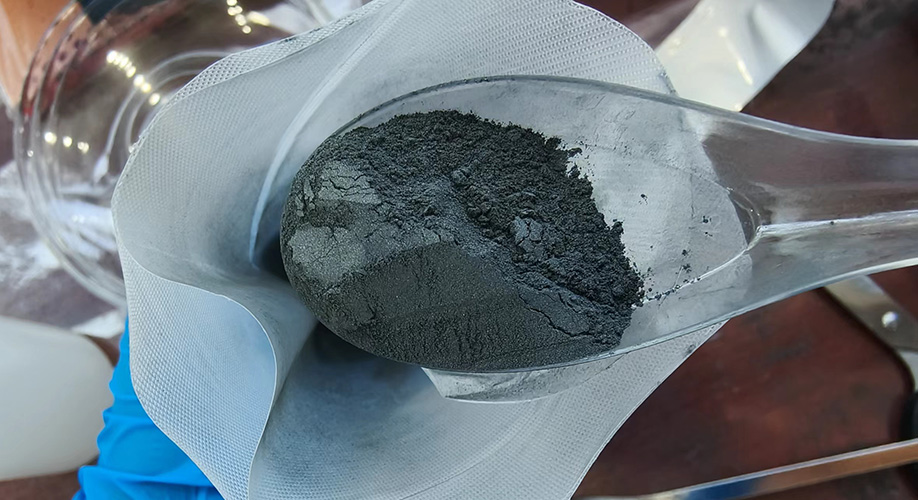
NbSi₂ powder is used in materials synthesis, powder processing, composite development and other research applications.
Particle size is an important consideration when selecting niobium disilicide powder. It can influence powder mixing, packing behaviour, reaction kinetics and processing characteristics.
VIMATERIAL supplies niobium disilicide powder with a purity of 99.5%.
Available specifications:
| Property | Specification |
|---|---|
| Chemical formula | NbSi2 |
| Purity | 99.5% |
| Particle size | -200 Mesh |
| Particle size | -325 Mesh |
| Appearance | Grey powder |
Different particle size requirements can be discussed according to specific application and processing needs.
Niobium disilicide sputtering targets are used as source materials in physical vapour deposition (PVD) processes.
During magnetron sputtering, energetic ions bombard the target surface, releasing material that can subsequently deposit onto a substrate to form a thin film.
NbSi₂ targets can be considered for the preparation of niobium-silicon-containing coatings and thin films for materials research and functional applications.
Target dimensions, geometry and bonding configuration should be selected according to the sputtering equipment and process requirements.
Available specifications:
| Property | Specification |
|---|---|
| Material | Niobium Disilicide (NbSi2) |
| Purity | 99.5% |
| Standard size | Ø 50.8 mm × 3.175 mm, etc |
| Shape | Circular, Square and Rectangular |
| Dimensions | Standard and Customised Sizes |
VIMATERIAL can supply NbSi₂ sputtering targets in different shapes and dimensions according to customer drawings and technical requirements.
Custom target manufacturing and bonding services can also be discussed for specific sputtering systems.
6. Factors to Consider When Selecting NbSi₂ Materials
When purchasing niobium disilicide for research or industrial applications, several technical factors should be considered.
6.1 Purity
Material purity can influence phase composition, electrical behaviour, oxidation performance and processing results.
For applications requiring controlled material composition, it is important to confirm the purity specification and impurity analysis requirements with the supplier.
6.2 Particle Size
For powder applications, particle size can affect mixing, dispersion, packing density and subsequent processing.
The appropriate mesh grade should be selected according to the intended manufacturing or research process.
6.3 Target Dimensions and Geometry
For sputtering applications, target dimensions must be compatible with the deposition equipment.
Important considerations include:
- Target diameter and thickness.
- Circular, square or rectangular geometry.
- Target-to-backing-plate compatibility.
- Bonding requirements.
- Custom dimensions and machining tolerances.
6.4 Packaging and Storage
Niobium disilicide powder should be stored in sealed packaging in a dry environment to minimise moisture exposure and potential contamination.
For powder handling, appropriate dust-control measures and personal protective equipment should be used.
7. Frequently Asked Questions
1. What is the chemical formula of niobium disilicide?
The chemical formula of niobium disilicide is NbSi₂. It consists of niobium and silicon in a 1:2 atomic ratio.
2. What is the CAS number of NbSi₂?
The CAS number of niobium disilicide is 12034-80-9.
3. What is the melting point of niobium disilicide?
The reported melting point of NbSi₂ is approximately 1940–1950°C, although reference values may vary.
4. What is the density of NbSi₂?
The density of niobium disilicide is approximately 5.7 g/cm³.
5. Is niobium disilicide electrically conductive?
Yes. NbSi₂ is an electrically conductive intermetallic compound and is of interest in functional materials and thin-film research.
6. What are the main applications of niobium disilicide?
Research applications include high-temperature structural materials, oxidation-resistant coatings, niobium-silicon-based alloys, ceramic composites and functional thin films.
References
- [1] Ovalı, D., Ağaoğulları, D., & Öveçoğlu, M. L. (2019). Mechanochemical synthesis and characterisation of niobium silicide nanoparticles. Ceramics International, 45(8), 10654–10663.
- [2] Rude, C. D., Chow, T. P., & Steckl, A. J. (1982). Characterization of NbSi₂ thin films. Journal of Applied Physics, 53(8), 5703–5709.
- [3] Song, B., Feng, P., Wang, J., Ge, Y., Wu, G., Wang, X., & Farid, A. (2014). Oxidation properties of self-propagating high temperature synthesized niobium disilicide. Corrosion Science, 85, 311–317.
- [4] Sakamoto, H., Fujii, A., Tanaka, K., & Inui, H. (2005). Enantiomorph identification of transition-metal disilicides with the C40 structure (the space groups of P6₂22 and P6₄22) by new convergent-beam electron diffraction method. Acta Materialia, 53(1), 41–52.
- [5] Insight into the electronic and thermodynamic properties of NbSi₂ from first-principles calculations. (2018). RSC Advances.
- [6] PubChem. Niobium Silicide (NbSi₂), CID 6336884.
Further Reading
- What Is Niobium Diboride (NbB₂)? Properties, Preparation, Applications and Advantages
- What Is Niobium Oxide? Properties, Uses, and How to Store It
- Cerium Silicide – The “Magician” of the Rare Earth World
- Hafnium Diboride vs Zirconium Diboride: Properties and High-Temperature Applications
- Advanced Silicon Nitride (Si3N4): Performance, Applications, and Prospects
Looking for Niobium Disilicde Materials?
VIMATERIAL supplies high-purity niobium disilicide materials for research, development and industrial applications.
Our available products include:
- Niobium Disilicide Powder: 99.5% purity, available in -200 mesh and -325 mesh.
- Niobium Disilicide Sputtering Targets: 99.5% purity, available in circular, square and rectangular shapes.
- Custom Specifications: Dimensions and configurations can be discussed according to customer requirements.
- Target Bonding: Bonding services are available for compatible sputtering target assemblies.
Whether you require NbSi₂ powder for material synthesis or sputtering targets for thin-film deposition, our team can assist with material specifications and product selection.
Contact VIMATERIAL to discuss your niobium disilicide requirements or request a quotation.