


Niobium diboride (NbB₂) is an ultra-high-temperature ceramic (UHTC) known for its exceptional melting point, high hardness, excellent electrical conductivity, and outstanding chemical stability. These characteristics make it an important engineering ceramic for demanding environments such as aerospace, metallurgy, electronics, and advanced ceramic manufacturing.
As research into ultra-high-temperature materials continues to expand, NbB₂ has attracted increasing attention as a candidate material for thermal protection systems, wear-resistant components, electrically conductive ceramics, and high-performance composite materials.
What Is Niobium Diboride?
Niobium diboride is an inorganic ceramic compound composed of niobium and boron with the chemical formula NbB₂. It belongs to the family of transition metal diborides, which also includes titanium diboride (TiB₂), zirconium diboride (ZrB₂), and hafnium diboride (HfB₂).
NbB₂ crystallizes in a hexagonal AlB₂-type crystal structure, where alternating layers of niobium and boron atoms form strong covalent and metallic bonds. This unique structure gives the material an excellent combination of hardness, thermal stability, and electrical conductivity.
Because of its relatively low density compared with many refractory materials and its melting point exceeding 3000°C, niobium diboride is widely regarded as a promising material for extreme-temperature applications.
Chemical and Physical Properties of NbB₂
| Property | Value |
|---|---|
| Chemical Formula | NbB₂ |
| CAS Number | 12007-29-3 |
| Crystal Structure | Hexagonal (AlB₂-type) |
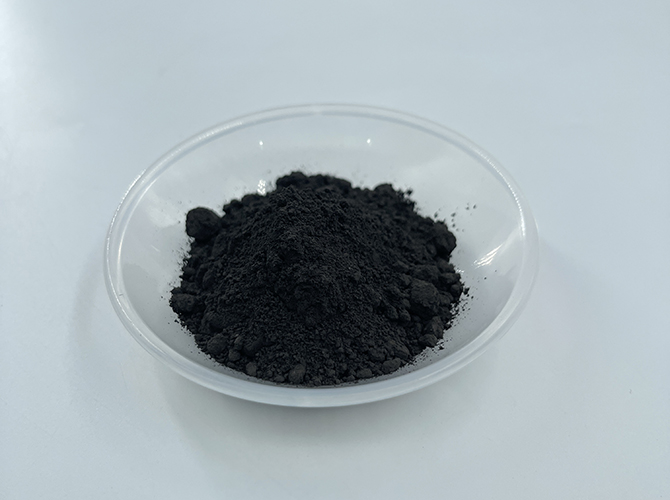
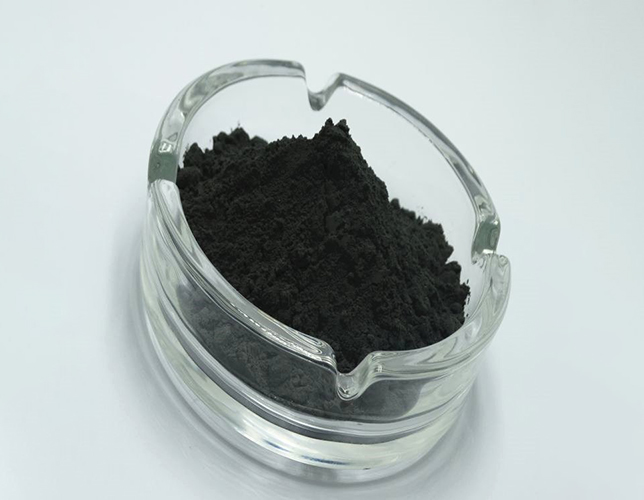
| Appearance | Gray to black-gray powder |
| Molecular Weight | 114.53 g/mol |
| Density | Approximately 6.97 g/cm³ (25°C) |
| Melting Point | Approximately 3050°C |
| Water Solubility | Insoluble in water |
| Electrical Resistivity | 26–65 μΩ·cm |
| Hardness | Very high |
| Thermal Conductivity | Good |
| Chemical Stability | Excellent under normal conditions |
Key Properties of Niobium Diboride
Ultra-High Melting Point
With a melting point of approximately 3050°C, NbB₂ belongs to the class of ultra-high-temperature ceramics capable of maintaining structural stability under extreme thermal conditions.
High Hardness and Wear Resistance
The strong covalent bonding within the crystal lattice provides excellent hardness, making niobium diboride suitable for wear-resistant coatings and structural ceramic components.
Good Electrical and Thermal Conductivity
Unlike many conventional ceramics, NbB₂ exhibits relatively high electrical and thermal conductivity, making it useful for conductive ceramic applications and high-temperature electrical components.
Excellent Chemical Stability
Niobium diboride shows excellent resistance to corrosion and chemical attack under normal operating conditions. It remains stable in many acidic and alkaline environments, although strong oxidizing atmospheres at elevated temperatures can gradually oxidize the material.
Relatively Low Density
Compared with many refractory metals, NbB₂ has a density of only about 6.97 g/cm³, providing an attractive balance between lightweight construction and high-temperature mechanical performance.
How Is Niobium Diboride Prepared?
Several manufacturing methods are used depending on the required purity, particle size, and intended application.
Direct Solid-State Reaction
High-purity niobium powder is mixed with boron powder and reacted at elevated temperatures to produce niobium diboride.
Advantages
- Simple process
- High product purity
- Suitable for industrial-scale production
Carbothermal Reduction
Niobium oxide, boron oxide, and carbon are reacted at high temperature, producing NbB₂ while releasing carbon monoxide.
Advantages
- Economical raw materials
- Suitable for bulk production
Chemical Vapor Deposition (CVD)
For thin-film applications, gaseous niobium and boron precursors react and deposit NbB₂ coatings onto substrates.
Advantages
- High coating quality
- Excellent thickness control
- Suitable for electronic and semiconductor applications
Available Powder Sizes and Specifications
Commercial niobium diboride powder is generally available in both nano and micron grades.
| Specification | Typical Options |
|---|---|
| Purity | ≥99.5% (higher purities available upon request) |
| Nano Powder Size | 20 nm, 50 nm, 100 nm, 200 nm, 500 nm |
| Micron Powder Size | 1 μm, 5 μm, 10 μm, 45 μm |
| Appearance | Black-gray powder |
| Particle Morphology | Irregular particles |
| Customization | Particle size, purity, and packaging can be customized according to customer requirements. |
Applications of Niobium Diboride
Ultra-High-Temperature Aerospace Materials
NbB₂ is widely studied for aerospace thermal protection systems because of its ability to withstand extremely high temperatures. It is considered for applications such as:
- Rocket nozzles
- Nose cones
- Re-entry vehicle components
- Hypersonic flight structures
- Thermal protection coatings
Wear-Resistant Ceramics
Its exceptional hardness makes niobium diboride suitable for:
- Protective coatings
- Mechanical seals
- Wear-resistant components
- Cutting tool materials
- Precision molds
Metallurgy
Niobium boride can serve as an additive in metal processing to improve microstructure refinement and enhance the mechanical properties of alloys, particularly aluminum- and copper-based materials.
It also demonstrates good resistance to molten metal corrosion, making it attractive for certain high-temperature metallurgical applications.
Electronic and Semiconductor Materials
The combination of electrical conductivity and thermal conductivity enables NbB₂ to be used in specialized electronic applications, including:
- Conductive ceramic components
- Thin-film deposition materials
- Semiconductor coating processes
- Electronic packaging materials
Composite Ceramics
Niobium diboride is frequently combined with ceramics such as boron carbide (B₄C), silicon carbide (SiC), or boron nitride (BN) to improve:
- Mechanical strength
- Oxidation resistance
- Fracture toughness
- Thermal shock resistance
- Wear performance
Brazing Materials
NbB₂ can be used as a component in certain high-temperature brazing alloys. It exhibits good wettability and spreading behavior when joining refractory materials, helping improve joint strength at elevated temperatures.
Scientific Research
Researchers continue to investigate NbB₂ for advanced applications including:
- Superconducting materials
- Ultra-high-temperature composites
- Functional ceramic materials
- Novel conductive ceramics
Advantages of Niobium Diboride
Compared with conventional engineering ceramics, niobium boride offers several important advantages:
- Extremely high melting point
- Outstanding hardness and wear resistance
- Excellent electrical conductivity
- Good thermal conductivity
- Superior chemical stability
- Resistance to molten metal attack
- Relatively low density
- Excellent high-temperature strength
- Suitable for advanced ceramic composites
These characteristics make NbB₂ an attractive material for environments where conventional ceramics or refractory metals cannot provide sufficient performance.
Storage and Handling
To preserve material quality, niobium diboride powder should be handled carefully.
Recommended storage conditions include:
- Store in a cool, dry, and well-ventilated environment.
- Keep containers tightly sealed.
- Protect the powder from moisture and prolonged air exposure.
- Avoid contact with strong acids and strong oxidizing agents.
- Wear appropriate personal protective equipment to minimize dust inhalation during handling.
High-purity powders are commonly supplied in moisture-proof, vacuum-sealed, or inert-gas-filled packaging to reduce oxidation and maintain product stability during storage and transportation.
Future Outlook
As demand grows for ultra-high-temperature ceramics in aerospace, semiconductor manufacturing, and advanced energy systems, niobium diboride is expected to play an increasingly important role.
Current research focuses on improving oxidation resistance, reducing manufacturing costs, developing nanostructured powders, and designing high-performance ceramic matrix composites. Continued advances in powder synthesis and sintering technologies are likely to further expand the commercial applications of NbB₂.
Frequently Asked Questions (FAQs)
Is niobium diboride a ceramic?
Yes. Niobium diboride is an ultra-high-temperature ceramic (UHTC) with exceptional hardness, thermal stability, and electrical conductivity.
What is the melting point of NbB₂?
Niobium diboride melts at approximately 3050°C, making it suitable for extreme-temperature applications.
Is niobium diboride electrically conductive?
Yes. Unlike many oxide ceramics, NbB₂ exhibits relatively good electrical conductivity because of its metallic bonding characteristics.
What industries use niobium diboride?
Major application areas include aerospace, metallurgy, advanced ceramics, semiconductor manufacturing, electronics, and scientific research.
Can niobium diboride powder be customized?
Yes. Commercial suppliers typically offer customized purity levels, particle sizes, and packaging options to meet different research and industrial requirements.
Conclusion
Niobium diboride (NbB₂) is a high-performance ultra-high-temperature ceramic that combines exceptional thermal stability, high hardness, electrical conductivity, and chemical resistance. Available in both nano- and micron-sized powders, it is widely used in advanced ceramics, aerospace systems, wear-resistant coatings, metallurgy, and electronic materials.
As ultra-high-temperature technologies continue to evolve, NbB₂ is expected to remain an important material for next-generation high-temperature structural and functional applications.
References
- [1] Pierson, H. O. *Handbook of Refractory Carbides and Nitrides*. William Andrew Publishing.
- [2] Matkovich, V. I. *Boron and Refractory Borides*. Springer.
- [3] CRC Handbook of Chemistry and Physics. CRC Press.
- [4] ASM Handbook. ASM International.
- [5] NIST Chemistry WebBook.
Further Reading
If you’re interested in niobium diboride and other advanced ceramic materials, you may also find these articles helpful:
- Ultra-High Temperature Ceramics (UHTCs): Materials for Extreme High-Temperature Applications
- Si3N4 vs SiC: A quick guide of these two ceramic materials.
- What’s boron nitride?
- What Are the Uses of Nano Niobium Pentoxide (Nb₂O₅)?An In-Depth Overview
- High Purity Titanium Carbide: The “Ultra-Hard Pioneer” Powering Advanced Technologies
Need a Custom Material Solution?
VIMATERIAL supplies high-purity niobium diboride (NbB₂) powder and other advanced ceramic materials for research and industrial applications. We offer customizable purity levels, particle sizes, and packaging, along with responsive technical support to help you find the right material for your project.
- High Purity Materials
- Custom Particle Sizes
- Research & Industrial Supply
- Global Shipping