


Mentre la tecnologia dei semiconduttori avanza a grandi passi verso una maggiore potenza, una maggiore densità e una sempre maggiore miniaturizzazione, un materiale che presenta la rara combinazione di elevata conducibilità termica ed eccellente isolamento elettrico è diventato un elemento indispensabile per il settore. Questo componente chiave della famiglia dei semiconduttori di terza generazione è il nitruro di alluminio (AlN). Quella che sembra una normale ceramica bianca in polvere è diventata, grazie alle sue proprietà uniche, silenziosamente indispensabile in settori di fascia alta come le comunicazioni 5G, i veicoli a nuova energia e l’aerospaziale, favorendo progressi rivoluzionari nelle prestazioni dei dispositivi elettronici.
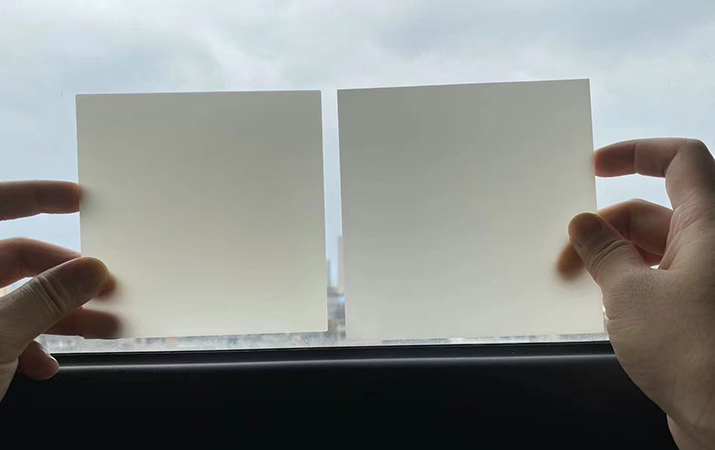
Aluminum nitride is available in different material forms, including fine powder, spherical powder, sintered ceramic substrates and thin films. Each form serves different manufacturing requirements, from ceramic production to thermally conductive polymer composites.
This guide explains the fundamental properties of aluminum nitride, its main applications, production methods and the key factors to consider when selecting AlN materials.
1. Proprietà fondamentali del nitruro di alluminio
Aluminum nitride is an inorganic compound composed of aluminum and nitrogen atoms. It belongs to the group of non-oxide ceramic materials and is valued for its combination of thermal, electrical and mechanical properties.
Its strong covalent bonding contributes to its high hardness, thermal stability and resistance to deformation.
Basic information about aluminum nitride:
| Property | Description |
|---|---|
| Chemical Name | Aluminum Nitride |
| Chemical Formula | AlN |
| CAS Number | 24304-00-5 |
| Molecular Weight | 40.99 g/mol |
| Crystal Structure | Hexagonal wurtzite |
| Appearance | White, gray or off-white powder |
| Density | Approximately 3.26 g/cm³ |
| Thermal Expansion Coefficient | Approximately 4.5 × 10⁻⁶ K⁻¹ |
| Theoretical Thermal Conductivity | Up to approximately 320 W/(m·K) |
The actual properties of aluminum nitride depend on its purity, microstructure, particle characteristics and manufacturing process. In particular, the thermal conductivity of a sintered AlN ceramic can differ considerably from its theoretical value.
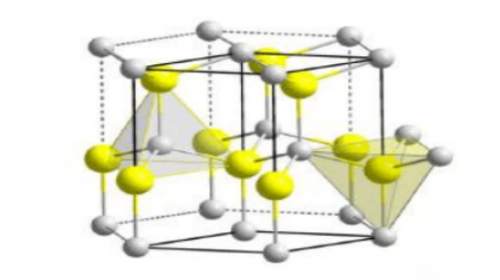
1.1 Caratteristiche strutturali
Il nitruro di alluminio (AlN) è un composto a legame covalente con struttura esagonale di tipo wurtzite. I suoi parametri reticolari sono a = 3,114 Å e c = 4,986 Å. L’AlN puro presenta un colore bianco-bluastro, ma nella pratica è spesso grigio o bianco sporco. In quanto tipico semiconduttore III-V a banda larga, unisce i vantaggi della stabilità e della robustezza.
2.1 High Thermal Conductivity
High thermal conductivity is one of the most important characteristics of aluminum nitride.
AlN transfers heat primarily through lattice vibrations, also known as phonons. Its strong atomic bonding and crystal structure support efficient phonon transport.
The theoretical thermal conductivity of high-quality AlN crystals can reach approximately 320 W/(m·K). Commercial polycrystalline AlN ceramics commonly exhibit values around 140–180 W/(m·K), although actual results depend on composition, oxygen content, sintering additives and microstructure.
This property makes AlN particularly useful in applications where heat must be transferred away from sensitive electronic components.
Typical applications include:
- High-power electronic packaging.
- Ceramic heat-dissipation substrates.
- LED and laser diode packaging.
- Power semiconductor modules.
- Thermally conductive polymer composites.
1.2 Parametri di prestazione
Rispetto ad altri materiali ceramici, l’AlN presenta prestazioni complessive eccezionali, che lo rendono particolarmente adatto come substrato per semiconduttori e come materiale strutturale per il packaging. Le sue potenziali applicazioni nell’industria elettronica sono numerose.
1.3 Caratteristiche principali del nitruro di alluminio
Il valore del nitruro di alluminio risiede nella sua perfetta corrispondenza con i requisiti fisici e chimici dell’elettronica, in particolare nella sua capacità di risolvere tre criticità fondamentali: la dissipazione del calore, le perdite elettriche e l’attenuazione del segnale.
- La combinazione perfetta di conducibilità termica senza conduzione elettrica: con una conducibilità termica a temperatura ambiente di 170–200 W/(m·K)—da 5 a 10 volte quella delle ceramiche tradizionali in allumina—l’AlN dissipa rapidamente il calore dai componenti elettronici, rendendolo un “campione termico”. Allo stesso tempo, la sua resistività di volume raggiunge i 10¹⁴–10¹⁶ Ω·cm, isolando perfettamente dalla corrente elettrica. Questo risolve il conflitto tra dissipazione del calore e isolamento, riducendo il rischio di cortocircuiti.
- Stabilizzatore di segnali ad alta frequenza: con una costante dielettrica di 8,5–9,5 e una perdita dielettrica inferiore a 0,001, l’AlN riduce al minimo l’attenuazione dei segnali ad alta frequenza come il 5G. A 28 GHz, la trasmittanza del segnale può raggiungere il 98%.
- Resistente agli ambienti estremi: con un punto di fusione di 2200 ℃ e prestazioni stabili al di sotto dei 1500 ℃, l’AlN è ideale per gli ambienti ad alta temperatura. La sua espansione termica corrisponde strettamente a quella dei chip di silicio, prevenendo la delaminazione dei componenti dovuta alle variazioni di temperatura. È inoltre resistente agli agenti chimici e mantiene la stabilità in ambienti umidi.
- Non tossico ed ecologico: a differenza delle ceramiche tossiche a base di ossido di berillio (BeO), l’AlN è atossico e offre prestazioni equilibrate, rendendolo una scelta ideale per i substrati elettronici.
2.4 High Hardness and Mechanical Strength
Aluminum nitride is a hard ceramic material with good mechanical strength.
Its mechanical properties make it suitable for applications requiring dimensional stability, wear resistance and structural integrity.
The mechanical performance of AlN ceramics depends on factors such as:
- Relative density.
- Grain size and microstructure.
- Sintering additives.
- Porosity.
- Processing and machining conditions.
These characteristics are important when manufacturing precision ceramic components for electronic and industrial equipment.
2.5 Dielectric Properties
Aluminum nitride has a relatively low dielectric constant, typically around 8–9 at 1 MHz for commercial ceramic grades.
It also exhibits low dielectric loss under suitable material and testing conditions.
These characteristics make AlN suitable for selected high-frequency electronic components, microwave devices and electrical packaging applications.
Its dielectric performance should be evaluated at the actual operating frequency and temperature of the intended application.
2.6 Chemical and High-Temperature Stability
Aluminum nitride exhibits good chemical stability in suitable environments and can maintain its structural properties at elevated temperatures.
However, it is sensitive to moisture. When exposed to water, AlN can undergo hydrolysis, producing aluminum hydroxide and ammonia.
The reaction can be represented as:
AlN + 3H₂O → Al(OH)₃ + NH₃
Moisture exposure can change the powder surface chemistry and affect its processing characteristics.
For this reason, aluminum nitride powder should be stored in sealed packaging under dry conditions. Surface treatment may also be used to improve moisture resistance and compatibility with specific processing systems.
2. Meccanismo di conducibilità termica
Tra le sue numerose proprietà, la più notevole dell’AlN è l’elevata conducibilità termica. Il trasferimento di calore avviene principalmente tramite le vibrazioni del reticolo — i fononi — che si propagano attraverso la struttura cristallina. In un cristallo perfetto e privo di difetti, i fononi trasmettono il calore quasi liberamente, determinando una conducibilità termica teorica estremamente elevata, che può raggiungere i 320 W/(m·K).
In realtà, le impurità e i difetti riducono la conducibilità termica a valori inferiori a 200 W/(m·K), poiché le distribuzioni atomiche irregolari disperdono i fononi.
Il nitruro di alluminio è resistente al fuoco?
Sebbene l’AlN abbia un punto di fusione elevato, pari a 2200 °C, non è ignifugo. Analogamente alla grafite, reagisce con l’ossigeno a temperature superiori agli 800 °C, formando ossido di alluminio, il che ne limita l’impiego in ambienti aperti ad alta temperatura.
Il nitruro di alluminio può fondere?
A pressione atmosferica standard, l’AlN è una polvere solida di colore da bianco a biancastro e sublima a circa 1800 °C, senza passare per la fase liquida. Solo in condizioni di laboratorio estreme (pressioni superiori a 10 GPa e temperature superiori a 2000 °C) può assumere brevemente lo stato liquido. In ambito industriale, il nitruro di alluminio si comporta come un solido o come nanoparticelle disperse quando viene miscelato con metalli fusi, anziché fondersi realmente.
3.3 Aluminum Nitride vs. Boron Nitride
Boron nitride is available in several crystal structures, including hexagonal boron nitride (h-BN) and cubic boron nitride (c-BN).
Hexagonal boron nitride is widely used as an electrically insulating and thermally conductive material, particularly in thermal management composites.
Aluminum nitride is another important ceramic filler for applications requiring thermal conductivity and electrical insulation.
Their suitability depends on particle morphology, thermal transport requirements, processing compatibility and the properties of the final composite.
3. Applicazioni: Dalla vita quotidiana alla tecnologia d'avanguardia
Grazie alle sue proprietà uniche, il nitruro di alluminio ha trovato applicazione in numerosi settori chiave:
- Semiconduttori: il nitruro di alluminio (AlN) funge da nucleo termico per i chip da 7 nm. I substrati in nitruro di alluminio stampati in 3D con canali di raffreddamento su scala micrometrica possono ridurre la temperatura dei chip da 120 °C a 65 °C, migliorando l’efficienza termica del 400%. Viene utilizzato anche nei mandrini elettrostatici e nei supporti per wafer, garantendo la stabilità della produzione.
- Optoelettronica: nei LED blu e nei laser, i substrati in nitruro di alluminio migliorano l’efficienza di conversione optoelettronica, supportando dispositivi ad alte prestazioni.
- Veicoli a nuova energia: le piastre di raffreddamento in AlN nei pacchi batteria raggiungono un’efficienza di contatto superiore al 98%, mantenendo le differenze di temperatura entro i 5 °C dopo 1000 cicli di carica. La durata supera gli 8 anni, prevenendo efficacemente il surriscaldamento.
- Comunicazioni 5G: il nitruro di alluminio è utilizzato nelle coperture delle antenne delle stazioni base e nei filtri, con una perdita di inserzione di soli 0,2 dB e una riduzione di peso del 60%, garantendo la qualità del segnale e la leggerezza del dispositivo.
- Settore aerospaziale: l’AlN resiste a -180 °C nello spazio e fino a 1200 °C durante il rientro, viene utilizzato nell’elettronica di navigazione e controllo, con una precisione strutturale mantenuta entro ±0,02 mm.
- Altre applicazioni: LED, dispositivi medici e componenti nucleari resistenti alle radiazioni traggono vantaggio dalla resistenza alla temperatura, dalla resistenza alla corrosione e dalle caratteristiche di bassa perdita dell’AlN.
4.1 Semiconductor Packaging and Electronic Substrates
One of the most important applications of aluminum nitride is in electronic packaging.
AlN ceramic substrates provide electrical insulation while transferring heat away from power-generating electronic components.
They are used in applications such as:
- Power semiconductor modules.
- High-power LED packaging.
- Laser diode submounts.
- Electronic circuit substrates.
- High-power electronic assemblies.
The thermal expansion compatibility between AlN and silicon is also beneficial in packaging designs involving temperature fluctuations.
4.2 Thermal Interface Materials (TIMs)
Aluminum nitride powder is an important functional filler for thermally conductive polymer composites.
It can be incorporated into silicone, epoxy and other polymer matrices to improve heat transfer while maintaining electrical insulation.
Typical applications include:
- Thermal interface pads.
- Thermal gels.
- Thermal greases.
- Electronic encapsulants.
- Thermally conductive adhesives.
Particle size, morphology, surface treatment and filler loading all influence the processing behaviour and final thermal performance of the composite.
For more information, see our guide:
Aluminum Nitride Fillers in Thermal Interface Materials (TIMs)
4.3 Semiconductor Manufacturing Equipment
Aluminum nitride ceramics are used in selected semiconductor manufacturing components where thermal management, electrical insulation and dimensional stability are important.
Examples include:
- Electrostatic chuck components.
- Ceramic heater components.
- Wafer-handling components.
- High-temperature insulating parts.
The specific suitability of AlN depends on the equipment design, operating environment and required electrical and mechanical specifications.
4.4 LED and Optoelectronic Devices
Aluminum nitride is used in LED and laser diode packaging because of its high thermal conductivity and electrical insulation.
It can serve as a ceramic substrate or submount to transfer heat away from semiconductor devices.
AlN is also used as a substrate material for certain optoelectronic and ultraviolet semiconductor structures.
4.5 High-Frequency and Acoustic Devices
Aluminum nitride has piezoelectric properties and can be deposited as a thin film for high-frequency acoustic devices.
Applications include:
- Surface acoustic wave (SAW) devices.
- Film bulk acoustic resonators (FBARs).
- Acoustic wave filters.
- Microelectromechanical systems (MEMS).
These applications generally require carefully controlled thin-film deposition, crystal orientation and material quality.
4.6 Industrial Ceramics and High-Temperature Components
AlN ceramics can also be used in selected industrial applications requiring thermal stability, electrical insulation and resistance to molten metal attack.
Potential applications include:
- High-temperature crucibles.
- Molten metal handling components.
- Thermocouple protection tubes.
- Electrical insulation components.
- Specialised ceramic structural parts.
The selection of AlN for these applications should consider the atmosphere, operating temperature and chemical compatibility of the process.
4. Sfide per il nitruro di alluminio
Il nitruro di alluminio (AlN) deve ancora affrontare diverse sfide:
Sensibilità all’umidità: in ambienti umidi, il nitruro di alluminio reagisce con l’acqua formando idrossido di alluminio, creando uno strato di ossido che riduce la conducibilità termica. La mitigazione prevede una modifica chimica della superficie o un rivestimento fisico per isolare l’AlN dall’umidità.
Costo elevato: la produzione di nitruro di alluminio (AlN) richiede temperature elevate, con conseguente elevato consumo energetico e rischi per la sicurezza. Le impurità, i residui di carbonio e i sottoprodotti come l’HCl durante la deposizione chimica da vapore richiedono una purificazione costosa, mantenendo i prezzi elevati.
5.1 Fine and Micron-Sized Aluminum Nitride Powder
Fine AlN powder is commonly considered for ceramic production and composite formulations requiring relatively small particles.
Particle size influences powder dispersion, packing behaviour, forming characteristics and processing performance.
Depending on the application, available grades can include nanoscale, submicron and micron-sized powders.

5.2 Spherical Aluminum Nitride Powder
Spherical AlN powder has a rounded particle morphology and is particularly relevant to thermal management composites.
Compared with irregular particles, spherical particles can offer different powder flow and packing characteristics.
These properties can be beneficial in applications requiring high filler loading and controlled processing behaviour.
Typical application areas include:
- Thermal gels.
- Thermal interface materials.
- Electronic encapsulation compounds.
- Thermally conductive plastics.
- Polymer-based thermal management materials.
For a more detailed discussion, see:
Spherical Aluminum Nitride Powder: Properties, Particle Sizes and Applications
5.3 Aluminum Nitride Powder Specifications Available from VIMATERIAL
VIMATERIAL offers aluminum nitride powder in different purity grades and particle sizes for material research and industrial applications.
| Powder Type | Purity | Particle Size |
|---|---|---|
| Irregular Powder | 99.5% | <200 nm |
| Irregular Powder | 99.5% | D50 <1 μm |
| Irregular Powder | 99.9% | D50: 1–5 μm |
| Irregular Powder | 99.9% | D50: 10–20 μm |
| Irregular Powder | 99.95% | D50: 5–10 μm |
| Spherical Powder | 99% | D50: 30–40 μm |
| Spherical Powder | 99% | D50: 45–55 μm |
| Spherical Powder | 99% | D50: 70–80 μm |
| Spherical Powder | 99% | D50: 90–105 μm |
Different particle sizes and purity grades can be selected according to application requirements.
For detailed information about purity, particle size distribution and quality evaluation, read:
Aluminum Nitride Powder: Purity, Particle Size and Quality Control
5. Un futuro promettente: Opportunità di innovazione
Con il progredire della tecnologia, il campo di applicazione dell’AlN continua ad ampliarsi. Tra gli sviluppi futuri figurano:
- Miglioramento dei compositi: combinazione dell’AlN con il carburo di silicio per creare materiali di qualità superiore.
- Sinterizzazione a bassa temperatura: utilizzo di agenti fondenti per ridurre la temperatura di sinterizzazione da 1650 °C a meno di 1400 °C.
- Stampa 3D: sviluppo di materie prime dedicate per strutture complesse e a forma netta.
- Settori emergenti: studio dell’AlN per l’informatica quantistica e l’elettronica aerospaziale avanzata.
6.1 Direct Nitridation
Grazie alle sue eccezionali proprietà fisiche e chimiche, il nitruro di alluminio (AlN) trova ampia applicazione in numerosi settori industriali. Con la continua comparsa di nuove tecnologie, il suo potenziale cresce, favorendo l’innovazione e il progresso nel campo dell’elettronica e in altri settori.
6.2 Carbothermal Reduction-Nitridation
Carbothermal reduction-nitridation (CRN) uses alumina and carbon as starting materials.
The reaction takes place under a nitrogen atmosphere at elevated temperatures.
The chemical reaction is:
Al₂O₃ + 3C + N₂ → 2AlN + 3CO
The process converts alumina into aluminum nitride through reduction and nitridation reactions.
The resulting powder characteristics depend on the raw material properties, carbon ratio, reaction temperature, atmosphere and processing conditions.
6.3 Other Synthesis Methods
Other methods have also been investigated for producing aluminum nitride powder, including:
- Self-propagating high-temperature synthesis.
- High-energy ball milling-assisted synthesis.
- Plasma-assisted synthesis.
- Chemical vapour deposition (CVD).
Each method has different requirements and limitations in terms of equipment, production scale, purity and particle characteristics.
For a detailed explanation of these production routes, see:
7. How to Select the Right Aluminum Nitride Material
Selecting the appropriate AlN grade requires an understanding of the intended application and manufacturing process.
A high nominal purity does not automatically guarantee better performance. Particle size, morphology, oxygen content and surface condition can be equally important.
The following factors should be considered during material selection.
| Selection Factor | Key Considerations |
|---|---|
| Purity | Confirm chemical composition and impurity limits |
| Particle Size | Match D50 and D90 to the processing requirements |
| Morphology | Evaluate spherical or irregular particle characteristics |
| Oxygen Content | Consider its influence on ceramic processing and thermal performance |
| Surface Treatment | Check compatibility with the intended polymer or processing system |
| Moisture Control | Evaluate packaging, storage and moisture resistance |
| Batch Consistency | Compare test results and specifications between batches |
Selection According to Application
For AlN ceramic production:
Focus on chemical purity, oxygen content, particle size distribution and compatibility with the forming and sintering processes.
For thermal interface materials:
Consider particle morphology, particle size distribution, packing behaviour, surface treatment and the rheological properties of the final formulation.
For electronic encapsulation:
Evaluate electrical insulation requirements, thermal conductivity, dispersion behaviour and compatibility with the polymer matrix.
For thermally conductive plastics:
Consider filler loading, particle size distribution, surface compatibility and the influence of AlN powder on the mechanical and processing properties of the polymer.
8. Storage and Handling of Aluminum Nitride Powder
Aluminum nitride powder is sensitive to moisture and should be handled and stored under appropriate conditions.
When exposed to moisture, AlN can undergo hydrolysis and release ammonia. This reaction may affect powder composition, surface chemistry and subsequent processing performance.
Recommended storage and handling practices include:
- Store in tightly sealed packaging.
- Keep in a cool and dry environment.
- Minimise exposure to humid air.
- Avoid unnecessary contact with water.
- Follow the product-specific Safety Data Sheet (SDS).
- Use suitable dust-control measures and personal protective equipment during handling.
For industrial applications, moisture control is particularly important when maintaining consistent powder quality and processing performance.
6. Domande frequenti sul nitruro di alluminio
1. A cosa serve il nitruro di alluminio?
Il nitruro di alluminio (AlN) è ampiamente utilizzato grazie alla sua elevata conducibilità termica, alle sue proprietà di isolamento elettrico e alla sua stabilità chimica, e trova impiego nei semiconduttori, nei LED, nei laser, nel raffreddamento delle batterie dei veicoli elettrici, nei componenti 5G, nell’elettronica aerospaziale e in altre applicazioni ad alte prestazioni.
2. Il nitruro di alluminio è tossico?
No, il nitruro di alluminio (AlN) è atossico e sicuro da maneggiare, il che lo rende un’alternativa affidabile alle ceramiche pericolose come l’ossido di berillio.
3. Perché il nitruro di alluminio è così costoso?
Il nitruro di alluminio (AlN) è costoso perché la sua produzione richiede temperature elevate, un rigoroso controllo della purezza e processi complessi. La sintesi ad alto consumo energetico, la rimozione delle impurità e le misure di sicurezza contribuiscono tutte al suo costo elevato.
4. Il nitruro di alluminio reagisce con l'acqua?
Sì, il nitruro di alluminio (AlN) può reagire con l’acqua, formando idrossido di alluminio e rilasciando ammoniaca. Questa reazione può ridurne la conducibilità termica, pertanto le polveri di AlN vengono spesso rivestite o sottoposte a trattamenti chimici per prevenire i danni causati dall’umidità.
5. Does Aluminum Nitride React with Water?
Yes. Aluminum nitride can react with water through hydrolysis, producing aluminum hydroxide and ammonia.
This is why AlN powder should be stored in sealed packaging under dry conditions.
6. What Is the Difference Between Aluminum Nitride Powder and Spherical Aluminum Nitride Powder?
The main difference is particle morphology.
Conventional AlN powder may contain irregularly shaped particles, while spherical AlN powder has rounded particle morphology.
Spherical powder can offer different flow and packing characteristics, which may be beneficial in high-filler-loading polymer composites and thermal interface materials.
7. What Is the Difference Between Theoretical and Actual Thermal Conductivity of AlN?
The theoretical thermal conductivity describes the potential heat-transfer performance of ideal AlN crystals.
Actual thermal conductivity depends on the material’s purity, defects, oxygen content, grain boundaries and manufacturing process.
For this reason, the thermal conductivity of a commercial AlN ceramic should be evaluated using the supplier’s measured data rather than assuming the theoretical value.
8. How Should I Choose the Particle Size of AlN Powder?
The appropriate particle size depends on the intended application.
Fine powders may be suitable for ceramic processing and formulations requiring smaller particles. Spherical and coarser powders may be considered for thermal composites where flow and packing behaviour are important.
D50, D90 and the complete particle size distribution should be evaluated together.
10. Aluminum Nitride Powder Supplier – VIMATERIAL
VIMATERIAL supplies aluminum nitride powder in different purity grades, particle sizes and morphologies for industrial and research applications.
Our available AlN powder range includes:
- High-purity aluminum nitride powder.
- Fine and submicron aluminum nitride powder.
- Micron-sized aluminum nitride powder.
- Spherical aluminum nitride powder.
We understand that different applications require different material characteristics. Our team can assist with material selection based on purity, particle size and intended processing requirements.
Whether you are developing thermal interface materials, electronic packaging compounds or advanced ceramic materials, we welcome technical enquiries and specification requests.
References
- [1] China, R. (2026). From Powder to Performance: A Review on the Synthesis and Densification of AlN for Advanced Thermal Management. Journal of the American Ceramic Society, 109(4).
- [2] Bowen, P., Highfield, J. G., Mocellin, A., & Ring, T. A. (1990). Degradation of Aluminum Nitride Powder in an Aqueous Environment. Journal of the American Ceramic Society, 73(3), 724–728.
- [3] Yu, H., Li, L., Kido, T., Xi, G., Xu, G., & Guo, F. (2012). Thermal and Insulating Properties of Epoxy/Aluminum Nitride Composites Used for Thermal Interface Material. Journal of Applied Polymer Science, 124(1), 669–677.
- [4] Zhong, S., et al. (2025). Oxygen Reduction via Carbothermal-Reduction-Nitridation of Aluminum Nitride Powders and the Performance of Its Sintered Body. Ceramics International, 51(6), 7875–7882.
Further Reading
- AlN Powder Specifications: Purity, Particle Size and Quality Control
- How to Make Aluminium Nitride Powder?
- Spherical Aluminum Nitride Powder: Properties, Particle Sizes and Applications
- What Is Aluminum Oxynitride (AlON)? Properties, Structure and Applications
- AlON Powder: Properties, Synthesis Methods and Applications
Contact VIMATERIAL for Aluminum Nitride Powder
If you need aluminum nitride powder with specific purity, particle size or morphology requirements, contact our team to discuss your application.