Silicon Dioxide: From Sand to Chips — The Unsung Material Shaping Modern Life

View Our Products

Contact Us Now !

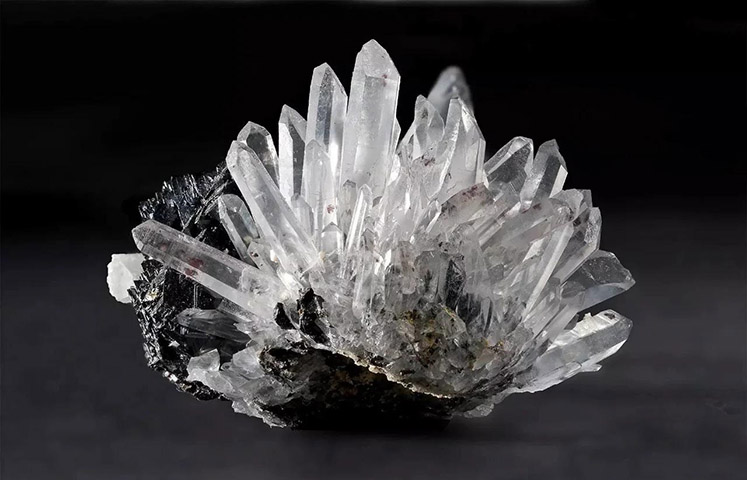
Silicon dioxide (SiO₂), commonly known as silica, is a compound consisting of silicon and oxygen. It occurs naturally in crystalline forms such as quartz and in amorphous forms such as fused silica and other synthetic silicas. Its combination of thermal stability, chemical resistance, electrical insulation, optical properties, and hardness makes it important in glass, ceramics, semiconductor processing, optical materials, coatings, and other advanced applications.

Silicon dioxide - VIMATERIAL

For material selection, the most important factors are not only chemical composition but also the crystalline or amorphous structure, purity, particle size, morphology, density, and required form. Different SiO₂ forms can therefore be suitable for very different applications.

VIMATERIAL supplies silicon dioxide materials for technical and industrial applications, including SiO₂ sputtering targets, SiO₂ powder and customized SiO₂ material forms, with specifications selected according to application requirements.

Basic Properties of Silicon Dioxide

Physical Properties

  • High melting point and boiling point: SiO2 has a melting point of 1713 °C and a boiling point of 2230 °C, giving it outstanding thermal stability.
  • High hardness: It is very hard and is a major component of natural quartz.
  • Moderate density: With a density of about 2.2 g/cm³, it has a stable structure while remaining relatively lightweight, which is beneficial for processing and applications.
  • High corrosion resistance: Silicon dioxide is chemically stable in many environments, but it reacts with hydrofluoric acid and can react with strong alkaline materials, particularly at elevated temperatures.
  • High transparency: Its excellent light transparency makes it widely used in optical devices.
  • Excellent insulating properties: It is a superior electrical insulator and is widely used in electronic components.
  • Stable refractive index: The refractive index of fused silica is typically around 1.46 at visible wavelengths, although the exact value depends on wavelength and material form.

Structural Characteristics

Silicon dioxide can exist in several structural forms, including crystalline, amorphous, and nanostructured silica. The most common crystalline form is quartz, while amorphous silicon dioxide includes materials such as fused silica and synthetic amorphous silica. Nanostructured silica refers to SiO₂ materials engineered with nanoscale particles or structural features, giving them a high surface area and distinctive surface properties.

Crystalline structure

In quartz, silicon and oxygen atoms form an ordered three-dimensional network. Each silicon atom is coordinated with four oxygen atoms, while each oxygen atom is connected to two silicon atoms. This continuous network contributes to the characteristic hardness, chemical stability, and thermal properties of crystalline silica.

Quartz is the most common crystalline form of SiO₂, while other crystalline polymorphs include cristobalite and tridymite. The different crystal structures can exhibit different physical properties and phase-transition behavior.

Silicon dioxide structure - VIMATERIAL

Amorphous structure

Amorphous silicon dioxide consists of randomly arranged silicon and oxygen atoms, so it lacks a well-defined crystal structure. As a result, it generally has lower density and melting point, making it easier to process at high temperatures.

Common examples include fused silica and synthetic amorphous silica. Compared with crystalline forms, amorphous SiO₂ can exhibit different thermal, optical, mechanical, and processing characteristics, making it suitable for applications such as optical components, glass, coatings, and electronic materials.

Nanostructured Silica

Nanostructured silica refers to silicon dioxide materials with nanoscale particles, pores, or other structural features. Because of their small particle size and high specific surface area, these materials can exhibit surface properties that differ significantly from conventional bulk silica.

Nanostructured silica is used in areas such as coatings, adsorption, catalysis, composites, surface modification, sensors, and advanced materials research. Depending on the production method, particle size, morphology, porosity, and surface chemistry can be controlled to meet different application requirements.

For technical applications, the distinction between crystalline, amorphous, and nanostructured silica is important because structure, particle size, morphology, and surface characteristics can directly influence material performance and processing behavior.


FormStructural CharacteristicsTypical ExamplesTypical Applications
Crystalline silicaOrdered atomic arrangement with a long-range periodic structureQuartz, cristobalite, tridymiteGlass and ceramics, refractory materials, optical and industrial applications
Amorphous silicaNo long-range periodic crystal structure, but with short-range structural orderFused silica, synthetic amorphous silicaOptical materials, glass, coatings, electronics and insulating materials
Nanostructured silicaSilica with nanoscale particles, pores or other engineered structural featuresSilica nanoparticles, mesoporous silica, nanostructured silicaCoatings, adsorption, catalysis, composites, sensors and advanced materials research

Is Silicon Dioxide Soluble in Water?

Silicon oxide may appear mild, but it has a “dual personality.” It is insoluble in water and most acids, yet it can be dissolved by hydrofluoric acid. It resists high temperatures but yields to strong alkalis. These unique chemical properties make it a highly versatile industrial material.

At high temperatures, silicon dioxide reacts with alkali metal oxides to form silicates, a reaction widely used in glass and ceramic manufacturing. Interestingly, while concentrated sulfuric and nitric acids have little effect on it, hot concentrated phosphoric acid can corrode silicon dioxide. Even more surprising, molten borates can dissolve silicon dioxide—an effect cleverly utilized in ceramic firing processes.

Property Typical Information
Chemical formula SiO₂
Molar mass 60.08 g/mol
Appearance Typically white powder or transparent/colourless solid, depending on form and purity
Crystal structure Crystalline forms include quartz, cristobalite and tridymite; amorphous forms have no long-range periodic crystal structure
Density Depends on the material form; crystalline and amorphous SiO₂ have different densities
Melting point Approximately 1710–1713 °C
Refractive index Approximately 1.46 for fused silica at visible wavelengths; varies with wavelength and material form
Electrical properties High electrical resistivity and good insulating characteristics
Chemical stability Stable in many environments; reacts with hydrofluoric acid and can react with strong alkaline materials

The chemical behavior of SiO₂ depends strongly on temperature, particle size, surface area, crystal structure, and the chemical environment.

Silicon Dioxide Has Different Forms and Applications

Silicon dioxide is not a single uniform material. Its properties and applications depend strongly on its structure, production method, purity, particle size and surface characteristics. Crystalline silica, fused silica, synthetic amorphous silica, silica gel and other silica-based materials therefore serve different technical and commercial purposes.

Food and pharmaceutical applications use specific regulated grades that are different from materials selected for optical, electronic or sputtering applications.

Silicon dioxide powder

Silicon Dioxide for Advanced Materials and Thin-Film Applications

Beyond traditional glass and ceramic applications, silicon dioxide is also important in optical coatings, electronics and thin-film deposition. In these applications, material purity, structure, dimensions and consistency can directly affect processing and film performance.

VIMATERIAL supplies silicon dioxide materials for technical and industrial applications, including SiO₂ sputtering targets, silicon dioxide powder and customized SiO₂ forms. Depending on the application, specifications can be considered for purity, particle size, shape, dimensions and other technical requirements.

For sputtering applications, VIMATERIAL also provides sputtering target bonding services for customized target assemblies, helping customers match the target material and assembly requirements to their deposition equipment and process.

From Natural Silica to Advanced Materials

Silicon dioxide occurs naturally in materials such as quartz and can be processed into different forms for industrial and advanced applications.

Natural silica → purification and processing → controlled SiO₂ form → powder, fused silica or target → final application

Material FormTypical CharacteristicsExample Applications
QuartzCrystalline structureGlass, ceramics and industrial materials
Fused silicaAmorphous, high thermal stabilityOptics, laboratory equipment and semiconductor processing
SiO₂ powderControlled particle characteristicsCeramics, composites and coatings
Nanostructured silicaHigh surface area and engineered structureSensors, catalysis, coatings and advanced materials
SiO₂ sputtering targetControlled geometry for PVDOptical, electronic and protective thin films

For advanced applications, material selection increasingly depends on purity, structure, particle characteristics and geometry rather than chemical composition alone. 

Is Silicon Dioxide Toxic?

The safety of silicon dioxide depends strongly on its physical form, particle size, exposure route and use conditions.

Crystalline silica dust exposure: Long-term inhalation of silicon dioxide dust can cause silicosis, a serious occupational disease common in mining, quarrying, and cement industries without proper protection. The main occupational concern is not SiO₂ as a chemical formula by itself, but exposure to respirable crystalline silica dust.

Food additive limits: Excessive intake may cause gastrointestinal discomfort; extra caution is required in infant foods.

Laboratory use: Glassware should not be used to store hydrofluoric acid, as it corrodes silicon dioxide.

Storage of strong alkalis: Strong bases (such as NaOH) react with SiO₂ in glass to form sticky silicates, which may cause ground-glass stoppers to seize.

Silicon dioxide crystalline - VIMATERIAL

Carcinogenicity Depends on Form

Respirable crystalline silica is a recognized occupational health hazard. Long-term or high-level inhalation exposure can cause silicosis and is associated with an increased risk of lung cancer. It is classified as a Group 1 carcinogen and is common in mining and construction.

Amorphous silica generally presents a different hazard profile from respirable crystalline silica, but safety depends on the specific material, particle characteristics and exposure route.

What Is Silicon Dioxide Used For?

Glass manufacturing: A primary ingredient in glass, used for windows, mirrors, bottles, and more.

Ceramics: Added to ceramics and refractory materials to enhance thermal stability and wear resistance.

Semiconductors: A superior insulating material used in integrated circuits and electronic components.

Silicon dioxide in semiconductor - VIMATERIAL

Optical devices: Its transparency and stability make it ideal for lenses and optical fibers.

Food additive: Used as an anti-caking agent and moisture absorber in foods, pharmaceuticals, and seasonings.

Cosmetics and daily products: Found in toothpaste as an abrasive and in skincare products as an absorbent.

Life sciences: Silicon dioxide nanoparticles are used in drug delivery systems and biosensors for detecting biomolecules and disease markers.

Environmental protection: Acts as an adsorbent to remove heavy metals, organic pollutants, and harmful gases from water and air.

Material Selection: How to Choose the Right Silicon Dioxide?

Choosing silicon dioxide for a technical application requires consideration of both material properties and processing requirements.

Selection FactorWhat to Consider
PurityRequired purity and control of trace impurities
StructureCrystalline, amorphous or nanostructured material
Particle sizeAverage particle size and particle size distribution
MorphologySpherical, irregular, porous or other required morphology
Surface propertiesSpecific surface area and surface chemistry
Material formPowder, sputtering target, ring, plate or customized form
DimensionsDiameter, thickness, length, width and other drawing requirements
PackagingProtection from contamination and moisture
ApplicationCompatibility with the intended process and equipment

For SiO₂ powder, particle size, morphology and surface characteristics may be particularly important. For sputtering targets, purity, density, dimensions, geometry and bonding condition should also be considered.

VIMATERIAL supplies silicon dioxide powders, sputtering targets and customized SiO₂ materials according to application requirements, including purity, particle size, shape and dimensions. Sputtering target bonding services are also available for customized target assemblies.

Looking Ahead

Silicon dioxide continues to attract interest in advanced coatings, optical materials, semiconductor processing, nanostructured materials and energy-related research. Future development is likely to focus on controlling purity, structure, particle size, surface chemistry and interfaces rather than simply expanding the number of applications.

From ancient glassmaking to cutting-edge quantum technology, silicon dioxide has always accompanied the progress of human civilization. This seemingly ordinary compound will continue to shine on the stage of technological innovation. The next time you see a grain of sand or a microchip, take a moment to reflect: this tiny bit of silicon dioxide carries humanity’s boundless imagination for the future.

Frequently Asked Questions

1. What is silicon dioxide?

Silicon dioxide (SiO₂), also known as silica, is a compound consisting of silicon and oxygen. It occurs naturally as quartz and can also be produced in amorphous and engineered forms.

Silicon dioxide is a solid under normal conditions. It can exist in crystalline forms such as quartz and amorphous forms such as fused silica.

SiO₂ can have crystalline or amorphous structures. Crystalline silica has an ordered long-range structure, while amorphous silica does not have long-range periodic crystal order.

The melting point of silicon dioxide is approximately 1710–1713 °C, depending on the material form and measurement conditions.

Silicon dioxide has very low solubility in water under normal conditions. Solubility can vary with temperature, particle size, material form and chemical environment.

Common applications include glass, fused silica, ceramics, refractory materials, semiconductor and electronic components, optical materials, coatings, thin films, composites and advanced materials.

Key factors include purity, particle size, particle size distribution, morphology, surface area, structure and intended application. Packaging and moisture control may also be important for high-purity powders.

A silicon dioxide sputtering target is a solid SiO₂ source material used in PVD sputtering to deposit silicon oxide-based thin films. Target purity, density, dimensions, geometry and bonding can affect deposition performance.

Respirable crystalline silica can present a significant occupational inhalation hazard. Appropriate exposure controls and workplace safety measures should be followed when processes can generate respirable crystalline silica dust.

Need a Custom Silicon Dioxide Material Solution?

The right SiO₂ material depends on more than chemical composition. Purity, structure, particle size, morphology, dimensions and material form can all affect suitability for a specific application.

VIMATERIAL supplies silicon dioxide powders, sputtering targets and customized SiO₂ forms for technical and industrial applications, with specifications tailored to application and processing requirements. Sputtering target bonding services are also available for customized target assemblies.

Tell us your SiO₂ requirements and application — our technical team can help you identify a suitable material solution.

Contact Us

Contact Us