| Product ID | Formula | Purity | Dimension | Quantity | Price in € | Inquiry |
|---|---|---|---|---|---|---|
| 5000ST001 | Sn | 99.99% | Ø 50.8 mm x 3.175 mm | 1 | 205.00 | Inquire |
| 5000ST002 | Sn | 99.999% | Ø 50.8 mm x 6.35 mm | 1 | POR | Inquire |
| 5000ST003 | Sn | 99.99% | Ø 76.2 mm x 3.175 mm | 1 | 229.00 | Inquire |
| 5000ST004 | Sn | 99.99% | Ø 76.2 mm x 6.35 mm | 1 | 263.00 | Inquire |
| 5000ST005 | Sn | 99.999% | Ø 101.6 mm x 3.175 mm | 1 | POR | Inquire |
| 5000ST006 | Sn | 99.999% | Ø 101.6 mm x 6.35 mm | 1 | POR | Inquire |
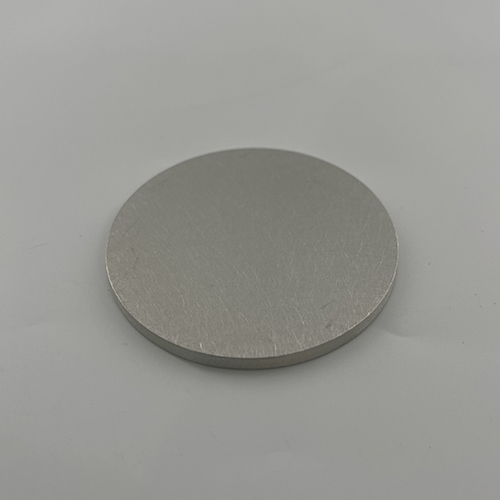
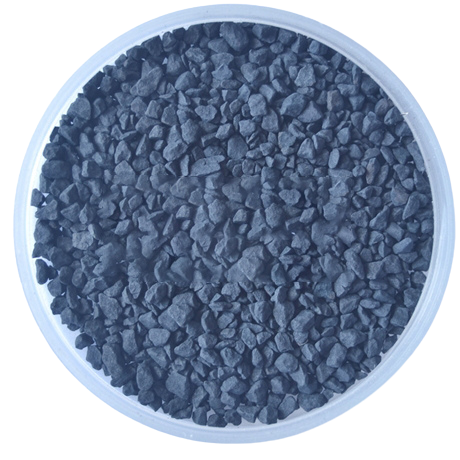
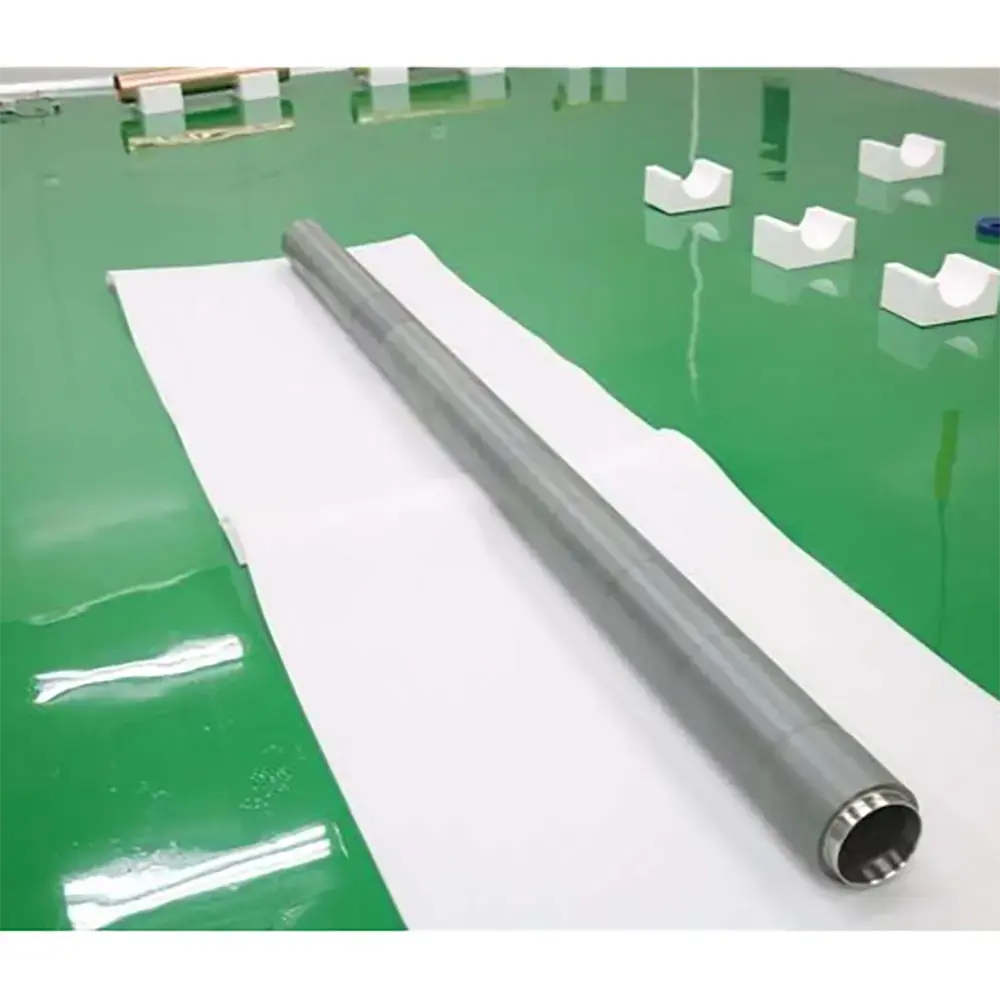
Tin sputtering target is a material made of high purity tin metal for physical vapour deposition technology. It usually has a silvery grey metallic appearance and is capable of depositing a thin film of tin during the sputtering process, which is widely used in the fields of electronics, packaging, chemical industry and many other areas.
VIMATERIAL offers high-purity tin sputtering targets, customizable in various sizes to meet your needs. Contact us for more information.
Appearance: Silver grey solid with metallic luster.
Melting point: 232℃
Boiling point: 2602°C
Density: 7.265 – 7.31g/cm³(20℃)
Coefficient of thermal expansion: 22.0 µm/(m-K)(20℃)
Poisson’s ratio: 0.36
Young’s modulus: 50GPa
Specific heat capacity: 0.21J/(g-°C)(25°C)
Thermal conductivity: 66.8W/(m-K)
Electrical Properties: Resistivity: 11.5×10-⁸Ω・m, Electronegativity: 1.96 Paulings.
Electronics field: Tin sputtering targets are used in semiconductor manufacturing and electronic packaging. They help form interconnects, barrier films, and solder materials, such as tin balls in flip-chip packaging, which directly affect device reliability and performance.
Optical field: Tin is used to prepare coatings for Low-E glass and optical lenses. These coatings improve thermal insulation, reduce reflection, and increase light transmission, making them important for buildings, glasses, and camera lenses.
Energy field: Tin sputtering targets are applied in solar cells and lithium-ion batteries. They are used to improve electrode performance, increase energy efficiency, and enhance battery capacity and stability.
Coating materials: Tin is used to create protective, decorative, and functional coatings such as anti-corrosion and wear-resistant layers, improving the durability and appearance of metal products.
Superconducting materials: Tin-based alloys are used in superconducting materials. Through sputtering processes, high-quality thin films can be produced for use in superconducting magnets and cables.
Packaging
Tin sputtering targets are usually vacuum-sealed or packed in clean, moisture-proof packaging such as plastic bags with protective foam or inert gas filling to prevent oxidation and contamination. For industrial transport, they are often placed in shock-resistant cartons or wooden cases with cushioning materials to protect the target surface from scratches, cracks, or deformation.
Storage
Tin sputtering targets should be stored in a dry, clean, and temperature-stable environment, preferably in vacuum or sealed conditions. They must be kept away from moisture, dust, and corrosive substances to maintain high purity and surface quality. Proper handling and storage are essential to ensure stable sputtering performance during semiconductor and coating processes.
Q1: What is a sputtering target?
A: A sputtering target is a solid material used in physical vapor deposition (PVD) processes to create thin films. During sputtering, high-energy ions bombard the target material, ejecting atoms that then deposit onto a substrate to form a thin, uniform coating. It is widely used in semiconductors, optics, and surface coating industries.
Q2: What are sputtering targets made of?
A: Sputtering targets can be made from a wide range of high-purity materials, including metals (such as tin, aluminum, copper, gold), alloys (like TiAl or CuSn), ceramics (such as oxides or nitrides), and even composite materials. The choice of material depends on the desired properties of the thin film being produced.
Q3: How long does a sputter target last?
A: The lifespan of a sputter target depends on its size, material, power conditions, and usage frequency. In general, a target can last from several hours to hundreds of hours of continuous operation. It is replaced once it becomes too thin or uneven to maintain stable coating performance.
VI HALBLEITERMATERIAL GmbH (VIMATERIAL) employs a stringent quality assurance system to ensure the reliability of our product quality. Strict quality control is implemented throughout the entire production chain, and for defective products, we strictly enforce the principle of rework and redo. Each batch is released only after passing detailed specification tests.
Every batch of our materials is independently tested, and, if necessary, we send samples to certified companies for testing. We provide these documents and analysis certificates with the shipment to certify that our products meet the required standards.
Contact our team of experts today and let us help you with your business!