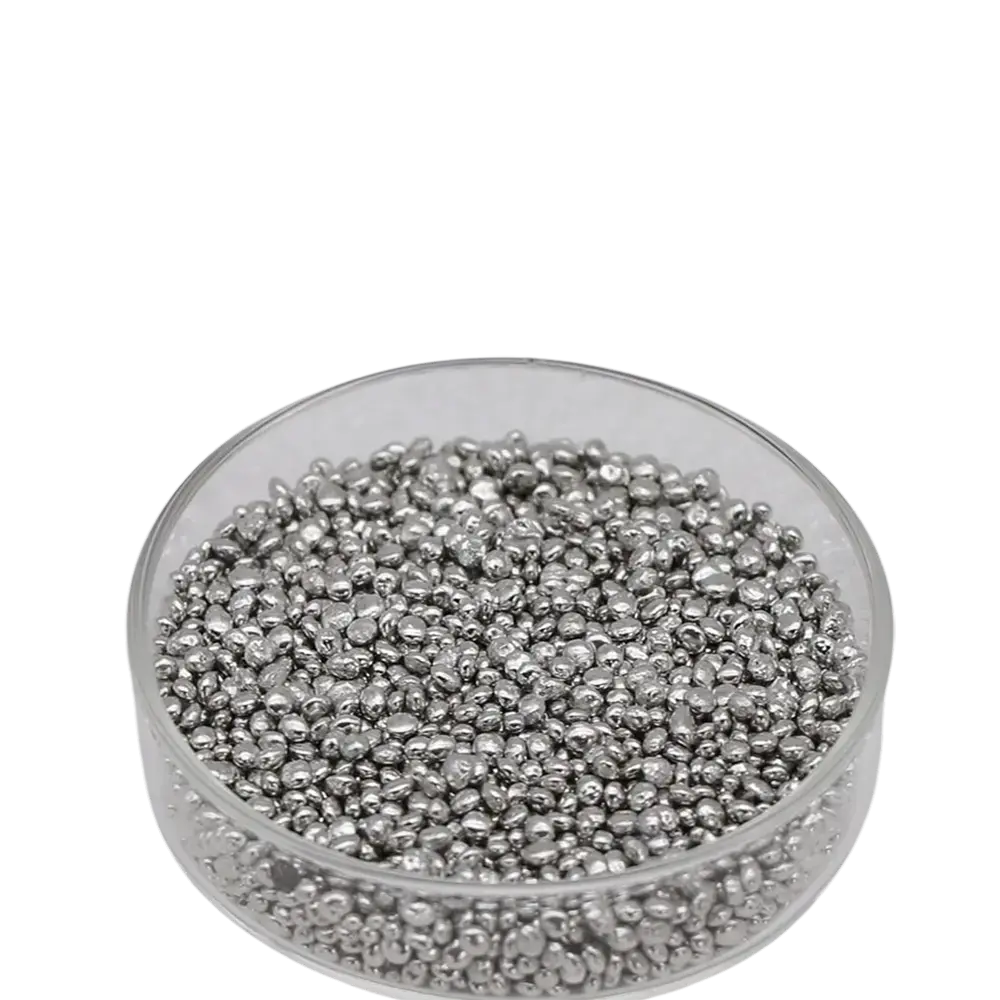
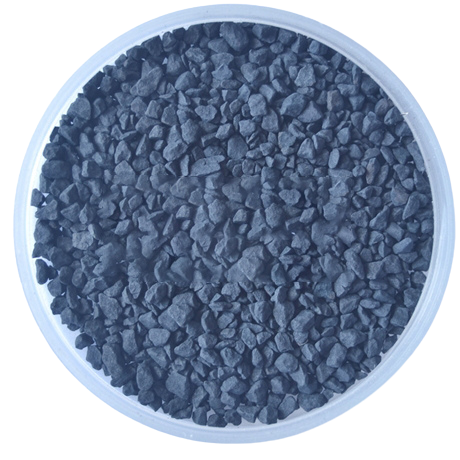
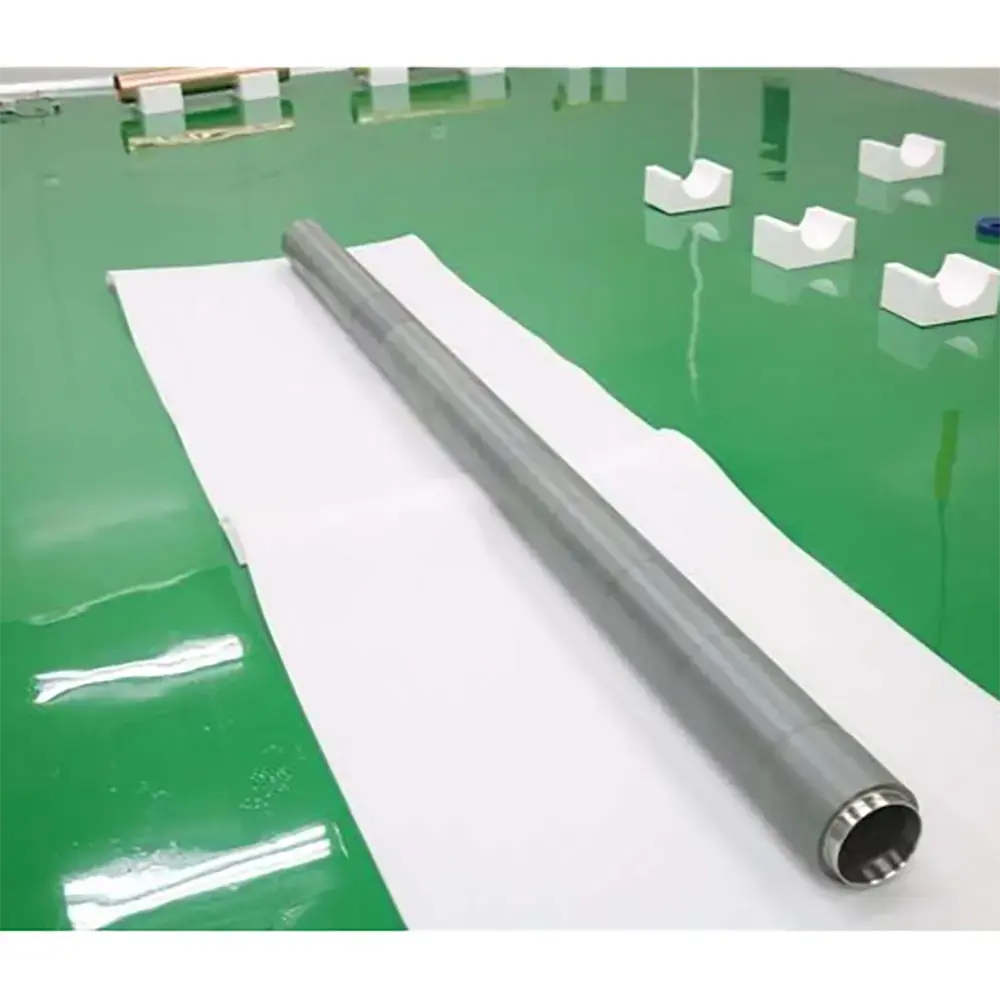
Tin Silver Alloy particles are tiny particles made by mixing two metals, tin and silver, in a certain ratio. They have some of the characteristics of both tin and silver, and play an important role in electronic soldering, surface treatment of materials, and many other fields.
Characteristics
Melting point: The melting point of tin-silver alloys varies compared to both pure tin and pure silver. For example, when the average diameter of tin-silver alloy nanoparticles is around 10 nanometres, the melting point can be as low as 194°C. The melting point of tin-silver alloys can be as low as 194°C.
Density: The density varies depending on the ratio of tin to silver and the microstructure of the particles, but is generally between the density of tin (7.28 g/cm3) and silver (10.49 g/cm3).
Colour: It has a metallic colour similar to silver-grey, but the shade of the colour may vary slightly depending on the proportion of the components.
Hardness: usually higher than that of pure tin, the hardness of the alloy increases with the silver content, but the exact hardness values are affected by the preparation process, particle size, etc.
Strength: It has good strength and can withstand a certain degree of external force. Its strength is also related to factors such as composition ratio, microstructure and size distribution of particles.
Electrical conductivity: tin-silver alloys have good electrical conductivity, although their electrical conductivity may be slightly lower than that of pure silver, but better than that of pure tin. The addition of silver can improve the conductivity of tin to a certain extent, which makes tin-silver alloys have a wide range of applications in electronic soldering and other areas where conductivity is required.
Antioxidant: It has better antioxidant properties than pure tin, and the presence of silver can inhibit the oxidation of tin to a certain extent. However, oxidation may still occur under certain specific environments, such as high temperature and high humidity.
Corrosion resistance: It has a certain degree of corrosion resistance to acids, alkalis and other chemicals, but the specific degree of corrosion resistance may also vary depending on the proportion of components and environmental conditions.
Applications
Electronic welding field:
Circuit board soldering: in modern electronic products, the electronic components on the circuit board need to be soldered to achieve electrical connection. The solder made of tin silver alloy particles has good electrical conductivity, wettability and thermal fatigue resistance, which can ensure the quality and reliability of the soldered joints, and is widely used in circuit board soldering of various electronic devices such as mobile phones, computers and TVs. For example, tin-silver alloy solder is used to solder chips, resistors, capacitors and other electronic components to the circuit board inside smart phones.
Chip encapsulation: Chip encapsulation is an important part of protecting the chip and realising the connection between the chip and the external circuit. Tin silver alloy particles can be used to make flip chip packaging and ball grid array packaging (BGA) and other advanced packaging technology in the solder ball, to provide reliable electrical connections and mechanical support to meet the strict requirements of high-performance chip packaging.
Solar photovoltaic field: In the manufacture of solar panels, tin-silver alloy particles can be used for the interconnection and encapsulation of solar cell wafers. As a lead-free alloy solder, it can maintain good soldering performance at higher temperatures, ensuring a strong and reliable connection between solar cell sheets and improving the conversion efficiency and service life of solar panels.
Jewellery manufacturing field: tin silver alloy particles can be used to make various kinds of jewellery, such as necklaces, bracelets, rings and so on. Due to their good plasticity and oxidation resistance, they can be processed into a variety of exquisite shapes and styles, and are not easy to discolour and rust during long-term wear, maintaining the beauty and luster of the jewellery. For example, some fashion brands use tin silver alloy to produce jewellery collections with unique designs.
Metal coating field: tin silver alloy particles are coated on metal surfaces through electroplating, thermal spraying and other methods, which can form coatings with good abrasion resistance, corrosion resistance and decorative properties. For example, tin silver alloy coating on the surface of automobile parts and mechanical parts can improve their service life and appearance quality.
Biomedical field: In the biomedical field, tin silver alloy particles have certain application potential. For example, they can be used in the manufacture of biosensors to detect various physiological signals in living organisms by using their good electrical conductivity and biocompatibility; they can also be used as drug carriers, wrapping drugs in tin silver alloy particles to achieve targeted delivery and controlled release of drugs.
VI HALBLEITERMATERIAL GmbH (VIMATERIAL) employs a stringent quality assurance system to ensure the reliability of our product quality. Strict quality control is implemented throughout the entire production chain, and for defective products, we strictly enforce the principle of rework and redo. Each batch is released only after passing detailed specification tests.
Every batch of our materials is independently tested, and, if necessary, we send samples to certified companies for testing. We provide these documents and analysis certificates with the shipment to certify that our products meet the required standards.
Contact our team of experts today and let us help you with your business!