| Product ID | Formula | Purity | Dimension | Quantity | Price in € | Inquiry |
|---|---|---|---|---|---|---|
| 031322150800PD001 | Li1.3Al0.3Ti1.7(PO4)3 | 99% | D50= 90-150nm | 100g | POR | Inquire |
| 031322150800PD002 | Li1.3Al0.3Ti1.7(PO4)3 | 99% | D50= 150-300nm | 100g | POR | Inquire |
| 031322150800PD003 | Li1.3Al0.3Ti1.7(PO4)3 | 99% | D50= 600-1200nm | 100g | POR | Inquire |
| 031322150800PD004 | Li1.3Al0.3Ti1.7(PO4)3 | 99% | D50= 1000-5000nm | 100g | POR | Inquire |
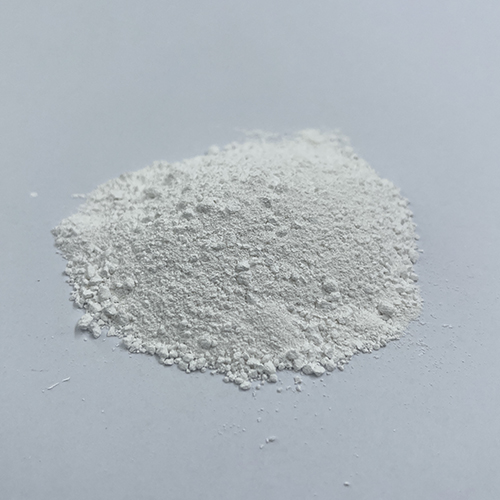
Lithium Aluminum Titanium Phosphate (LATP), with the chemical formula Li₁.₃Al₀.₃Ti₁.₇(PO₄)₃, is a lithium-ion conductive ceramic material with a NASICON-type crystal structure. Due to its high ionic conductivity, excellent thermal stability, and chemical stability, LATP powder is considered a promising solid electrolyte material for next-generation lithium batteries and all-solid-state battery (ASSB) technologies.
VIMATERIAL supplies high-quality LATP powder with controlled composition and particle size, suitable for research, battery development, and advanced electrochemical applications. Contact us for more information.
| Property | Value |
|---|---|
| Chemical Formula | Li₁.₃Al₀.₃Ti₁.₇(PO₄)₃ |
| Appearance | White to off-white powder |
| Crystal Structure | NASICON-type structure |
| Density | Approx. 3.0 g/cm³ |
| Ionic Conductivity | Up to ~10⁻³ S/cm at room temperature |
| Thermal Stability | Stable at elevated temperatures (typically up to 500–600°C) |
| Material Type | Lithium-ion conductive ceramic electrolyte |
Packaging: LATP powder is available in moisture-resistant sealed packaging. Customized packaging options are available according to customer requirements.
Storage: Store in a sealed container in a dry and clean environment. Protect from moisture, contamination, and excessive humidity to maintain material quality.
VIMATERIAL provides high-quality Lithium Aluminum Titanium Phosphate (LATP) Powder with reliable composition control, consistent quality, and customized solutions for battery material research and industrial applications.
Q1: What is LATP?
LATP (Lithium Aluminum Titanium Phosphate) is a lithium-ion conductive ceramic material with the chemical formula Li₁.₃Al₀.₃Ti₁.₇(PO₄)₃. It belongs to the NASICON-type solid electrolyte family and is widely researched for use in all-solid-state batteries, lithium-ion batteries, and advanced electrochemical devices due to its high ionic conductivity, thermal stability, and chemical stability.
Q2: What is the formula for Lithium Aluminum Titanium Phosphate?
The chemical formula of Lithium Aluminum Titanium Phosphate (LATP) is:
Li₁.₃Al₀.₃Ti₁.₇(PO₄)₃
It consists of lithium (Li), aluminum (Al), titanium (Ti), phosphorus (P), and oxygen (O) elements. The partial substitution of Ti⁴⁺ with Al³⁺ helps create lithium-ion migration pathways within the NASICON crystal structure, improving ionic conductivity.
Q3: What is LATP powder used for?
LATP powder is mainly used as a solid electrolyte material in next-generation battery technologies. Typical applications include:
Its high lithium-ion conductivity and non-flammable ceramic nature make it attractive for safer battery designs.
Q4: What are the advantages of LATP as a solid electrolyte?
LATP offers several advantages compared with conventional liquid electrolytes:
These characteristics make LATP suitable for solid-state battery research and advanced energy storage applications.
Q5: Is LATP suitable for all-solid-state batteries?
Yes. LATP is considered a promising ceramic electrolyte for all-solid-state lithium batteries because it can transport lithium ions while providing improved safety compared with liquid electrolyte systems. It is commonly studied in ceramic electrolytes and composite electrolyte designs.
Q6: Can LATP powder specifications be customized?
Yes. LATP powder specifications can be customized according to customer requirements, including:
Customized solutions are available for battery research, laboratory testing, and industrial development.
VI HALBLEITERMATERIAL GmbH (VIMATERIAL) employs a stringent quality assurance system to ensure the reliability of our product quality. Strict quality control is implemented throughout the entire production chain, and for defective products, we strictly enforce the principle of rework and redo. Each batch is released only after passing detailed specification tests.
Every batch of our materials is independently tested, and, if necessary, we send samples to certified companies for testing. We provide these documents and analysis certificates with the shipment to certify that our products meet the required standards.
Contact our team of experts today and let us help you with your business!