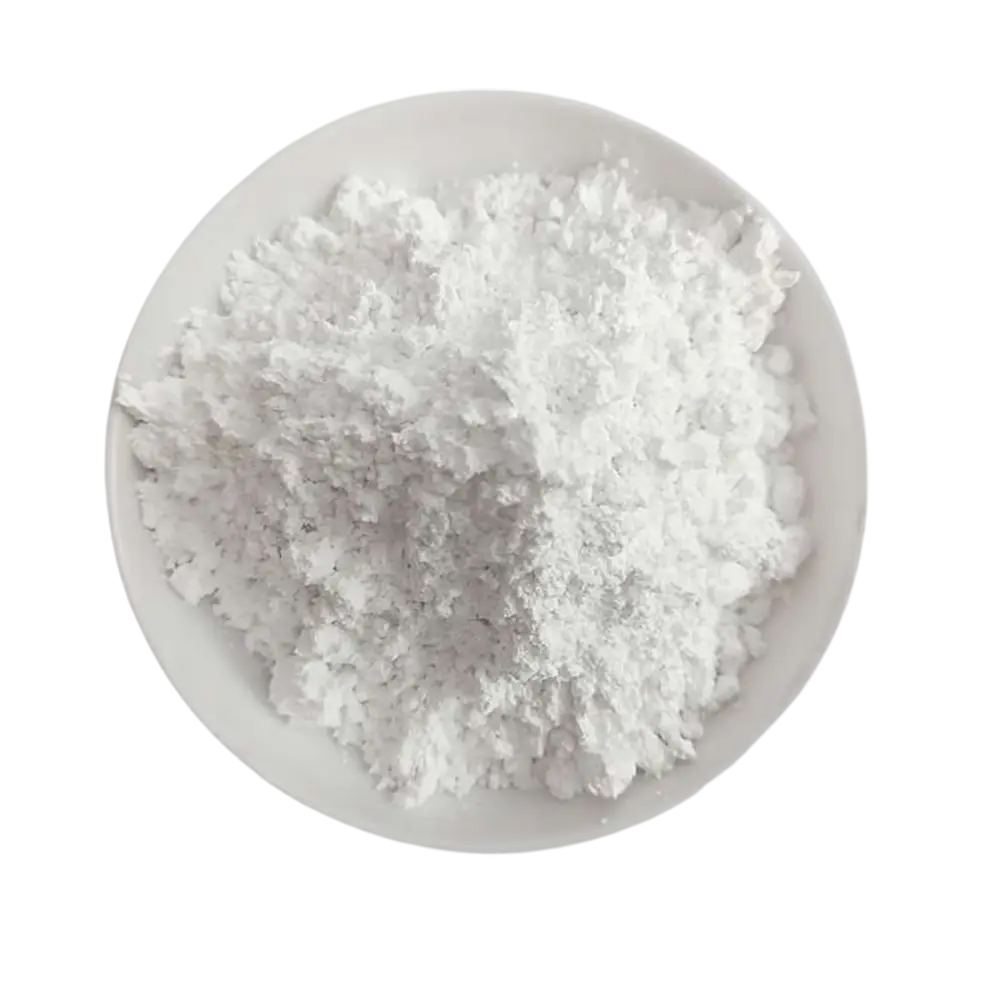
Hafnium Oxide powder is a white crystalline powder composed of hafnium and oxygen elements, with high melting point, high hardness, good chemical stability, high dielectric constant, etc. It is widely used in semiconductors, optics, high temperature materials, nuclear industry and many other fields.
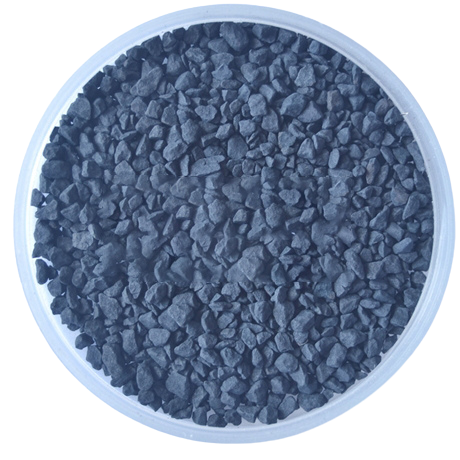
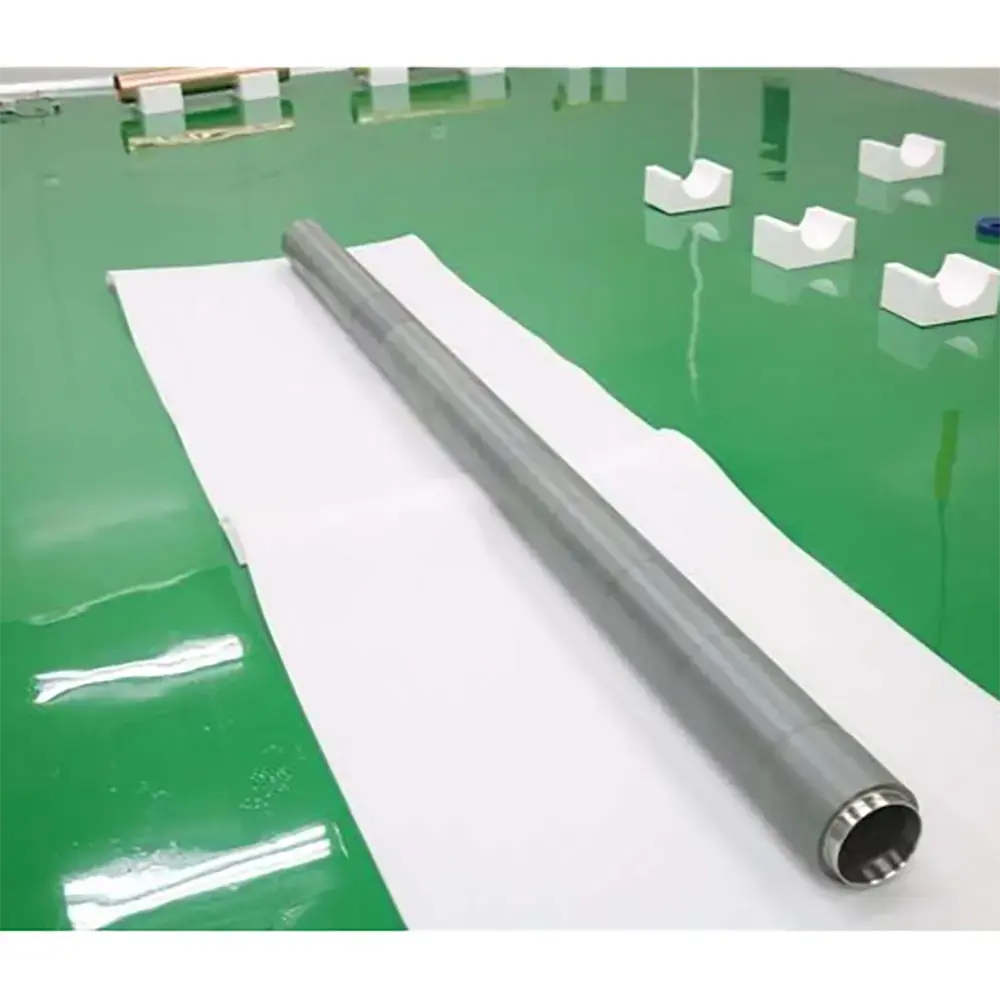
VIMATERIAL offers high-purity hafnium oxide powder with customizable particle sizes. We also provide hafnium oxide particles and hafnium oxide targets. Contact us for more information.
Chemical formula: HfO₂
Molar mass: 210.49 g/mol
Appearance: usually off-white or white powder
Density: 9.68 g/cm³
Melting point: 2810°C
Boiling point: 5400°C;
Band gap: 5.3 to 5.7 eV, an electrical insulator;
Refractive index: high in the near-ultraviolet to mid-infrared region, e.g. 2.13 at 1700 nm;
Coefficient of thermal expansion: low
Thermal conductivity: 1.1 W/m-K
Young’s modulus: 57 GPa
Electrical resistivity: high, typically 9 × 10⁹ Ω-m.
Semiconductor field
Optical field
High-temperature ceramics
Chemical field
Other fields
Packaging:
Hafnium oxide powder is typically double-layered (e.g., inner polyethylene bag + outer aluminum foil bag or plastic drum) to prevent moisture absorption or reaction with airborne impurities. A desiccant should be included, and product information, batch number, and precautions should be clearly labeled on the outer packaging to ensure safety and traceability during transportation and use.
Storage:
Hafnium oxide powder should be stored in a dry, cool, and well-ventilated environment, avoiding moisture, high temperatures, and direct sunlight, and kept away from corrosive substances such as acids and alkalis. During storage, the packaging should be kept sealed to prevent moisture absorption, clumping, or contamination.
Q1: What is hafnium oxide used for?
A: Hafnium oxide (HfO₂) is an important inorganic compound. Due to its high thermal neutron absorption cross-section, it is a key material for nuclear reactor control rods and also has wide applications in semiconductors, optics, and advanced memory technologies.
Nuclear Energy and High Temperature Engineering: Nuclear reactor control rods and protective materials, high-temperature refractory and coating materials, hafnium metal preparation and precursors.
Semiconductor and Microelectronics: Transistor gate dielectric layers, memory applications, other electronic components.
Optics and Multifunctional Materials: Optical coatings and laser materials, ceramics and catalysts, special functional materials.
Q2: What is the difference between Al2O3 and HfO2?
A: Al₂O₃ (aluminum oxide) and HfO₂ (hafnium oxide) differ mainly in dielectric properties and application focus. Al₂O₃ has a lower dielectric constant but excellent interface quality, high thermal stability, and low leakage, making it suitable for passivation and interface layers. HfO₂ has a much higher dielectric constant, which is beneficial for advanced CMOS scaling and high-density devices, but it has relatively higher leakage and lower thermal stability. In practice, Al₂O₃ is used for stability and interface control, while HfO₂ is used for high-k performance, and combining both can achieve better overall device performance.
Q3: What is hafnium oxide?
A: Hafnium oxide (HfO₂) is an inorganic compound composed of hafnium and oxygen. It is an important functional material belonging to the transition metal oxide family. It possesses a high melting point (approximately 2810℃), high hardness (Mohs hardness 6.5-7.5), and excellent chemical stability, being virtually insoluble in water and most acids (except hydrofluoric acid) at room temperature. These properties make it a core material in high-temperature materials, optical coatings, and electronic devices.
Q4: What is the lead time for hafnium oxide powder?
A: In Stock: Immediate shipping
Standard Products: Generally 2-4 Weeks
Customized Products: Determined based on required details
Special requirements can be discussed
VI HALBLEITERMATERIAL GmbH (VIMATERIAL) employs a stringent quality assurance system to ensure the reliability of our product quality. Strict quality control is implemented throughout the entire production chain, and for defective products, we strictly enforce the principle of rework and redo. Each batch is released only after passing detailed specification tests.
Every batch of our materials is independently tested, and, if necessary, we send samples to certified companies for testing. We provide these documents and analysis certificates with the shipment to certify that our products meet the required standards.
Contact our team of experts today and let us help you with your business!