


Indium foil is a soft, malleable metal foil used in thermal interface assemblies, vacuum sealing and specialized low-temperature applications. Selecting the right indium foil requires more than choosing a thickness: material purity, dimensions, surface condition and assembly requirements can all affect performance.
VIMATERIAL supplies 99.99% purity indium foil in thicknesses from 0.05 mm to 2 mm for industrial, electronic and research applications. Customers can specify their required dimensions and application conditions so that the material can be matched to the intended use.
This guide explains how to select indium foil, which specifications to confirm before ordering, and what to consider when using it as a thermal interface or sealing material.
What Is Indium Foil?
Indium foil is a thin, rolled form of indium metal. Indium is a soft, silvery metal with good malleability and a relatively low melting point of approximately 156.6°C. These characteristics make it useful in applications where a metal needs to conform to contacting surfaces or operate under specific low-temperature conditions.
Unlike rigid metal shims, indium foil can deform under appropriate assembly pressure. In a thermal interface, this deformation can help the foil conform to surface irregularities and improve physical contact between components. In a sealing application, it can help form a seal between suitably designed mating surfaces.
Indium foil is not the same as indium tin oxide (ITO). Indium foil is metallic indium, while ITO is a compound material used primarily to produce transparent conductive coatings. The two materials have different compositions, properties and applications.
What Is Indium Foil Used For?
The suitability of indium foil depends on the design of the assembly, the operating environment and the required material properties. Common application areas include thermal management, specialized sealing and laboratory or engineering assemblies.
1. Thermal Interface Materials
Indium foil can be used as a metal thermal interface material (TIM) between contacting components, such as an electronic device package and a heat spreader or cooling plate.
Its softness allows it to conform to contacting surfaces under suitable pressure. This can help reduce gaps at the interface and improve thermal contact. The actual thermal performance depends on factors such as surface flatness, contact pressure, foil thickness, surface condition and assembly design.
When selecting indium foil for thermal management, consider the available space, required contact area, clamping method and operating temperature. The foil thickness should be selected for the specific assembly rather than assumed to be interchangeable across different devices.
2. Vacuum Sealing and Gasket Applications
Indium foil can serve as a sealing material between appropriately designed mating surfaces. Its malleability allows it to deform under compression, helping it conform to surface irregularities.
Potential applications include specialized vacuum assemblies, low-temperature equipment and laboratory systems. Suitability depends on the sealing geometry, surface materials, compression method, operating temperature and required vacuum performance.
Indium foil should not be assumed to provide a reliable seal in every assembly. The design should be validated under the actual operating conditions, especially where leak-rate requirements are critical.
3. Low-Temperature and Research Applications
Indium remains ductile at low temperatures, making it useful in certain cryogenic and scientific assemblies. Depending on the design, indium foil may be used as a compliant interface, contact material or component in a specialized experimental setup.
For these applications, confirm the full operating temperature range, mechanical loading, compatibility with adjacent materials and any requirements for cleanliness or surface preparation before selecting the foil.
How to Choose the Right Indium Foil Thickness?
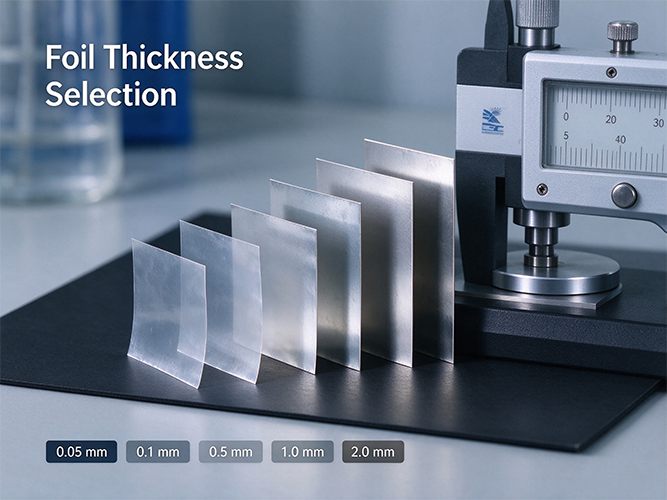
Thickness is one of the first specifications to define when ordering indium foil. VIMATERIAL offers thicknesses from 0.05 mm to 2 mm.
The appropriate thickness depends on the available assembly gap, the flatness of the contacting surfaces, the required deformation and the mechanical design. A thicker foil is not automatically better, and a thinner foil is not always more suitable.
For example, a thermal interface with a tightly controlled gap may require a different thickness from a sealing assembly designed to accommodate larger surface irregularities. The selected foil must also fit the assembly without creating excessive stress or interfering with component alignment.
| Selection Factor | What to Consider |
|---|---|
| Assembly Gap | Determine the space available for the foil in the assembled component. |
| Surface Flatness | Consider how closely the mating surfaces contact one another and whether surface irregularities need to be accommodated. |
| Contact Pressure | Confirm the pressure that the assembly can apply without damaging the components. |
| Application Type | Thermal interfaces and sealing assemblies may have different thickness requirements. |
| Operating Conditions | Check the operating temperature and any mechanical or environmental constraints. |
| Dimensional Requirements | Specify the required thickness and the acceptable tolerance for the application. |
When the required thickness is not yet established, it is useful to evaluate the assembly design and contact conditions before finalizing the specification. For demanding applications, trial assembly or performance testing may be necessary.
How Does Indium Foil Purity Affect Material Selection?
The purity of indium foil is an important specification for electronic assemblies, thermal management systems and research applications. The appropriate grade depends on the application’s material requirements, impurity limits and quality-control criteria.
VIMATERIAL offers 99.99% purity indium foil. This grade provides a clearly defined starting point for customers who require high-purity indium metal in foil form.
When specifying indium foil, consider the following factors:
- Purity requirement: Confirm whether 99.99% purity meets the requirements of your application.
- Impurity limits: Identify any specific metallic impurities that need to be controlled.
- Application requirements: Consider whether the material will be used for thermal contact, sealing or another specialized purpose.
- Quality documentation: Confirm the required material certificate or analytical report before placing an order.
A nominal purity grade alone does not establish suitability for every application. For demanding projects, the material specification and required documentation should be confirmed before ordering.
Why Surface Quality and Dimensional Accuracy Matter?
Indium is a soft metal, so the foil can be susceptible to dents, creases, scratches and deformation during cutting, handling or transportation. These issues may matter when the material must cover a defined contact area or fit into a precision assembly.
For thermal interfaces, surface condition and the quality of contact between mating components can influence thermal performance. For sealing applications, dimensional accuracy and the condition of the sealing surfaces can affect assembly and sealing consistency.
Before ordering indium foil, define the relevant requirements:
- Thickness: the nominal thickness and acceptable tolerance.
- Length and width: the required sheet dimensions or cut-piece size.
- Shape: rectangular sheets, strips or other specified geometries, subject to confirmation.
- Surface condition: any restrictions on visible defects, contamination or surface treatment.
- Packaging: protection against deformation and contamination during storage and transport.
- Inspection documents: any certificates, reports or acceptance criteria required for the order.
For custom or precision applications, provide a drawing or dimensional specification whenever possible. This helps clarify the requirements before production and reduces the risk of receiving material that does not fit the intended assembly.
Pure Indium Foil vs. Indium Alloy Foil
Pure indium foil and indium alloy foil should not be treated as interchangeable materials. Adding other elements changes the composition and can alter properties such as melting behaviour, mechanical characteristics and joining performance.
Pure indium foil is appropriate when the application specifically requires metallic indium. An indium alloy may be more suitable when a project requires a particular alloy composition or joining behaviour. The choice should be based on the actual operating conditions and technical specification.
| Comparison Factor | Pure Indium Foil | Indium Alloy Foil |
|---|---|---|
| Composition | Indium metal | Indium combined with one or more other elements |
| Material Specification | Defined by indium purity and relevant dimensional requirements | Defined by alloy composition and relevant dimensional requirements |
| Thermal Behaviour | Governed by the properties of indium and the assembly design | Depends on the specific alloy composition |
| Joining Performance | Depends on surface condition, temperature and process design | Depends on alloy composition and process conditions |
| Selection Priority | Use when metallic indium is required | Consider when a specific alloy property or joining requirement is needed |
If your application requires an alloy rather than pure indium, specify the required composition and performance criteria separately. Do not assume that an alloy will have the same melting point or mechanical properties as pure indium.
What Should You Check Before Ordering Indium Foil?
A clear specification makes it easier to assess whether the material is suitable for your application. Before requesting a quotation, prepare the following information.
| Specification | Information to Provide |
|---|---|
| Material | Pure indium foil or a specified indium alloy |
| Thickness | Required thickness within the available 0.05–2 mm range |
| Dimensions | Required length, width and, where applicable, cut-piece shape |
| Purity | Required purity grade and any impurity limits (99.99%) |
| Application | Thermal interface, sealing, research assembly or another defined use |
| Operating Conditions | Relevant temperature, pressure, vacuum conditions and mechanical loading |
| Surface Requirements | Cleanliness, appearance or other application-specific criteria |
| Quality Documents | Required certificates, inspection reports or acceptance documents |
| Quantity | Sample, prototype or production quantity |
Not every application requires the same level of specification. For a straightforward project, material, thickness, dimensions and quantity may be sufficient to begin a quotation. More demanding applications may require drawings, detailed tolerances, purity documentation or additional inspection.
VIMATERIAL supplies indium foil for customers who need material specifications aligned with their own application requirements. Providing these details at the enquiry stage helps establish a clear basis for specification review and order confirmation.
Packaging and Storage of Indium Foil
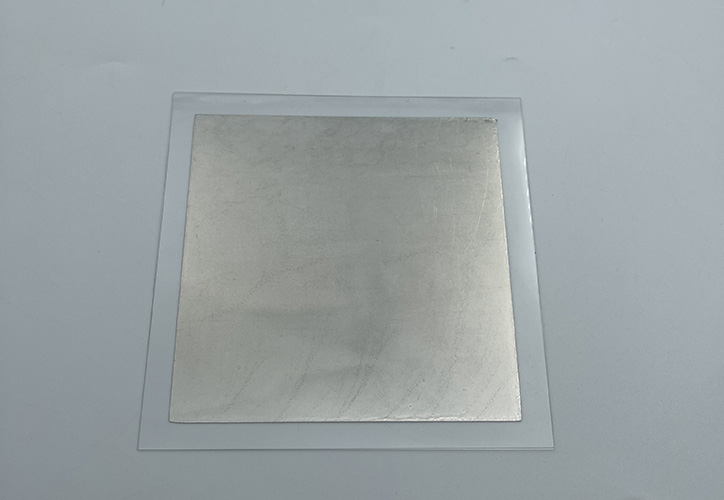
Indium foil should be protected against contamination, moisture exposure and mechanical deformation. Because the metal is soft, inappropriate handling or packaging can affect its flatness and surface condition.
Keep the foil in its original protective packaging until it is required for use. Store it in a clean, dry environment and avoid placing heavy objects on the material. Handle it with clean tools or suitable gloves when surface cleanliness is important.
For sensitive applications, define packaging and cleanliness requirements before ordering. If the foil will be used in a vacuum system, electronic assembly or other controlled process, confirm whether additional cleaning, surface preparation or special handling is required by the application.
Storage and handling conditions should also follow the requirements of the specific process and any applicable product documentation.
Frequently Asked Questions
1. What is indium foil used for?
Indium foil is used in thermal interface assemblies, specialized vacuum sealing and selected low-temperature or laboratory applications. Its softness and malleability allow it to conform to contacting surfaces under suitable conditions.
2. What purity and thicknesses does VIMATERIAL offer for indium foil?
VIMATERIAL offers 99.99% purity indium foil in thicknesses from 0.05 mm to 2 mm. The suitable specification depends on the intended application, assembly gap, contact conditions and sealing requirements. Customers can also specify any additional impurity limits, dimensional tolerances or documentation requirements when enquiring.
3. How do I choose the right indium foil thickness?
Start with the available assembly space, mating-surface flatness, required contact area and mechanical loading. Then confirm the thickness tolerance and whether the foil is intended for thermal contact, sealing or another application.
4. Can indium foil be used as a thermal interface material?
Yes. Indium foil can be used between contacting components to improve thermal contact. Performance depends on the foil thickness, surface condition, contact pressure and overall assembly design.
5. Can indium foil be used for vacuum sealing?
Indium foil can be used as a sealing material in suitably designed assemblies. The design must account for the mating surfaces, compression method, operating temperature and required leak performance.
6. What is the difference between indium foil and ITO?
Indium foil is metallic indium. ITO, or indium tin oxide, is a compound of indium oxide and tin oxide commonly used in transparent conductive coatings. They are different materials and serve different purposes.
7. What information should I provide when requesting indium foil?
Provide the required material, thickness, dimensions, purity, quantity and intended application. If the foil is for a precision assembly, also include dimensional tolerances, operating conditions and any quality-documentation requirements.
References
- [1] Royal Society of Chemistry (RSC). Indium – Element Information, Properties and Uses.
- [2] National Institute of Standards and Technology (NIST). Standard Reference Material 1745: Indium Freezing-Point Standard and Standard Reference Material 2232: Indium DSC Melting-Point Standard.
- [3] Lewis, B. G. Sealing Vacuum and Cryogenic Components with Indium. CryoGas International, Vol. 33, No. 9, October 1995. International Institute of Refrigeration (IIR).
- [4] National Institute for Occupational Safety and Health (NIOSH). NIOSH Pocket Guide to Chemical Hazards: Indium. Centers for Disease Control and Prevention (CDC).
Further Reading
- Indium Metal: A Metal Even Rarer Than Rare Earths
- Indium Powder: Properties, Production Methods, Applications, and Buying Guide
- ITO Film: A Transparent Conductive Material Behind Modern Technology
- Indium-Based Materials: The “Soft Metal” Powering a Revolution in Chips and Communications
- Common ITO Sputtering Target Problems and Solutions
Need a Custom Indium Foil Solution?
VIMATERIAL supplies 99.99% purity indium foil in thicknesses from 0.05 mm to 2 mm for industrial, electronic and research applications.
To help us assess your requirements, please provide the target thickness, dimensions, quantity and intended application. If your project has specific impurity limits, dimensional tolerances or documentation requirements, include these details in your enquiry.
Contact VIMATERIAL to discuss your indium foil requirements and request a quotation.