Indium Metal: A Metal Even Rarer Than Rare Earths

View Our Products

Contact Us Now !

When people talk about rare metals, rare earth elements are usually the first thing that comes to mind. Yet there is another metal—far less well known, but highly significant in both resources and industry: indium metal.

Indium metal is like that quiet, unassuming friend who rarely stands out in a crowd, yet always steps up at the critical moment. It is scarce in supply, unique in its properties, and indispensable to modern technology. As solar power, semiconductors, and next-generation display technologies continue to expand rapidly, indium is becoming increasingly strategic. Some analysts even describe it as “one of the most important rare metals to watch over the next decade.

So what exactly is indium metal used for? Why is it so scarce? And what does its future look like?

1. What Is Indium Metal?

Indium is a silvery-white metal with a slight bluish tint. It is extremely soft—so soft that pressing it lightly can leave a mark. It has a melting point of 156.61°C, a boiling point of 2,080°C, and a density of 7.3 g/cm³. Thanks to its excellent ductility, conductivity, and plasticity, indium metal can easily be pressed into sheets or cut into blocks.

Chemically, indium metal behaves somewhat like iron. Between room temperature and its melting point, it reacts slowly with oxygen in the air, forming a very thin oxide layer on its surface.

Because of these unique characteristics, indium does not exist in nature in pure form. Instead, it is always found combined with other elements. Indium is valued for its outstanding ductility, low melting point, high boiling point, low electrical resistance, and strong corrosion resistance. In addition, its excellent transparency and conductivity have made it a highly important semiconductor material.
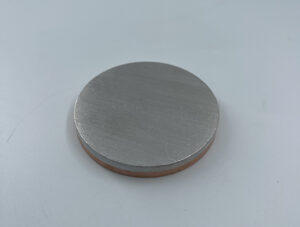
Indium metal target - VIMATERIAL

These special properties explain why indium metal is so highly valued in advanced technology.

In fact, many of the products we use every day depend on indium metal:

  • Smartphone touchscreens and displays
  • TVs and computer monitors
  • Solar panels, especially CIGS thin-film solar cells
  • Semiconductor chip soldering materials
  • Advanced medical equipment
  • Aerospace materials

The single most important application is ITO (indium tin oxide), a transparent conductive coating used in touchscreens and LCD/OLED panels. More than 70% of global indium demand comes from ITO.

Put simply: without indium metal, there would be no touchscreen era.

2. Why Is Indium So Scarce?

Indium metal is often described as a strategic metal because global reserves are limited. Most of the world’s known indium resources are concentrated in a handful of countries, including China, Peru, the United States, Canada, and Russia.

Global indium resources are estimated at around 60,000 tonnes, but only about half of this amount is considered economically recoverable.

Indium metal belongs to the category of dispersed rare metals. In the Earth’s crust, indium-bearing minerals mainly include roquesite, sakuraiite, and dzhalindite. However, these minerals occur only in extremely small quantities, and no natural ore body containing indium as the main component has ever been discovered.

In reality, around 90% of the world’s primary indium production comes as a by-product of zinc refining, with smaller amounts also recovered from lead ores. The concentration of indium in these ores is extremely low—typically between one part per million and one part per ten thousand.
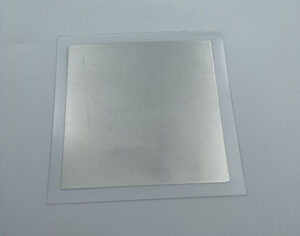
Indium metal foil - VIMATERIAL

In other words, indium metal is not mined directly. It is extracted indirectly from zinc and lead ores.

This creates two major challenges:

1). Supply Is Driven by Zinc Mining, Not by Indium Demand

Even if demand for indium metal rises sharply, mining companies will not open new mines just to produce more indium. Production depends primarily on how much zinc ore is being mined and processed.

2). Extraction Is Difficult and Expensive

Recovering and refining indium metal is technically challenging and costly. Many countries still lack advanced extraction and purification technology, making the global supply chain fragile and creating a form of “structural scarcity.”

This scarcity gives indium metal considerable economic value. As technology continues to advance and demand keeps growing, the strategic importance—and the market value—of indium is likely to increase further.

3. What Is the application of Indium Metal?

Today, indium has become an essential material in modern industry, defense technology, and cutting-edge research. Its main applications include ITO targets, thin-film photovoltaics, computer chips, semiconductor materials, solders, and specialty alloys.

Among these, ITO remains by far the largest market.

3.1 Electronics and Information Technology

Indium is a key material in the production of LCD displays and touchscreens. Thin films made from ITO combine excellent electrical conductivity with high optical transparency, making displays brighter, clearer, and more responsive.

Indium is also widely used in semiconductors and integrated circuits, where it plays an important role in modern electronics manufacturing.

3.2 Renewable Energy and Semiconductors

Indium is equally important in renewable energy and semiconductor technology.New energy - VIMATERIAL

In copper indium gallium selenide (CIGS) thin-film solar cells, indium improves the performance of the light-absorbing layer. These solar cells can achieve conversion efficiencies of more than 22% while reducing production costs.

Indium-based compounds such as indium phosphide (InP) and indium arsenide (InAs) are essential materials for 5G communications, fiber-optic networks, and high-frequency chips. They are helping to drive the next generation of telecommunications technology.

3.3 Aerospace and Defense

Indium metal alloys offer excellent corrosion resistance and mechanical properties, making them useful in aerospace and military applications.

Silver-lead-indium alloys can be used in bearings for high-speed aircraft engines. Indium-tin alloys are used as vacuum sealing materials and in low-melting-point contact materials.

Indium also appears in missile guidance systems and other critical defense technologies, providing important support for aerospace and national security industries.

3.4 Medical Research and Healthcare

Indium has several specialized medical applications. Indium colloids are used in scans of the liver, spleen, and bone marrow. Indium-DTPA is used in brain and kidney imaging, while indium-based particles are used in lung and placental scans.

Researchers are also exploring liquid metal alloys made from gallium and indium. These materials may one day help repair damaged nerves and reduce the risk of long-term disability after severe injuries.

4. The Future of Indium

Indium may be a relatively small and obscure metal, but it occupies a critical position in several strategic industries.

As technology continues to evolve, the range of applications for indium is expected to expand even further. Hidden deep inside the technologies we rely on every day, this rare metal is quietly supporting scientific progress, industrial innovation, and the transition to a more sustainable future.

5. Frequently Asked Questions about Indium Metal

1. What is indium metal used for?

Indium has become an essential material in modern industry, defense technology, and cutting-edge research. Its main applications include ITO targets, thin-film photovoltaics, computer chips, semiconductor materials, solders, and specialty alloys.

2. Is indium metal safe to touch?

Direct contact with indium by hand is generally considered relatively safe in short-term, occasional situations where skin is intact and unbroken, as skin is a natural protective barrier that indium ions have difficulty penetrating. However, caution is needed when sanding indium sheets to generate dust, or when welding to produce fumes—inhaling these tiny particles can irritate the respiratory tract, causing symptoms such as coughing and chest tightness.

3. Can you cut indium with a knife?

Yes, indium can be cut with a knife. Indium is a very soft metal; it can be cut with a knife at room temperature and can even be scratched with a fingernail. This property makes it a “soft magician” in the metal world.

However, it should be noted that indium is easily oxidized at high temperatures, and its dust or vapor is somewhat toxic. It is recommended to handle it in a well-ventilated environment and avoid direct skin contact or inhalation of dust.

Contact Us

Contact Us