


Hafnium diboride (HfB₂), also known as hafnium boride, is a refractory ceramic compound composed of hafnium and boron. It is widely studied as an ultra-high-temperature ceramic (UHTC) because of its high melting point, hardness, thermal conductivity, electrical conductivity and chemical stability.
HfB₂ is particularly relevant for applications where conventional metals and ceramics cannot maintain their performance under extreme temperatures, including high-temperature structural components, protective coatings, aerospace materials and advanced ceramic research.
What Is Hafnium Diboride?
Hafnium diboride has the chemical formula HfB₂ and CAS No. 12007-23-7. Its molecular weight is approximately 200.11 g/mol.
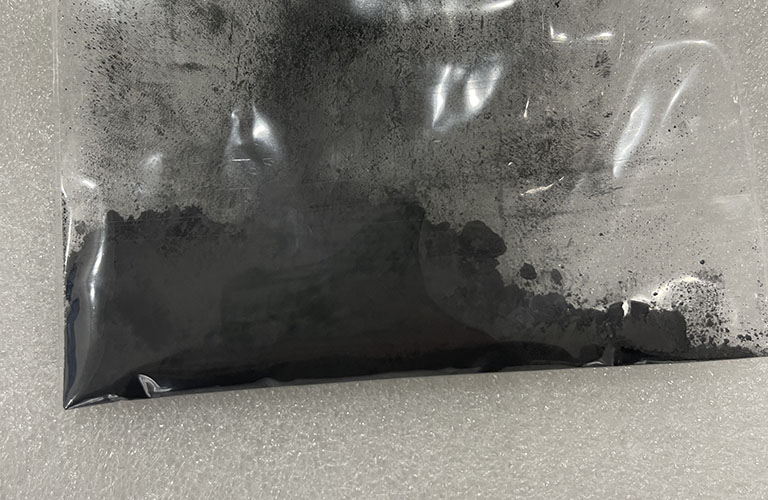
The material is typically supplied as a grey to grey-black powder or metallic-lustre crystalline material. Its density is approximately 10.5 g/cm³, while the melting point is generally given in the range of approximately 3250–3380°C, depending on material composition and measurement conditions.
HfB₂ belongs to the family of transition-metal diborides and has a hexagonal AlB₂-type crystal structure with space group P6/mmm. In this structure, hafnium and boron atoms form a stable layered arrangement that contributes to the material’s combination of ceramic hardness and metallic-type electrical and thermal conductivity.
Key Properties of Hafnium Diboride
The main properties that make hafnium diboride attractive for high-temperature applications include:
| Property | Typical information |
|---|---|
| Chemical formula | HfB₂ |
| CAS No. | 12007-23-7 |
| Molecular weight | ~200.11 g/mol |
| Crystal structure | Hexagonal, AlB₂-type |
| Space group | P6/mmm |
| Appearance | Grey to grey-black powder / metallic-lustre crystal |
| Density | ~10.5 g/cm³ |
| Melting point | Approximately 3250–3380°C |
| Hardness | High; reported microhardness values vary with material and test conditions |
| Thermal conductivity | High compared with many conventional ceramics |
| Electrical conductivity | Good |
| Chemical stability | High under many ambient conditions |
The exact values should be evaluated together with purity, particle size, phase composition, density and processing history rather than treated as universal specifications.
1. Extremely High Temperature Resistance
One of the most important characteristics of Hafnium boride is its extremely high melting point. Values of approximately 3250–3380°C place hafnium diboride among the refractory materials considered for ultra-high-temperature environments.
This property makes HfB₂ attractive for components and coatings exposed to severe thermal conditions, particularly when dimensional stability and resistance to thermal degradation are required.
2. High Hardness
Hafnium boride is a hard ceramic material. Its strong bonding and dense crystal structure contribute to high hardness and wear resistance.
For powder and ceramic applications, hardness is particularly relevant when hafnium diboride is used as a reinforcing phase, wear-resistant coating material or high-temperature structural ceramic.
3. Thermal Conductivity and Thermal Stability
Unlike many conventional oxide ceramics, Hafnium boride combines ceramic hardness with relatively high thermal and electrical conductivity. Its thermal conductivity is commonly considered to be in the approximate range of 60–100 W/(m·K), although the actual value can vary with temperature, density, porosity, purity and microstructure.
Its relatively low thermal expansion and high thermal conductivity can also be beneficial in applications involving rapid temperature changes.
4. Electrical Conductivity
Hafnium diboride has good electrical conductivity for a ceramic material. This characteristic allows it to be considered for electrically conductive high-temperature components, electrodes and selected electronic-material applications.
5. Chemical Stability
Hafnium diboride is chemically stable under many room-temperature conditions and is resistant to many chemical environments, although hydrofluoric acid is an important exception.
High-temperature oxidation behaviour is different from room-temperature chemical stability and should therefore be considered separately when designing components for oxidising environments.
HfB₂ as an Ultra-High-Temperature Ceramic
Hafnium boride is generally considered part of the ultra-high-temperature ceramic family because its melting point and high-temperature stability allow it to operate in environments beyond the practical range of many conventional engineering materials.
However, Hafnium diboride is not selected simply because of its melting point. In practical ceramic processing, factors such as powder purity, particle-size distribution, oxygen and carbon impurities, phase composition, sintering behaviour and final density can strongly influence performance.
Fine and relatively uniform powders can be beneficial for achieving improved packing and sintering behaviour, while excessive surface area can also increase the tendency toward agglomeration.
Applications of Hafnium Diboride (HfB₂)
Hafnium diboride is mainly considered for applications that require a combination of very high temperature resistance, hardness, thermal conductivity, electrical conductivity and chemical stability. Its applications can be broadly divided into high-temperature ceramics, protective coatings, electronic materials and advanced materials research.
High-Temperature Structural Materials
Hafnium boride is suitable for research and development of high-temperature structural ceramics where resistance to extreme heat, mechanical wear and chemical degradation is required.
It can be used as a matrix material, reinforcing phase or ceramic component in systems designed for demanding thermal environments, including aerospace and high-temperature engineering applications.
Protective and Wear-Resistant Coatings
The high hardness, thermal stability and chemical resistance of HfB₂ make it a candidate material for protective coatings exposed to severe thermal or mechanical conditions.
HfB₂-containing coatings can be investigated for applications requiring resistance to wear, erosion and high-temperature degradation. The final coating performance depends strongly on coating composition, deposition method, substrate compatibility and processing conditions.
Aerospace and Ultra-High-Temperature Applications
Hafnium boride is of interest in aerospace materials research because of its combination of extremely high melting point, thermal stability and mechanical strength.
It can be considered for ultra-high-temperature ceramic systems and thermal protection components where conventional materials may lose their mechanical or dimensional stability at extreme temperatures. In practical aerospace applications, oxidation resistance and environmental durability must also be evaluated alongside the intrinsic properties of HfB₂.
Electronic and Electrically Conductive Materials
HfB₂ combines ceramic hardness with relatively high electrical and thermal conductivity, making it suitable for research into electrically conductive ceramic components and high-temperature electronic materials.
It has also been investigated for field-emission applications, where electrical conductivity, thermal stability and surface characteristics are important.
Advanced Ceramic Composites
HfB₂ can be incorporated into ceramic composites as a reinforcing or functional phase. Its high hardness, thermal stability and conductivity can complement the properties of other ceramic materials.
The final performance of an HfB₂-containing composite depends on factors such as phase composition, particle size, dispersion, interface bonding and sintering conditions.
High-Temperature Research and Specialized Materials
Beyond established ceramic applications, HfB₂ is used in advanced materials research involving refractory ceramics, high-temperature coatings, functional materials and other specialized material systems.
For research and development, HfB₂ powder can be selected according to purity, particle size, morphology and other parameters required by the synthesis or processing method.
How Is HfB₂ Powder Produced?
Several synthesis routes can be used to produce hafnium diboride.
One established approach is a high-temperature carbothermal reduction route using hafnium oxide, boron-containing materials and carbon. HfO₂, B₂O₃ and carbon can serve as typical starting materials for this type of synthesis.
Other approaches include precursor-based synthesis, reduction reactions and gas-phase deposition methods. The selected process affects the resulting powder’s purity, particle size, morphology, phase composition and surface characteristics.
For high-performance applications, the synthesis route should therefore be considered together with the final powder specification rather than evaluated independently.
What Should Be Considered When Selecting HfB₂ Powder?
For research and industrial applications, several parameters are particularly important:
Purity: High-purity hafnium diboride can help reduce the influence of oxygen, carbon and other secondary phases.
Particle size: Particle size and distribution influence surface area, dispersion, packing and sintering behaviour.
Phase composition: XRD analysis can be used to identify the primary HfB₂ phase and possible secondary phases.
Morphology: Particle morphology can affect powder flow, dispersion and subsequent processing.
Packaging: Fine hafnium boride powder should be protected from moisture and unnecessary exposure to air to reduce agglomeration and maintain consistent powder handling behaviour.
VIMATERIAL can supply hafnium diboride powder in nano- or micron-scale particle sizes, with purity of 99%. Particle size and purity can also be customized according to specific application requirements.
HfB₂ Powder from VIMATERIAL
VIMATERIAL supplies hafnium diboride powder for research, advanced ceramics, high-temperature materials and other specialized applications.
Depending on the application, specifications can be discussed according to:
- HfB₂ purity
- Particle size
- Particle-size distribution
- Powder morphology
- Packaging quantity
- Customized material requirements
Our hafnium boride powder is available with high purity, fine particle size and controlled particle-size distribution. Specifications can be adjusted according to the requirements of ceramic processing, coating preparation, composite manufacturing and materials research.
For a specific ceramic, coating or research process, the appropriate specification should be selected according to the required processing method and final material performance.
FAQs
1. What is HfB₂?
HfB₂ is hafnium diboride, a refractory ceramic compound composed of hafnium and boron. It is known for its high melting point, hardness, thermal conductivity, electrical conductivity and chemical stability.
2. What is the melting point of HfB₂?
The melting point of HfB₂ is generally given in the range of approximately 3250–3380°C. The exact value can vary depending on material composition and test conditions.
3. Is hafnium diboride a ceramic?
Yes. HfB₂ is commonly considered an ultra-high-temperature ceramic and belongs to the transition-metal diboride family.
4. What is hafnium boride powder used for?
HfB₂ powder is used as a starting material for high-temperature ceramics, ceramic composites, refractory materials, wear-resistant coatings, protective coatings and advanced materials research.
5. What particle sizes are available?
HfB₂ powder can be produced in different particle-size ranges, from nano-scale to micron-scale materials. The appropriate particle size depends on the intended processing route and application.
6. How should HfB₂ powder be stored?
HfB₂ powder should be sealed and stored in a dry, cool environment. Protection from moisture and unnecessary exposure to air can help reduce agglomeration and maintain consistent powder handling performance.
Conclusion
Hafnium diboride (HfB₂) is a high-performance refractory ceramic combining an extremely high melting point with high hardness, thermal conductivity, electrical conductivity and chemical stability. These characteristics make it an important material for ultra-high-temperature ceramics, aerospace research, advanced coatings and other demanding applications.
For powder-based processing, however, material selection should go beyond the nominal chemical formula. Purity, particle size, particle-size distribution, phase composition and packaging can all influence subsequent processing and final ceramic performance.
References
- [1] Golla, B. R., Mukhopadhyay, A., Basu, B., & Thimmappa, S. K. (2020). Review on ultra-high temperature boride ceramics. Progress in Materials Science, 111, 100651. https://doi.org/10.1016/j.pmatsci.2020.100651
- [2] Wyatt, B. C., Nemani, S. K., Hilmas, G. E., Opila, E. J., et al. (2024). Ultra-high temperature ceramics for extreme environments. Nature Reviews Materials, 9, 773–789. https://doi.org/10.1038/s41578-023-00619-0
- [3] Fahrenholtz, W. G., & Hilmas, G. E. (2012). Oxidation of ultra-high temperature transition metal diboride ceramics. International Materials Reviews, 57(1), 61–72. https://doi.org/10.1179/1743280411Y.0000000012
- [4] Zhang, X., Weng, L., Han, J., Meng, S., & Han, W. (2009). Preparation and Thermal Ablation Behavior of HfB₂–SiC-Based Ultra-High-Temperature Ceramics Under Severe Heat Conditions. International Journal of Applied Ceramic Technology, 6, 134–144. https://doi.org/10.1111/j.1744-7402.2008.02264.x
- [5] Bajpai, S., Dubey, S., Venkateswaran, T., Singh, S. S., & Balani, K. (2024). An insight to wetting and joining of HfB₂ and ZrB₂ based ultra high temperature ceramics: A review. Chemical Engineering Journal, 495, 153387. https://doi.org/10.1016/j.cej.2024.153387
Further Reading
- Ultra-High Temperature Ceramics (UHTCs): Materials for Extreme High-Temperature Applications
- High-Temperature Materials: Top 10 Heat-Resistant Materials for Extreme Environments
- Niobium boride (NbB₂) for Grain Refinement of Aluminum Alloys: Mechanism, Advantages and Selection Guide
- Hafnium Oxide (HfO₂): A High-Performance High-k Material for Advanced Electronics and Beyond
- Spherical Hafnium Powder: A New Choice for Additive Manufacturing and High-Performance Materials
Need a Custom Material Solution?
Contact VIMATERIAL to discuss Hafnium diboride powder specifications, purity, particle size and packaging requirements for your application.