


Aluminum oxynitride (AlON) is an advanced transparent ceramic for applications where optical transmission must be combined with mechanical durability, thermal stability, and chemical resistance. Its combination of high optical transmission, hardness, strength, wear resistance, and environmental stability has made AlON particularly attractive for infrared windows, transparent armor, aerospace optics, semiconductor equipment, and specialized protective components. AlON Transparent Ceramics are essential in these fields.
Why Is AlON Suitable for Demanding Applications?
The value of AlON comes from the combination of properties rather than a single characteristic.
Depending on the application, a transparent ceramic may need to withstand:
- Mechanical impact
- Scratching
- Abrasion
- Thermal stress
- Thermal shock
- Chemical attack
- Long-term environmental exposure
At the same time, the component must maintain optical transmission.
AlON can address several of these requirements within one ceramic material.
1. Infrared Windows
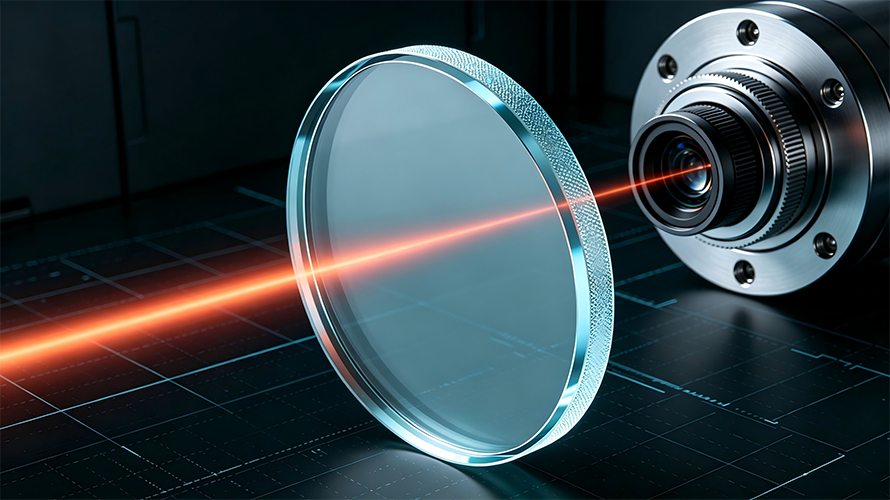
Infrared windows are one of the most important applications for transparent AlON ceramic.
An infrared window must allow the required wavelength range to pass through while maintaining sufficient mechanical and thermal performance.
AlON exhibits broad optical transmission extending from approximately 0.2 μm in the ultraviolet to around 6.0 μm in the infrared, making it suitable for a range of visible and infrared optical applications.
AlON is therefore considered for applications such as:
- Infrared windows
- Infrared sensor protection
- Optical covers
- Aerospace optical components
- High-temperature optical systems
Its optical and mechanical isotropy is another useful characteristic for transparent optical components.
2. Transparent Armor
Transparent armor is one of the most important potential applications for AlON.
The material combines:
- High hardness
- Useful mechanical strength
- Optical transparency
- Wear resistance
- Scratch resistance
- Relatively low density
Compared with conventional transparent protective systems, AlON can potentially reduce component thickness and weight while maintaining high protection performance.
This makes it attractive for applications such as:
- Armored vehicle windows
- Helicopter windows
- Protective observation windows
- Specialized transparent armor systems
Actual ballistic performance depends on the complete armor design, including thickness, bonding layers, projectile type, impact conditions, and system configuration.
3. Aerospace and Defense Optics
AlON ceramics can be considered for demanding aerospace and defense optical components where optical transmission must be combined with mechanical and thermal performance.
Potential applications include:
- Infrared windows
- Optical windows
- Protective covers
- Sensor windows
- High-temperature optical components
The combination of transparency and durability makes AlON an important candidate for environments where conventional glass may not be sufficiently robust.

4. High-Temperature Observation Windows
AlON’s thermal stability, thermal-shock resistance, and optical performance make it suitable for selected high-temperature observation applications.
Potential uses include:
- Industrial furnaces
- High-temperature processing equipment
- Thermal observation systems
- High-temperature optical instruments
The final material selection depends on operating temperature, wavelength, thermal cycling, component dimensions, and environmental conditions.
5. Semiconductor Manufacturing Equipment
AlON’s chemical resistance is particularly interesting for semiconductor-processing environments.
The supplied material identifies potential applications including:
- Plasma delivery tubes
- Wafer carriers
- Process housings
- Other corrosion-resistant ceramic components
In these environments, chemical durability can be important for service life.
AlON ceramics can therefore be considered as an alternative to other ceramic materials in selected applications where corrosion resistance and mechanical durability are required.
6. POS Scanner Windows
The combination of high hardness and durability makes AlON suitable for protective windows in POS scanners and similar equipment.
These components may be exposed to:
- Repeated contact
- Scratching
- Cleaning
- Mechanical wear
AlON’s hardness can help maintain surface quality over extended use.
7. Precision Instruments and Protective Components
AlON ceramics can also be used or considered for selected precision and protective components, including:
- Instrument housings
- Optical windows
- Protective lenses
- Prisms
- Protective eyewear components
- High-temperature observation components
Its value comes from combining optical performance with mechanical durability.
8. Optical and Luminescent Materials
The supplied material also identifies AlON as a potential matrix material for luminescent applications because of its optical and high-temperature characteristics.
Potential areas include:
- Luminescent ceramics
- Optical materials
- Solid-state optical systems
- Specialized display and communication applications
The suitability of AlON ceramics depends on composition, dopant selection, microstructure, and the specific optical function required.
AlON Application Overview
| Application | Key AlON Advantage |
|---|---|
| Infrared windows | Optical transmission + mechanical durability |
| Transparent armor | Hardness + strength + transparency |
| Aerospace optics | Optical + mechanical + thermal performance |
| High-temperature windows | Thermal stability + optical performance |
| Semiconductor equipment | Chemical resistance + durability |
| POS scanner windows | Hardness + wear resistance |
| Precision optical components | Transparency + mechanical protection |
| Luminescent materials | Optical and thermal characteristics |
What Makes AlON Attractive for Infrared Windows?
Infrared windows must satisfy several requirements simultaneously.
They need:
- Appropriate infrared transmission
- Mechanical durability
- Thermal stability
- Resistance to environmental exposure
- Suitable optical quality
AlON provides a useful combination of these properties.
Compared with sapphire, AlON can also offer manufacturing advantages for certain large or complex geometries.
For a detailed material comparison, see [AlON vs. Sapphire vs. Spinel: Which Transparent Ceramic Is Better?]
What Makes AlON Transparent Ceramics Attractive for Transparent Armor?
Transparent armor requires a difficult combination of optical and mechanical performance.
A suitable material must allow visibility while resisting mechanical damage and impact.
AlON’s high hardness, useful strength, wear resistance, and optical transmission make it particularly attractive for this application.
Its relatively low density compared with sapphire can also be relevant when overall system weight is important.
AlON Applications in Industry
The potential application range of AlON extends beyond defense and infrared optics.
Its combination of properties supports interest in:
- Semiconductor manufacturing
- Industrial optical equipment
- Precision instruments
- POS equipment
- Protective components
- High-temperature systems
However, commercial selection depends on the required performance, component size, manufacturing process, and cost.
Frequently Asked Questions
1. What is AlON mainly used for?
Important applications include infrared windows, transparent armor, aerospace optics, high-temperature observation windows, semiconductor equipment, and protective optical components.
2. Why is AlON used for transparent armor?
AlON combines high hardness, mechanical strength, optical transparency, wear resistance, and relatively low density.
3. Is AlON suitable for infrared windows?
Yes. AlON provides broad optical transmission extending into the infrared and can combine this with mechanical and thermal performance.
4. Can AlON be used in semiconductor equipment?
Yes. Its chemical and corrosion resistance makes it suitable for selected semiconductor-processing components such as plasma delivery tubes, wafer carriers, and process housings.
5. Is AlON suitable for high-temperature applications?
AlON has good thermal stability and thermal-shock resistance, making it suitable for selected high-temperature optical and industrial applications.
Conclusion
AlON transparent ceramic is valuable because it combines optical transmission with mechanical, thermal, and chemical performance.
Its most important application areas include infrared windows, transparent armor, aerospace and defense optics, high-temperature observation windows, and semiconductor-processing components.
As AlON powder quality, sintering technology, and ceramic manufacturing continue to improve, the material can provide an attractive solution wherever transparency, hardness, durability, and environmental resistance are required in the same component.
References
- [1] McCauley, J. W., Patel, P., Chen, M., Gilde, G., Strassburger, E., Paliwal, B., Ramesh, K. T., & Dandekar, D. P. (2009). AlON: A brief history of its emergence and evolution. Journal of the European Ceramic Society, 29(2), 223–236. https://doi.org/10.1016/j.jeurceramsoc.2008.03.046
- [2] Hartnett, T. M., Gentilman, R. L., Corbin, N. D., & McCauley, J. W. (1982). Aluminum oxynitride spinel (ALON) – A new optical and multimode window material. Ceramic Engineering and Science Proceedings. https://doi.org/10.1002/9780470318140.ch6
- [3] Long, G. G., Hartnett, T. M., Gentilman, R. L., & others. (1998). Optical properties of ALON (aluminum oxynitride). Infrared Physics & Technology, 39(4), 203–211. https://doi.org/10.1016/S1350-4495(98)00007-3
- [4] Liu, X. J., Chen, F., Zhang, F., Zhang, H. L., Zhang, Z., Wang, J., Wang, S. W., & Huang, Z. R. (2013). Hard transparent AlON ceramic for visible/IR windows. International Journal of Refractory Metals and Hard Materials, 39, 38–43. https://doi.org/10.1016/j.ijrmhm.2013.01.021
- [5] Krell, A., Klimke, J., & Hutzler, T. (2009). Advanced spinel and sub-μm Al₂O₃ for transparent armour applications. Journal of the European Ceramic Society, 29, 275–281.
- [6] Krell, A., Strassburger, E., Hutzler, T., & Klimke, J. (2013). Single and polycrystalline transparent ceramic armor with different crystal structure. Journal of the American Ceramic Society, 96, 2718–2721.
Further Reading
If you’re interested in aluminum oxynitride and other advanced ceramic materials, you may also find these articles helpful:
Need a Custom Material Solution?
Looking for AlON transparent ceramics for infrared windows or transparent armor? VIMATERIAL provides high-purity AlON materials and customized solutions for demanding optical and protective applications, with options for tailored purity, dimensions, geometry, and other technical specifications.
Contact VIMATERIAL to discuss your requirements and find the right AlON solution for your application.