| Product ID | Formula | Purity | Dimension | Quantity | Price in € | Inquiry |
|---|---|---|---|---|---|---|
| 5000PD001 | Sn | 99.9% | -200 Mesh | 100g | 434.00 | Inquire |
| 5000PD002 | Sn | 99.9% | -325 Mesh | 100g | 434.00 | Inquire |
| 5000PD003 | Sn | 99.9% | D50< 10μm | 100g | POR | Inquire |
| 5000PD004 | Sn | 99.9% | 100 nm | 100g | POR | Inquire |
| 5000PD005 | Sn | 99.95% | 100-325 Mesh | 100g | POR | Inquire |
| 5000PD006 | Sn | 99.95% | 200-500 Mesh | 100g | POR | Inquire |
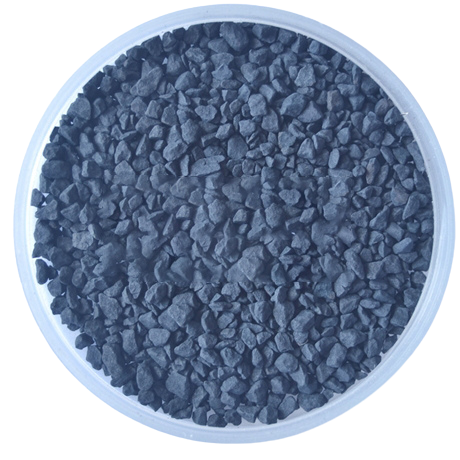
Tin metal powder is a kind of tin metal in the form of powder, fine particles, with the basic chemical properties of tin metal, such as good chemical stability, and due to the powder state has a large specific surface area, in electronics, chemical industry, metallurgy and many other fields of application.
VIMATERIAL offers high-purity tin powder, customizable in various sizes to meet your needs. Contact us for more information.
Appearance: Gray.
Density: 3.0–3.5 g/cm³.
Melting point: About 232°C.
Boiling point: About 2270°C.
Crystal structure: Tetragonal crystal structure.
Electrical resistivity: ~115 nΩ·m, suitable for conductive applications.
Thermal expansion: About 22 µm/m·K.
Specific surface area: It has a large surface area, which increases its reactivity and adsorption ability. Smaller particle size means higher surface area.
Chemical stability: It is stable at room temperature, but can oxidize to tin oxide when exposed to heat, moisture, or certain chemicals.
Electronics industry: Tin powder is widely used in solder paste, conductive paste, and battery electrode materials. Its low melting point and good conductivity make it important for circuit board soldering, electronic signal transmission, and lithium-ion batteries.
Metallurgical industry: In powder metallurgy, tin powder is mixed with other metal powders to produce alloys with good strength, wear resistance, and corrosion resistance. It is also used in metal coatings to improve surface protection and durability.
Chemical industry: It can act as a catalyst or catalyst carrier in chemical reactions. It is also added to coatings and paints to improve anti-corrosion performance, gloss, and chemical stability.
Food packaging and daily products: Tin powder is used in food packaging coatings to improve safety and prevent metal reactions with food or beverages. It is also applied in some daily products, such as toothpaste and soaps, because of its antibacterial properties.
Packaging
Tin powder is usually packed in sealed moisture-proof bags, plastic drums, or metal containers to prevent oxidation, moisture absorption, and contamination. For transportation, protective inner liners and cushioning materials are often used to keep the powder stable and avoid leakage or damage.
Storage
It should be stored in a cool, dry, and well-ventilated environment away from moisture, heat, sparks, and corrosive chemicals. Containers should remain tightly sealed to maintain powder purity and prevent oxidation or agglomeration during long-term storage.
Q1: What is tin powder used for?
A: Tin powder is widely used in electronics, metallurgy, and chemical industries. It is commonly used in solder paste for circuit board assembly, alloy manufacturing, metal coatings, conductive materials, catalysts, and battery electrode materials because of its good conductivity, low melting point, and corrosion resistance.
Q2: How to make tin metal powder?
A: Tin metal powder is usually produced through atomization, electrolysis, or mechanical milling processes. In atomization, molten tin is sprayed into fine droplets and rapidly cooled into powder particles. Other methods, such as grinding or electrolytic deposition, are used to produce powders with different particle sizes and properties for specific industrial applications.
Q3: Where to buy tin metal powder?
A: Tin metal powder can be purchased from metal material suppliers, chemical raw material companies and electronics material distributors. It is important to choose products with suitable purity, particle size, and specifications based on the intended application. VIMATERIAL offers stable supply capacity and strict quality control, supports customized specifications, and provides professional technical support. Contact us for a quotation.
VI HALBLEITERMATERIAL GmbH (VIMATERIAL) employs a stringent quality assurance system to ensure the reliability of our product quality. Strict quality control is implemented throughout the entire production chain, and for defective products, we strictly enforce the principle of rework and redo. Each batch is released only after passing detailed specification tests.
Every batch of our materials is independently tested, and, if necessary, we send samples to certified companies for testing. We provide these documents and analysis certificates with the shipment to certify that our products meet the required standards.
Contact our team of experts today and let us help you with your business!