| Product ID | Formula | Purity | Dimension | Quantity | Price in € | Inquiry |
|---|---|---|---|---|---|---|
| 5000PD001 | Sn | 99.9% | -200 Mesh | 100g | 434.00 | Inquire |
| 5000PD002 | Sn | 99.9% | D50< 10μm | 100g | 513.00 | Inquire |
| 5000PD003 | Sn | 99.95% | 200-500 Mesh | 100g | POR | Inquire |
| 5000PD004 | Sn | 99.95% | 100 nm | 100g | POR | Inquire |
| 5000PD005 | Sn | 99.995% | 100-200 Mesh | 100g | POR | Inquire |
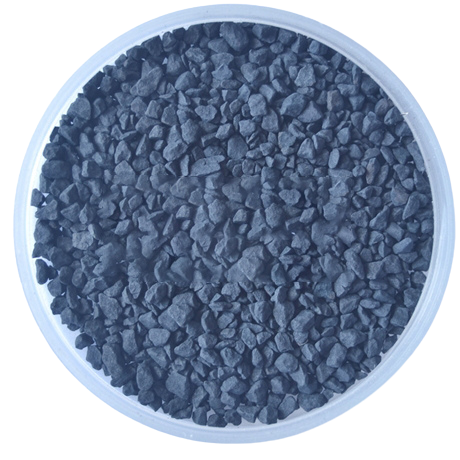
Tin metal powder is a kind of tin metal in the form of powder, fine particles, with the basic chemical properties of tin metal, such as good chemical stability, and due to the powder state has a large specific surface area, in electronics, chemical industry, metallurgy and many other fields of application.
Characteristics
Chemical Stability: Tin metal powders are chemically stable at room temperature and pressure, but may react chemically at high temperatures, in humidity, or when in contact with certain chemicals. For example, when heated in air, tin powder will have an oxidation reaction with oxygen to produce tin oxide.
Specific surface area: As the powder state has a large specific surface area, this makes the tin powder have higher activity and reaction rate in chemical reaction, adsorption and other processes. The size of the specific surface area is related to the particle size and shape of the tin powder, generally speaking, the smaller the particle size, the larger the specific surface area.
Density: The density of tin is relatively large, the density of tin metal powder is usually around 3.0 – 3.5 g / cm3.
Melting Point: Tin has a relatively low melting point of 232°C (449.6°F), which allows the powder to melt at lower temperatures and therefore has a wide range of applications in soldering, alloying and other areas.
Boiling Point: Tin has a high boiling point of 2270°C (4118°F), which means that under normal processing and use conditions, tin powder will not easily evaporate.
Crystal Structure: Tin has a tetragonal crystal structure, which determines its physical and chemical properties, such as its electrical conductivity and ductility.
Electrical resistivity: Tin metal powders have a relatively low electrical resistivity of about 115 nano-ohm-metres, which allows them to be used as electrically conductive materials in electronics.
Coefficient of Thermal Expansion: At 20°C, the coefficient of thermal expansion of tin powder is about 22 µm/m Kelvin. The magnitude of the coefficient of thermal expansion determines the dimensional change of the tin powder when the temperature changes, which needs to be taken into account in some applications where high dimensional accuracy is required.
Applications
Electronic industry field:
Soldering materials: Tin powder is a commonly used material in electronic soldering, for example, in the soldering of circuit boards, solder paste (the main components are tin powder and flux) is widely used. With its low melting point and good fluidity, tin powder is able to melt and connect electronic components at lower temperatures to form reliable solder joints.
Electrode materials: can be used to prepare electrodes for lithium-ion batteries. Compounding tin powder with other materials can improve the conductivity and energy storage performance of the electrode, which plays an important role in the manufacture of batteries for small electronic devices such as mobile phones and tablet computers.
Conductive paste: Used to make conductive paste, coated on the surface of electronic components or circuits to form a conductive layer for the transmission of electronic signals. For example, conductive pastes can be used to make electrode circuits in the manufacture of devices such as touchscreens and liquid crystal displays.
Metallurgical industry field:
Powder metallurgy: As a raw material for powder metallurgy, it is used to make various tin alloy parts. By mixing tin powder with other metal powders (such as copper powder, iron powder, etc.), pressing, sintering and other processes, alloy materials with specific properties can be prepared, such as tin bronze, tin-lead alloys and so on. These alloy materials have good wear resistance, corrosion resistance and mechanical strength, and are widely used in machinery manufacturing, automotive industry, aerospace and other fields.
Metal Coating: Through thermal spraying, electroplating and other methods, tin powder is coated on the metal surface to form anti-corrosion and wear-resistant coatings. For example, spraying tin powder on the surface of steel products can improve its corrosion resistance and extend its service life.
Chemical field:
Catalyst: tin powder can be used as a catalyst or a carrier of catalyst to participate in chemical reactions. For example, in the organic synthesis reaction, tin powder can promote certain reactions and improve the efficiency and selectivity of the reaction.
Coatings and paints: tin powder can be added to coatings and paints to play the role of anticorrosion, anti-rust, increase gloss and so on. In some special coatings and paints, the addition of tin powder can improve the weather resistance and chemical stability of the coating.
Other fields:
Food packaging: due to the high safety of tin for food, tin powder can be used in the manufacture of food and beverage packaging materials. For example, in the production of easy-open cans, the tin layer can be used as an inner coating to prevent the beverage from reacting with the metal of the can, ensuring the quality and safety of the beverage.
Manufacture of daily necessities: It can be used in the manufacture of toothpaste, soap, shower gel and other daily necessities. The antibacterial and antifungal properties of tin powder can enhance the efficacy of these products, while the addition of tin powder can also improve the texture and taste of the products.
VI HALBLEITERMATERIAL GmbH (VIMATERIAL) employs a stringent quality assurance system to ensure the reliability of our product quality. Strict quality control is implemented throughout the entire production chain, and for defective products, we strictly enforce the principle of rework and redo. Each batch is released only after passing detailed specification tests.
Every batch of our materials is independently tested, and, if necessary, we send samples to certified companies for testing. We provide these documents and analysis certificates with the shipment to certify that our products meet the required standards.
Contact our team of experts today and let us help you with your business!