Sodium Vanadium Phosphate Carbon Composite (Na₃V₂(PO₄)₃/C), commonly abbreviated as NVP/C, is a high-performance NASICON-structured cathode material widely used in sodium-ion batteries (SIBs) and advanced electrochemical energy storage systems. Featuring a robust three-dimensional sodium-ion diffusion framework, NVP/C delivers excellent rate capability, outstanding cycling stability, high operating voltage, and superior structural durability.
The incorporation of conductive carbon significantly improves the intrinsic electronic conductivity of Na₃V₂(PO₄)₃, enhancing charge transfer kinetics and electrochemical performance. As a safe, stable, and environmentally friendly phosphate-based cathode material, NVP/C has attracted extensive attention for next-generation sodium-ion batteries, especially for applications requiring high power density, fast charging capability, and long service life.
VIMATERIAL offers high-quality Na₃V₂(PO₄)₃/C powders with customizable specifications, including carbon content, particle size distribution, tap density, and surface characteristics. Contact us for more information.
Formula: Na₃V₂(PO₄)₃/C
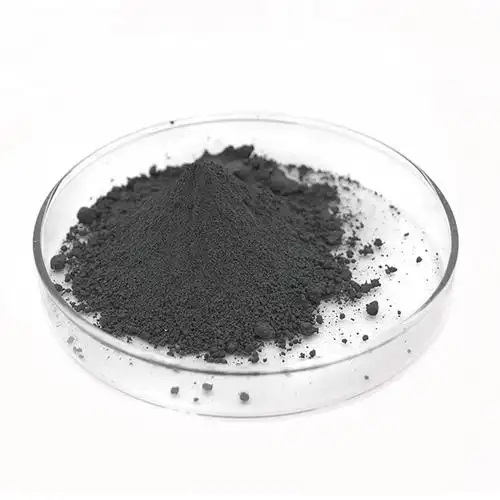
Appearance: Typically dark gray or black powder.
Crystal Structure: NASICON-type rhombohedral structure, providing three-dimensional sodium-ion migration channels for rapid Na⁺ diffusion.
Density: ~3.2–3.5 g/cm³.
Theoretical Capacity: ~117.6 mAh/g.
Operating Voltage: Approximately 3.4 V vs. Na⁺/Na.
Voltage Plateau: ~3.4 V, providing high energy density compared with many conventional sodium-ion cathode materials.
Carbon Content: Typically 1–5 wt% (customizable according to customer requirements).
Electrochemical Characteristics:
Cathode Material for Sodium-Ion Batteries: Na₃V₂(PO₄)₃/C is widely used as a cathode material for sodium-ion batteries due to its high operating voltage, stable NASICON framework, and excellent cycling performance. The open three-dimensional ion transport channels enable fast sodium-ion diffusion, supporting high-rate charge and discharge operations.
High-Power Energy Storage Systems: With excellent structural stability and rapid ion/electron transport properties, NVP/C is suitable for large-scale energy storage applications requiring high power output and long cycle life, including:
Fast-Charging Sodium-Ion Batteries: The carbon coating improves electronic conductivity and reduces electrode polarization, allowing NVP/C to maintain excellent electrochemical performance under high current density conditions. It is particularly suitable for fast-charging sodium-ion battery technologies.
Sodium-Ion Hybrid Capacitors and Advanced Electrochemical Devices: NVP/C is also applied in sodium-ion hybrid capacitors and other advanced energy storage devices where high power capability, excellent reversibility, and long operational lifetime are required.
High working voltage: ~3.4 V vs. Na⁺/Na, enabling higher energy density.
Fast sodium-ion diffusion: NASICON framework provides efficient 3D Na⁺ transport pathways.
Excellent cycling stability: Strong phosphate framework maintains structural integrity during repeated cycling.
Improved conductivity: Carbon coating enhances electron transport and electrochemical kinetics.
Superior safety: Stable phosphate structure provides excellent thermal and chemical stability.
Long service life: Suitable for demanding high-power applications.
Handling: As a fine powder, appropriate personal protective equipment (PPE), including gloves and dust protection, should be used to minimize exposure to airborne particles.
Storage: Store in a cool, dry environment away from moisture, heat sources, and contaminants. Keep containers tightly sealed to preserve material quality during long-term storage.
Q1: What is Na₃V₂(PO₄)₃/C used for?
A: Na₃V₂(PO₄)₃/C is mainly used as a cathode material for sodium-ion batteries. It is also applied in sodium-ion hybrid capacitors, high-power energy storage systems, and advanced electrochemical research.
Q2: Why is carbon coating applied to Na₃V₂(PO₄)₃?
A: Carbon coating improves the electronic conductivity of Na₃V₂(PO₄)₃, reduces electrode resistance, enhances rate capability, and improves overall battery performance, especially under high current charging and discharging conditions.
Q3: Is Na₃V₂(PO₄)₃/C suitable for fast-charging sodium-ion batteries?
A: Yes. The NASICON crystal structure provides rapid sodium-ion diffusion pathways, while the carbon coating enhances electron transport, making NVP/C highly suitable for fast-charging and high-power sodium-ion battery applications.
Q4: Do you provide customized specifications?
A: Yes. Customized specifications are available, including:
VI HALBLEITERMATERIAL GmbH (VIMATERIAL) employs a stringent quality assurance system to ensure the reliability of our product quality. Strict quality control is implemented throughout the entire production chain, and for defective products, we strictly enforce the principle of rework and redo. Each batch is released only after passing detailed specification tests.
Every batch of our materials is independently tested, and, if necessary, we send samples to certified companies for testing. We provide these documents and analysis certificates with the shipment to certify that our products meet the required standards.
Contact our team of experts today and let us help you with your business!