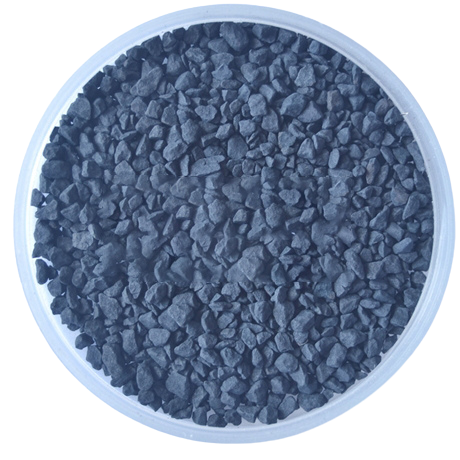
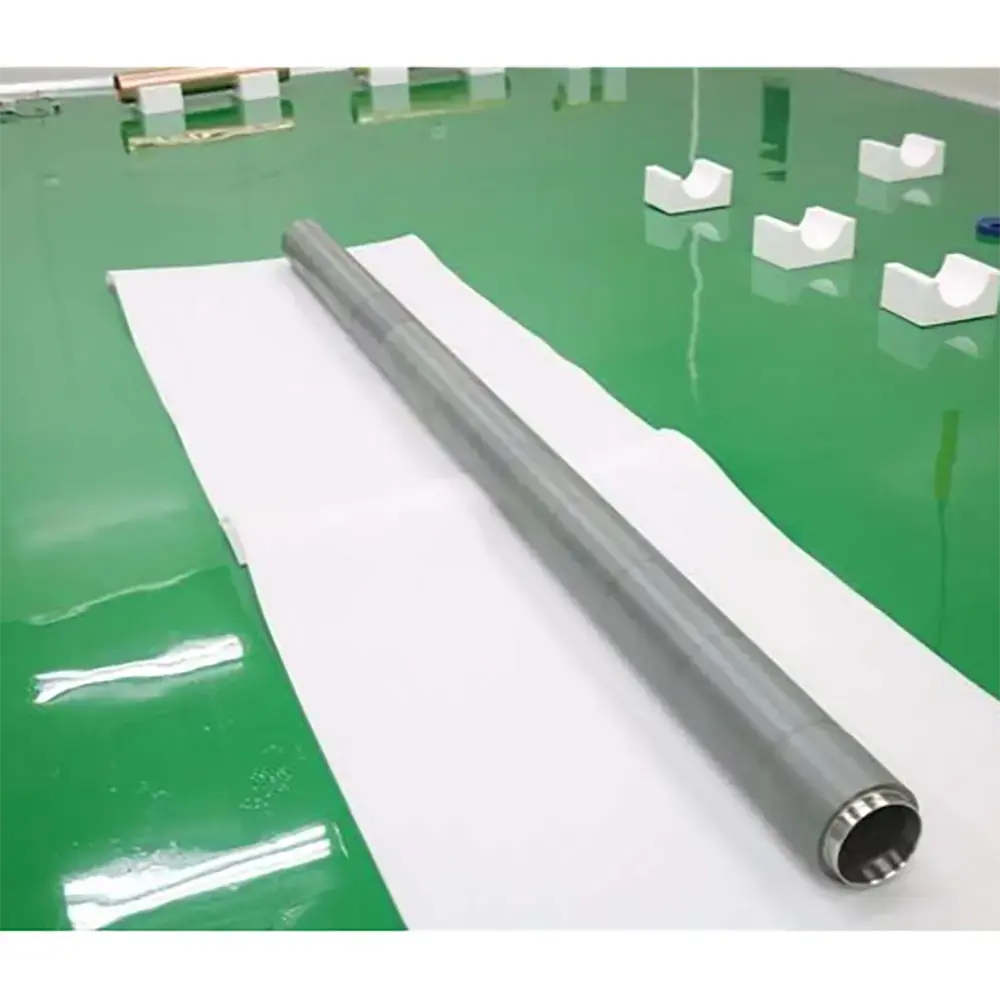
Molybdenum Selenide particles are microscopic particulate matter consisting of molybdenum and selenium with specific physico-chemical properties.
Properties
Appearance: grey powder.
Density: its density is about 6.90 g/cm³.
Melting point: melting point greater than or equal to 1200°C.
Molecular weight: 253.86.
Crystal structure: Hexagonal layered structure, which gives it unique properties in applications such as lubrication and electron transport.
Solubility: virtually insoluble in water.
Chemical Stability: It is relatively stable at room temperature and pressure, but may react chemically with other substances in some specific chemical environments or under high temperature conditions.
Electrical Properties: Molybdenum Selenide is a semiconductor material with moderate forbidden bandwidth, its band gap is about 1.41 – 1.58 eV, this semiconductor properties make it in the field of electronic devices, photoelectricity conversion and other areas of potential applications.
Optical properties: It has certain light absorption and emission properties, and its photoluminescence peak is located around 840 nm, and Molybdenum Selenide particles with different particle sizes and morphologies may show different optical properties, which has potential applications in optical devices and bio-imaging.
Mechanical Properties: Molybdenum Selenide particles have good lubricating properties, and their layered structure enables them to form a low coefficient of friction lubricant film on the friction surface, thus reducing friction and wear, and they can be used as solid lubricants.
Applications
Catalysis
Hydrogen precipitation catalyst: Molybdenum diselenide has high catalytic activity and can be used as a potential catalyst to replace the precious metal platinum in electrochemical hydrogen precipitation reactions, lowering the overpotential of the reaction and improving the efficiency of energy conversion, which is expected to be applied in the field of hydrogen production by water electrolysis.
Other chemical reaction catalysts: It can be used for the catalysis of various chemical reactions, such as in organic synthesis, it can catalyse some hydrogenation and dehydrogenation reactions, promote the reaction, and improve the selectivity and yield of the reaction.
Electronic field
Thin-film transistors: Molybdenum selenide’s semiconducting properties make it suitable for the manufacture of thin-film transistors, which can be used to prepare high-performance flexible electronic products, such as medical monitors, fitness trackers, smart clothing and foldable smart phones, etc., which provides the possibility of miniaturisation and flexibilisation of electronic devices.
Solar cells: Molybdenum Selenide can absorb and convert solar energy, can be used as photovoltaic materials in the manufacture of solar cells, improve the photoelectric conversion efficiency of solar cells, to provide support for the use of renewable energy.
Photodetector: Based on its absorption of light and photoelectric conversion properties, it can be used to prepare photodetectors, which can convert optical signals into electrical signals, and have potential applications in optical communications, environmental monitoring, imaging and other fields.
Lubrication field
Solid lubricant additives: molybdenum selenide powder has the advantages of good dispersion, non-bonding and anti-oxidation, etc., with low coefficient of friction, it can be added in various greases to form a colloidal state and increase the lubricity and extreme pressure of grease, which is suitable for the high temperature, high pressure, high speed and high load mechanical working condition, and it can effectively reduce the friction and wear and prolong the life of the equipment.
Coating material: It can be used as coating material on the surface of various mechanical parts, forming a lubricating film with low coefficient of friction and good abrasion resistance, improving the surface performance and service life of the parts, and reducing energy consumption and maintenance costs.
Energy storage field
Molybdenum selenide is a low-dimensional transition metal layered material with a large distance between layers, which has a high lithium ion holding capacity and a wide ion transport channel, and when compounded with other electrode materials, it can effectively increase the storage capacity and charging/discharging performance of lithium-ion batteries, as well as improve the cycling stability of the batteries.
Supercapacitor electrode materials: its large specific surface area and good electrical conductivity make it suitable for use as the electrode materials of supercapacitors, which can improve the capacitance performance and energy storage density of supercapacitors and provide an option for the development of high-performance energy storage devices.
Nanotechnology Field
Preparation of nanostructured materials: It can be used to prepare nanostructured materials such as nanowires, nanotubes, etc. These nanostructured materials have unique physical and chemical properties, and have a wide range of applications in the fields of nanoelectronic devices, sensors and catalysts.
Molybdenum selenide quantum dots: Molybdenum selenide quantum dots can be prepared by controlling the synthesis conditions. Quantum dots have the size effect and quantum domain-limiting effect, which have potential applications in the fields of fluorescent labelling, bio-imaging, and photovoltaic devices.
Sensors
Gas sensors: Molybdenum selenide is sensitive to certain gases and can interact with gas molecules, leading to changes in their electrical or optical properties, which can be used to prepare gas sensors for detecting hazardous gases or biomolecules in the environment, which have important applications in the fields of environmental monitoring, industrial safety and medical diagnosis.
Biosensors: Based on their specific interactions with biomolecules, biosensors can be developed for the detection of biomarkers, proteins, nucleic acids, etc., providing new tools and methods for biomedical research and disease diagnosis.
VI HALBLEITERMATERIAL GmbH (VIMATERIAL) employs a stringent quality assurance system to ensure the reliability of our product quality. Strict quality control is implemented throughout the entire production chain, and for defective products, we strictly enforce the principle of rework and redo. Each batch is released only after passing detailed specification tests.
Every batch of our materials is independently tested, and, if necessary, we send samples to certified companies for testing. We provide these documents and analysis certificates with the shipment to certify that our products meet the required standards.
Contact our team of experts today and let us help you with your business!