| Product ID | Formula | Purity | Dimension | Quantity | Price in € | Inquiry |
|---|---|---|---|---|---|---|
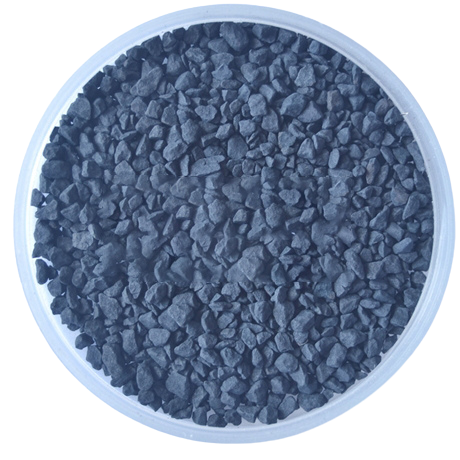
| 420800PD001 | MoO2 | 99.5% | <200 nm | 500g | POR | Inquire |
| 420800PD002 | MoO2 | 99.9% | -200 Mesh | 500g | POR | Inquire |
| 420800PD003 | MoO2 | 99.9% | -325 Mesh | 500g | POR | Inquire |
| 420800PD004 | MoO2 | 99.9% | D50< 5μm | 500g | POR | Inquire |
| 420800PD005 | MoO2 | 99.9% | D50< 10μm | 500g | POR | Inquire |
| 420800PD006 | MoO2 | 99.95% | D50< 5μm | 500g | POR | Inquire |
| 420800PD007 | MoO2 | 99.95% | -325 Mesh | 500g | POR | Inquire |
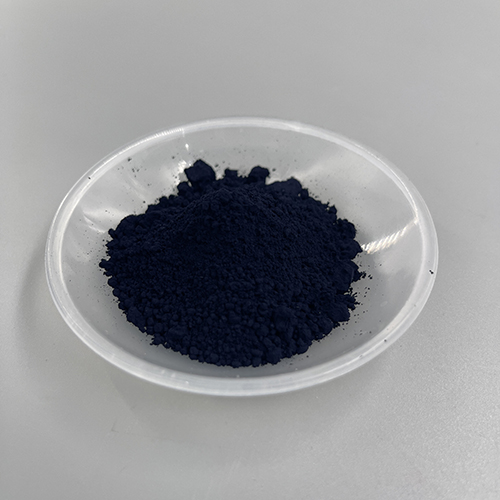
Molybdenum dioxide powder is a blue-black, special physico-chemical properties, through a variety of methods of preparation and in the iron and steel metallurgy, electronics industry, chemical catalysts and other important applications in many areas of the dioxide powder.
VIMATERIAL offers high-purity molybdenum dioxide powder, with particle sizes customizable to meet your needs. We also support third-party testing. If you have any requirements, please don’t hesitate to contact us.
Chemical formula: MoO₂.
Appearance: Blue-black powder.
Crystal structure: Monoclinic crystal.
Density: approx. 6.44 g/cm³.
Melting point: About 1800 ℃.
Hardness: Mohs hardness of about 5.5.
Oxidizing and reducing properties: Molybdenum dioxide has certain reducibility properties and can be reduced to molybdenum metal under certain conditions. At the same time, it also shows a certain oxidizing, and can be oxidized to higher valence molybdenum oxides, such as molybdenum trioxide, in the presence of strong oxidizing agents.
Acid-base: It is an amphoteric oxide that reacts with acids to form the corresponding salts and water, and also with strong bases to form molybdates and water. For example, it reacts with hydrochloric acid to form molybdenum chloride and water, and with sodium hydroxide to form sodium molybdate and water.
Steel Production: Improves strength, hardness, toughness, wear, corrosion, and heat resistance in steel. Used in high-strength alloys, stainless steel, and tool steel.
Electronics: Due to its electrical and thermal conductivity, it’s used in electronic components like electrodes, conductive paste, and packaging materials. It’s key in making thin film transistors and integrated circuits.
Chemical Catalysis: Used as a catalyst in petrochemical processes (e.g., hydrodesulfurization, denitrification) and organic reactions (e.g., oxidation, dehydrogenation). It enhances reaction efficiency and reduces production costs.
Ceramics: Enhances mechanical, electrical, and thermal properties in ceramics, used for tools, sensors, and capacitors, improving durability and reliability.
Energy Storage: Used in lithium-ion batteries as an electrode material, enabling better charge/discharge cycles with high capacity and stability.
Molybdenum dioxide powder is typically packaged in sealed, moisture-proof bags or drums to prevent moisture and contamination. Packaging materials should have good moisture-proof properties, and the product name, batch number, production date, and precautions should be clearly labeled on the bags or containers. For bulk products, double sealing with plastic bags lined with inner polyethylene bags or aluminum foil bags is commonly used to ensure stability and safety during transportation.
Molybdenum dioxide should be stored in a dry, ventilated, and cool environment, avoiding direct contact with moisture, oxygen, and strong light. Storage temperature should be maintained at room temperature, avoiding extreme high or low temperatures. Warehouses should be kept away from strong acids, strong alkalis, and other chemicals, and storage areas should be kept clean to prevent any contamination or reaction.
Q1: What is MoO2?
A: Molybdenum dioxide (MoO2) is an oxide of molybdenum, commonly used in alloy manufacturing, electronic components, chemical catalysts, and energy storage devices. It has excellent electrical and thermal conductivity and serves as an efficient catalyst in several chemical reactions.
Q2: What does molybdenum oxide do?
A: Steel Industry: Enhances the strength, hardness, wear resistance, and corrosion resistance of steel.
Electronics Industry: Used in electronic components, thin film transistors, and integrated circuits as a conductive material.
Chemical Catalysis: Utilized in desulfurization, denitrification reactions, and organic synthesis to improve reaction rates and efficiency.
Ceramic Materials: Improves mechanical, thermal, and electrical properties of ceramics.
Energy Storage: Used as an electrode material in lithium-ion batteries, offering high theoretical capacity and excellent cycling stability.
Q3: What is the color of molybdenum dioxide?
A: Molybdenum dioxide (MoO2) is typically a bluish-black or dark gray powder. Its color can vary depending on its crystal structure, purity, or external conditions; in its fine-grained state, it leans more towards a bluish-black color.
Q4: What are the chemical properties of Molybdenum Dioxide?
A: Molybdenum dioxide is a good conductor of electricity and has high thermal stability. It remains stable at room temperature but may react with other substances at high temperatures. In certain chemical reactions, it acts as a catalyst, enhancing the reaction rate and efficiency.
VI HALBLEITERMATERIAL GmbH (VIMATERIAL) employs a stringent quality assurance system to ensure the reliability of our product quality. Strict quality control is implemented throughout the entire production chain, and for defective products, we strictly enforce the principle of rework and redo. Each batch is released only after passing detailed specification tests.
Every batch of our materials is independently tested, and, if necessary, we send samples to certified companies for testing. We provide these documents and analysis certificates with the shipment to certify that our products meet the required standards.
Contact our team of experts today and let us help you with your business!