| Product ID | Formula | Purity | Dimension | Quantity | Price in € | Inquiry |
|---|---|---|---|---|---|---|
| 4900WI001 | In | 99.99% | Ø 1 mm x Length. | 1 | POR | Inquire |
| 4900WI002 | In | 99.99% | Ø 1.5 mm x Length. | 1 | POR | Inquire |
| 4900WI003 | In | 99.99% | Ø 3 mm x Length. | 1 | POR | Inquire |
| 4900WI004 | In | 99.99% | Ø 6 mm x Length. | 1 | POR | Inquire |
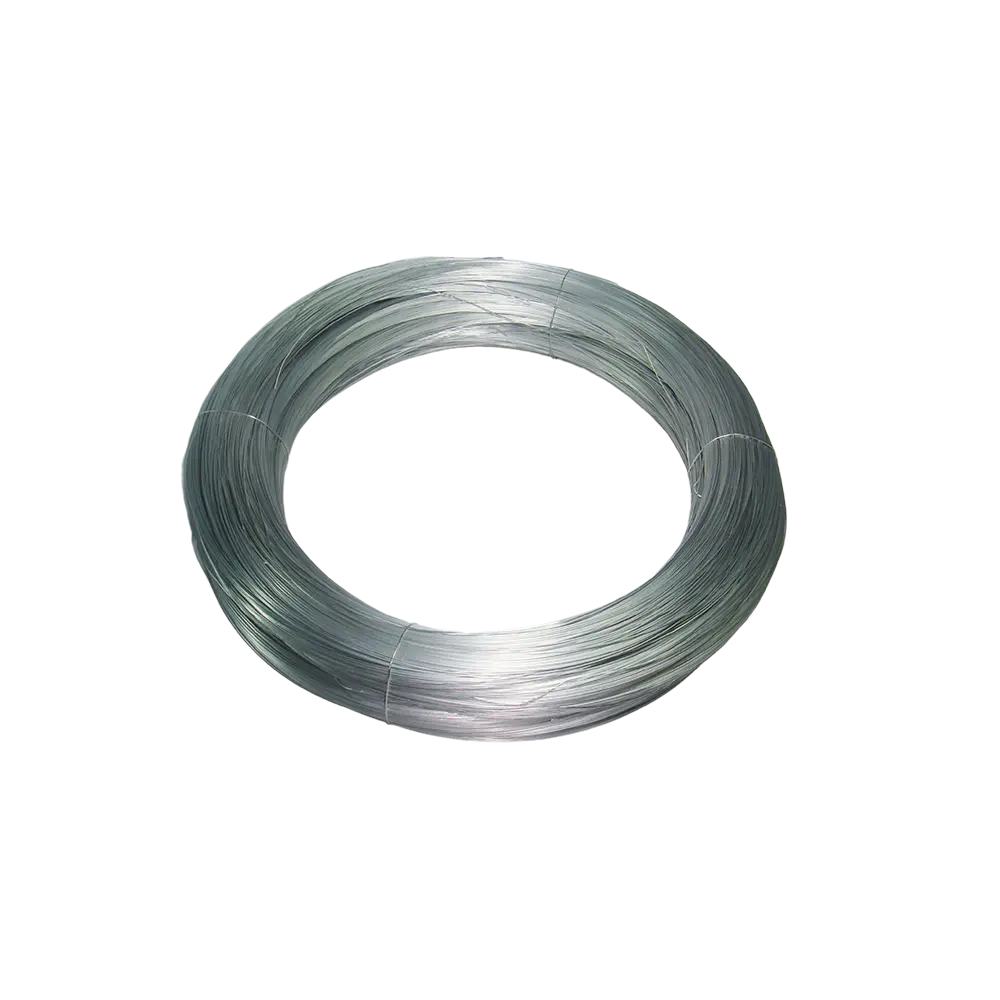
Indium wire is a filamentary material made of pure indium with high purity, good conductivity and chemical stability.
VIMATERIAL also provides high-purity indium targets, indium foils, indium powders, etc. If you need it, please contact us.
Appearance: Usually silver-white linear, the surface has a metallic luster. If exposed to air, the surface may become gray due to oxidation.
Density: The density of indium is about 7.31g/cm³
Melting point: approximately 156.61°C
Hardness: Soft texture, Mohs hardness of about 1.2,
Electrical conductivity: It has good electrical conductivity, and has application value in the fields of electronics, electrical and other conductive properties.
Electronics industry: In semiconductor manufacturing, indium wire can be used for the packaging and connection of chips. Because of its good conductivity and weldability, it can realize the reliable connection between the chip and the external circuit.
Welding field: Indium wire is an excellent low-temperature solder, which has important applications in the welding of some temperature-sensitive materials.
Field of scientific research: In the laboratory, indium wire can be used to make thermocouples and other temperature measuring instruments. Due to the low melting point of indium, it has certain advantages in low temperature measurement.
Our products implement the most stringent quality management system. There are strict inspection standards for incoming materials, processes, final inspections, and factory inspections. Strict isolation measures will be adopted for unqualified processing to prevent unqualified products from flowing into the next process. Samples will be provided to customers according to customer requirements for re-inspection.
Vacuum packaging, the packaging quantity can be provided according to customer requirements and packaged separately.
Indium wire should be stored in a dry, cool, ventilated warehouse, away from direct sunlight and high temperature environment to prevent the indium wire from being deformed or melted by heat.
Q1: What is indium wire used for?
A: Indium wire is used in the electronics industry for chip packaging and connections, in soldering as a low-temperature solder for heat-sensitive materials, and in scientific research for making thermocouples and other low-temperature measuring instruments.
Q2: Is indium a solder?
A: Indium itself is not a solder in the traditional sense, but it is a crucial component in the manufacture of many solders (especially indium-based alloy solders), holding an irreplaceable position in high-end electronics, low-temperature, vacuum, and sealing welding fields.
Q3: Can I touch indium?
A: Daily contact (such as using mobile phones and televisions) will not lead to indium poisoning. In LCD screens, indium is sealed between two layers of glass in the form of indium tin oxide (ITO), and will not decompose or release dust on its own, making it completely safe for normal use; however, people who work in frontline environments (such as those involved in LCD screen and solar panel manufacturing) must prevent the fine indium dust from entering their lungs. Inhalation of indium-containing dust or accidental ingestion may cause health problems.
Q4: Can indium melt?
A: Metallic indium is molten, with a melting point of approximately 156.6℃. Indium is a silvery-white metal with a slight bluish tint, extremely soft, and can be scratched with a fingernail. As a fusible metal, indium changes from a solid to a liquid state when heated above this temperature. It is mainly used in the manufacture of low-melting-point alloys, semiconductors, and raw materials for electric light sources.
VI HALBLEITERMATERIAL GmbH (VIMATERIAL) employs a stringent quality assurance system to ensure the reliability of our product quality. Strict quality control is implemented throughout the entire production chain, and for defective products, we strictly enforce the principle of rework and redo. Each batch is released only after passing detailed specification tests.
Every batch of our materials is independently tested, and, if necessary, we send samples to certified companies for testing. We provide these documents and analysis certificates with the shipment to certify that our products meet the required standards.
Contact our team of experts today and let us help you with your business!