| Product ID | Formula | Purity | Dimension | Quantity | Price in € | Inquiry |
|---|---|---|---|---|---|---|
| 7200PL001 | Hf | 99.95% (Zr< 1%) | Ø 2 mm x 5 mm | 50g | 476.00 | Inquire |
| 7200PL002 | Hf | 99.95% (Zr< 1%) | Ø 3 mm x 3 mm | 50g | 449.00 | Inquire |
| 7200PL003 | Hf | 99.95% (Zr< 1%) | Ø 6 mm x 6 mm | 50g | 460.00 | Inquire |
| 7200PL004 | Hf | 99.995% (Zr< 0.5%) | Ø 2 mm x 5 mm | 50g | POR | Inquire |
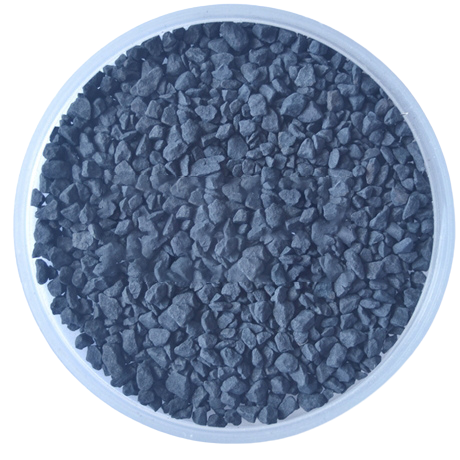
Hafnium pellets are high-density metallic materials composed of elemental hafnium (Hf). Known for their high melting point, excellent thermal stability, good corrosion resistance, and strong neutron absorption capability, hafnium is an important refractory metal used in nuclear technology, aerospace, electronics, and advanced materials research.
VIMATERIAL supplies high-quality hafnium metal pellets for industrial manufacturing, material processing, and research applications. Different product specifications and packaging options can be discussed according to customer requirements.
Whether used as a raw material for metal processing, evaporation source material, or specialized material development, our hafnium pellets provide a reliable material option for demanding applications. Contact us for more information.
VIMATERIAL follows a comprehensive quality management system to ensure the quality and consistency of supplied hafnium metal products.
Key quality control considerations include:
For more information, visit our Quality Control page.
Packaging: It is packed in suitable sealed containers or protective packaging to minimize contamination and moisture exposure during transportation and storage. Packaging specifications can be adjusted according to product quantity and customer requirements.
Storage: Store in a clean, dry, and well-ventilated environment. Keep the original packaging sealed when not in use and avoid exposure to moisture and contaminants. Proper handling and storage help maintain material quality and surface condition.
Looking for a reliable supplier of hafnium metal pellets?
Contact VIMATERIAL for product specifications, availability, and quotations. Let us know your required purity, particle size, quantity, and application so we can evaluate a suitable solution for your needs.
Hafnium pellets are small pieces of metallic hafnium used as raw materials in industrial processing, thin-film deposition, and materials research. They are valued for their high melting point, high density, and excellent neutron absorption capability.
It is used in nuclear technology, aerospace materials, electronics, specialized metal processing, and scientific research. They can also serve as source materials for preparing hafnium-based compounds and thin films.
It can be used as an evaporation source material in physical vapor deposition (PVD). Its suitability depends on the evaporation equipment, source configuration, and deposition conditions.
Hafnium has a melting point of approximately 2,227°C, making it a refractory metal suitable for high-temperature applications.
The theoretical density of hafnium metal is approximately 13.09 g/cm³ at room temperature.
Hafnium pellets should be stored in a clean, dry environment and kept in sealed packaging to minimize moisture exposure and contamination. Appropriate handling procedures should be followed during storage and use.
VI HALBLEITERMATERIAL GmbH (VIMATERIAL) employs a stringent quality assurance system to ensure the reliability of our product quality. Strict quality control is implemented throughout the entire production chain, and for defective products, we strictly enforce the principle of rework and redo. Each batch is released only after passing detailed specification tests.
Every batch of our materials is independently tested, and, if necessary, we send samples to certified companies for testing. We provide these documents and analysis certificates with the shipment to certify that our products meet the required standards.
Contact our team of experts today and let us help you with your business!