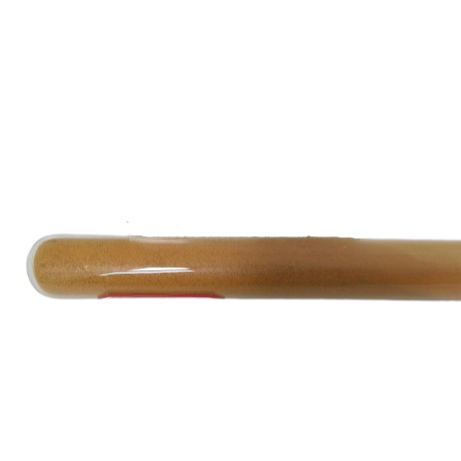
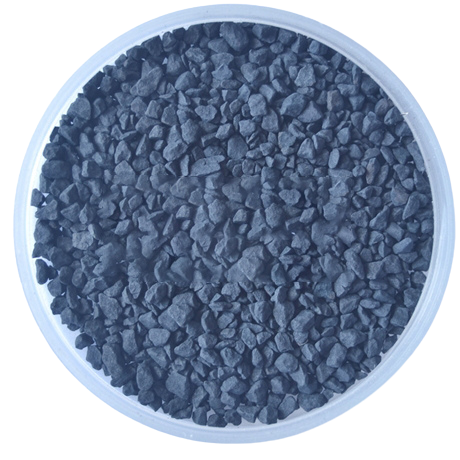
Germanium Selenide particles are black or orange in color, with semiconductor and optical properties, and can be prepared by physical vapor deposition, chemical synthesis, mechanical ball milling, etc., and can be used in semiconductor devices, infrared optical devices, and other fields.
Characteristics
Chemical formula: GeSe₂.
Molecular weight: 230.60
CAS No.: 12065-11-1
Appearance: usually black or dark gray granules.
Density: about 4.56 g/cm³.
Melting point: 707°C
Structural Characteristics: Germanium Selenide has a layered crystal structure, which gives it some unique physical and chemical properties. The layers interact with each other through weak van der Waals forces, making the material more workable and flexible in certain directions.
Semiconductor Properties: Germanium Selenide is a typical semiconductor material with a moderate forbidden bandwidth, and its electrical properties can be modulated by doping, changing the particle size, and other methods. This gives it a wide range of applications in the field of electronic devices, such as can be used in the manufacture of transistors, integrated circuits and so on.
Optical properties: It has good optical transmittance and absorption in the infrared band, and is an important infrared optical material. It can be used to prepare infrared detectors, infrared sensors, optical filters and other optical devices, and plays an important role in military, security, communications and other fields.
Stability: It has good chemical and thermal stability at room temperature and pressure, and can keep its performance relatively stable under different environmental conditions, thus ensuring its reliability and durability in various applications.
Applications
Electronic devices: As a semiconductor material, Germanium Selenide particles can be used in the manufacture of a variety of electronic devices, such as field effect transistors, photodiodes, etc., to improve the performance and integration of devices.
Optical devices: utilizing its excellent infrared optical properties, Germanium Selenide particles can be used to prepare high-performance infrared optical components, such as infrared windows, lenses, prisms, etc., which are widely used in infrared imaging, infrared remote sensing, infrared communications and other fields.
Energy field: Germanium Selenide also has potential applications in photovoltaic devices and thermoelectric materials. Studies have shown that through rational material design and device structure optimization, GeSe₂-based materials are expected to improve the photovoltaic conversion efficiency of solar cells and the energy conversion efficiency of thermoelectric materials.
Sensors: Based on the changes in the electrical and optical properties of Germanium Selenide, sensors sensitive to a variety of physical and chemical quantities, such as gas sensors, humidity sensors, pressure sensors, etc., can be prepared to achieve rapid and accurate detection of environmental parameters.
VI HALBLEITERMATERIAL GmbH (VIMATERIAL) employs a stringent quality assurance system to ensure the reliability of our product quality. Strict quality control is implemented throughout the entire production chain, and for defective products, we strictly enforce the principle of rework and redo. Each batch is released only after passing detailed specification tests.
Every batch of our materials is independently tested, and, if necessary, we send samples to certified companies for testing. We provide these documents and analysis certificates with the shipment to certify that our products meet the required standards.
Contact our team of experts today and let us help you with your business!