| Product ID | Formula | Purity | Dimension | Quantity | Price in € | Inquiry |
|---|---|---|---|---|---|---|
| 5500LP001 | Cs | 99.9% | 10 - 25 mm approx | 25g | 386.00 | Inquire |
| 5500LP002 | Cs | 99.95% | 10 - 25 mm approx | 25g | 476.00 | Inquire |
| 5500LP003 | Cs | 99.985% | 10 - 25 mm approx | 25g | 536.00 | Inquire |
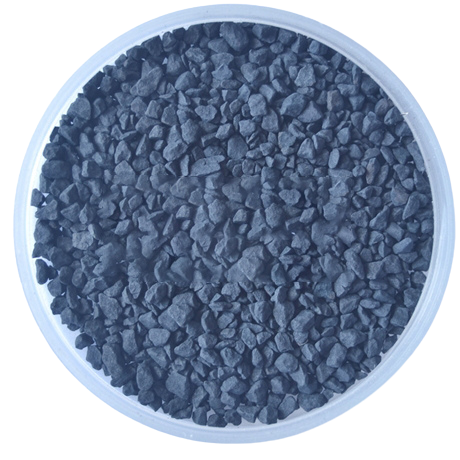
Cesium metal lump is a soft, silver-gold coloured metallic lump with active chemical properties, low density and low melting point, which plays an important role in many fields such as optoelectronics, atomic clocks and chemical catalysis.
Characteristics
Appearance: usually a silver-gold solid metal with a metallic luster.
Density: Relatively low, about 1.93g/cm³, belonging to the category of light metals. This low density makes it potentially valuable in applications where material weight is important.
Melting point: Relatively low, 301.7K (28.5°C) or 301.59K (28.44°C). This means that the caesium metal block is close to the melting point at room temperature and tends to melt when slightly heated, making it a relatively active metal.
Boiling point: high, about 944K (671°C), which allows caesium to remain in a stable liquid state at high temperatures, providing it with some reference for certain high-temperature applications or research involving processes such as evaporation and gasification.
Conductivity: It has good electrical conductivity. The resistivity at 20°C is 205nΩ・m, which gives caesium some potential for application in electronic and electrical fields that require good electrical conductivity, such as in some special electronic components or electrode materials.
Thermal conductivity: It has good thermal conductivity, with a thermal conductivity of 35.9W・m-¹・K-¹. Capable of transferring heat quickly, it may have application value in some scenarios where heat conduction is required, such as heat exchangers and heat sinks.
Coefficient of Thermal Expansion: The coefficient of thermal expansion at 25°C is 97µm・m-¹・K-¹, which is relatively high. This means that the dimensions of the caesium metal block will change considerably when the temperature changes, and the influence of the thermal expansion factor on the material properties and structure needs to be taken into account in the design and use process.
Hardness: Relatively soft. Data such as Vickers hardness are not explicitly mentioned, but usually alkali metals have relatively low hardness. This makes caesium metal blocks easy to shape or cut during processing and use, but may also lead to limitations in some scenarios where higher hardness and wear resistance are required.
Reactivity: caesium is a very reactive metal and reacts very easily with oxygen in air to form compounds such as caesium oxide. Therefore, when storing and using caesium metal blocks, strict sealing and protection measures are required to prevent them from coming into contact with air.
Reactivity with water: When it comes into contact with water, it reacts violently, releasing hydrogen and generating caesium hydroxide. A large amount of heat will be released during the reaction, which may even cause combustion or explosion.
Flame-coloured reaction: The flame-coloured reaction of caesium shows a distinctive blue colour, which is due to the fact that caesium atoms are excited by heat and the electrons jump to release a specific wavelength of light. This characteristic makes caesium useful in fireworks, flares and other products that need to produce flames of a specific colour.
Applications
Time-frequency standard field:
Atomic clocks: Cesium atomic clocks are the most accurate time-keeping devices known, and are widely used in the Global Positioning System (GPS), time synchronisation of communication networks, and precision timing in scientific research. Cesium metal blocks are one of the key raw materials used in the manufacture of atomic clocks, which utilise the specific vibration frequency of cesium atoms to achieve high-precision time measurement.
Energy field:
Thermal Ion Conversion Power Generation : Cesium metal can be used as a working substance in thermal ion conversion power generation technology. Thermionic conversion power generation is a technology that directly converts thermal energy into electrical energy. The high ionisation energy and low vapour pressure of cesium metal enable it to produce ions stably at high temperatures, resulting in highly efficient energy conversion.
Magneto-hydrodynamic power generation: In magneto-hydrodynamic generators, cesium metal can be used to improve the efficiency of thermal conversion, especially in large-scale energy facilities such as nuclear power stations, helping to improve the efficiency of energy use.
Electronic industry field:
Phototubes and photocells: cesium metal has good photoelectric properties and can be used to manufacture photoelectric devices such as phototubes and photocells. In phototubes, caesium can convert optical signals into electrical signals, which are widely used in optical measurement, automatic control and other fields; in photocells, caesium can improve the photoelectric conversion efficiency of the battery.
Electron tube: In early electron tubes, cesium metal was used as the cathode material because it has a low escape work and can emit electrons at a lower temperature, thus enabling the tube to work properly.
Medical field:
Radiotherapy: Radioactive caesium – 137 can be used as a radiation source for treating various types of cancer. The gamma rays it emits are capable of destroying the DNA of cancerous cells, thus achieving the purpose of treating cancer.
Medicine and diagnosis: Cesium compounds also have certain applications in medicine. For example, cesium salts can be used as anti-shock agents after taking arsenic-containing drugs, and can also be used in the diagnosis and treatment of some diseases.
Chemical field:
Catalyst: Cesium metal can be used as a catalyst in certain chemical reactions. For example, in organic synthesis reactions, cesium can promote the reaction and improve the yield and selectivity of the reaction.
Drilling fluids: In oil and gas drilling, caesium can improve the performance of drilling fluids, enhance the stability and lubricity of drilling fluids, and help to improve the ability of the drill bit to penetrate the rock.
Aerospace:
Propellant: Cesium metal can be used as one of the components of rocket propellant. In rocket engines, cesium is able to react violently with oxidants, releasing a large amount of energy and providing powerful thrust for the rocket.
Aerospace instruments: Because cesium metal has good performance at low temperatures, it can be used to manufacture some low-temperature instruments and equipment in the aerospace field.
Glass and ceramics manufacturing: Cesium compounds can be used in the production of glass and ceramics, and can improve the performance of glass and ceramics, such as lowering the electrical conductivity of glass, improving the stability and heat resistance of glass, and so on.
VI HALBLEITERMATERIAL GmbH (VIMATERIAL) employs a stringent quality assurance system to ensure the reliability of our product quality. Strict quality control is implemented throughout the entire production chain, and for defective products, we strictly enforce the principle of rework and redo. Each batch is released only after passing detailed specification tests.
Every batch of our materials is independently tested, and, if necessary, we send samples to certified companies for testing. We provide these documents and analysis certificates with the shipment to certify that our products meet the required standards.
Contact our team of experts today and let us help you with your business!