Chemical formula: BiCl₃.
Molecular weight: 315.34 g/mol.
CAS No.: 7787-60-2.
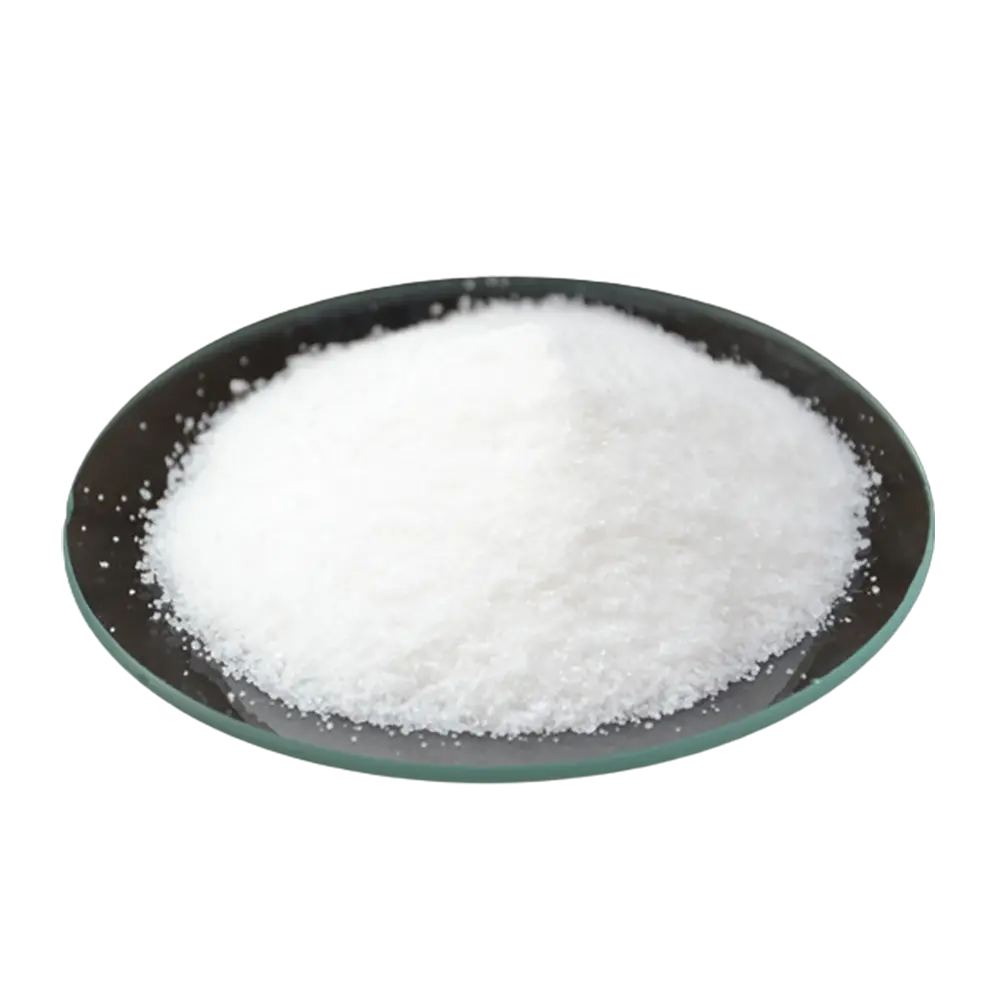
Appearance: usually white or slightly yellowish crystalline powder.
Density: 4.75 g/cm³.
Melting point: 230 – 232℃.
Boiling point: 447°C.
Solubility: soluble in hydrochloric acid, nitric acid, anhydrous ethanol, acetone and ethyl acetate.
Chemical Properties:
Hydrolysis: it is easily deliquesced in air and will undergo a hydrolysis reaction when it meets water, generating bismuth oxychloride and releasing hydrogen chloride.
Oxidising and reducing properties: in the presence of an oxidising or reducing agent, BiCl₃ can catalyse oxidising or reducing reactions.
Preparation method: Bismuth oxide can be added to analytically pure hydrochloric acid which is heated to a certain temperature beforehand (excess of hydrochloric acid), and a transparent bismuth chloride solution can be obtained after a period of reaction.
Application field:
Analytical reagent: Bismuth Chloride is used for the analysis and detection of substances.
Bismuth salt manufacture: it is an important raw material for the preparation of other bismuth salts.
Catalyst: It can be used as catalyst in many organic reactions, such as Friedel-Crafts reaction, Diels-Alder reaction, Mannich reaction, acetal deprotection reaction, etc.
VI HALBLEITERMATERIAL GmbH (VIMATERIAL) employs a stringent quality assurance system to ensure the reliability of our product quality. Strict quality control is implemented throughout the entire production chain, and for defective products, we strictly enforce the principle of rework and redo. Each batch is released only after passing detailed specification tests.
Every batch of our materials is independently tested, and, if necessary, we send samples to certified companies for testing. We provide these documents and analysis certificates with the shipment to certify that our products meet the required standards.