


Titanium carbide (TiC) is one of the most important transition metal carbides used in modern high-temperature and wear-resistant applications. With a melting point of approximately 3,100 °C, extremely high hardness (around 9–9.5 on the Mohs scale), high elastic modulus, good electrical conductivity, low density compared to tungsten carbide, and excellent chemical stability, titanium carbide (TiC) has become a key material in cutting tools, cermets, thermal barrier systems, protective coatings, and advanced refractory composites.
In refractory applications in particular, titanium carbide (TiC) is often introduced as an additive phase. It significantly enhances mechanical strength, improves resistance to thermal shock, and increases corrosion resistance against molten iron and slag. These advantages make titanium carbide (TiC)-containing refractories highly attractive for steelmaking and non-ferrous metallurgy industries.
The final properties of titanium carbide (TiC) powders—such as particle size distribution, morphology, purity level, and defect concentration—are strongly influenced by the synthesis route. Therefore, understanding the available preparation methods is essential for both materials engineers and industrial producers.
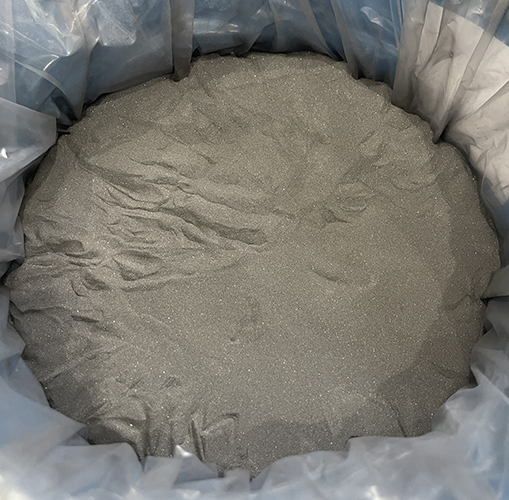
Below, we review eight widely used synthesis routes, outlining their mechanisms, advantages, limitations, and industrial relevance.
1. Direct Carburization of Titanium Powder or Titanium Hydride (TiH₂)
Direct carburization is the classical and most established industrial route for titanium carbide (TiC) production.
In this process, metallic titanium powder—typically obtained from sodium-reduced sponge titanium—or titanium hydride (TiH₂) powder is mixed with carbon black. The carbon content is usually adjusted to 5–10% above the theoretical stoichiometric value to ensure complete conversion. The powder mixture is homogenized by dry ball milling and then compacted under pressures around 100 MPa.
The compact is placed in a graphite crucible and heated in an induction furnace at temperatures between 1500 and 1700 °C under high-purity protective gas (dew point below −35 °C). Reaction time and temperature depend on particle size and reactivity. Titanium derived from TiH₂ is particularly reactive due to its fine structure and high surface activity, allowing near-stoichiometric titanium carbide (TiC) (20.05% carbon) to be obtained after holding at 1500 °C for approximately one hour.
Industrial relevance:
This method is technically mature and suitable for large-scale production. However, it requires relatively high temperatures and substantial energy input.
2. Self-Propagating High-Temperature Synthesis (SHS)
Self-propagating high-temperature synthesis (SHS), also known as combustion synthesis, utilizes the highly exothermic nature of the Ti–C reaction. Once locally ignited, the reaction front propagates through the reactant compact without continuous external heating.
The adiabatic reaction temperature of Ti and C is sufficiently high to sustain rapid transformation into TiC. Compared with conventional carburization, SHS improves production efficiency by approximately 1.5 to 3 times. The method is particularly attractive for batch production of refractory compounds.
Advantages:
- Energy-efficient due to self-sustained reaction
- Short processing time
- High theoretical purity
Limitations:
- Difficult temperature control
- Potential porosity due to rapid gas evolution
- Post-processing may be required to refine particle size
3. Carbothermal Reduction of Titanium Dioxide (TiO₂)
Carbothermal reduction is one of the most economically attractive methods because TiO₂ is widely available and relatively inexpensive.
In this route, Titanium dioxide (TiO₂) powder is mechanically mixed with carbon and heated under vacuum or inert atmosphere (argon). Reaction temperatures typically range between 1500 and 2000 °C. In hydrogen atmosphere, temperatures may reach up to 2250 °C.
The overall reaction involves reduction of TiO₂ by carbon, forming TiC and CO gas. Careful control of temperature and holding time is necessary to minimize oxygen residue in the final product. Efficient removal of CO gas promotes reaction completion and helps reduce grain growth.
Recent developments include depositing carbon onto TiO₂ surfaces via hydrocarbon decomposition prior to reduction. Such approaches have enabled the production of high-purity submicron TiC powders at 1550 °C with holding times around four hours.
Industrial relevance:
Suitable for cost-sensitive large-scale powder production, but requires precise atmosphere control.
4. Chemical Vapor Deposition (CVD)
Chemical vapor deposition is primarily used for coating applications rather than bulk powder production.
In CVD processing, gaseous TiCl₄ reacts with methane (CH₄) or other hydrocarbons at temperatures between 800 and 1200 °C. The reaction results in deposition of solid TiC onto substrates, commonly tool steels or hard metals. Hydrogen is frequently added to enhance reaction kinetics and reduce unwanted by-products.
Advanced techniques such as laser-assisted CVD have enabled the synthesis of ultrafine titanium carbide (TiC) powders and even composite systems such as SiC/TiC.
Advantages:
- Exceptional purity
- Excellent microstructural control
- Ideal for thin films and coatings
Limitations:
- High capital investment
- Complex gas handling systems
- Limited suitability for bulk powder production
5. Microwave-Assisted Carbothermal Reduction
Microwave heating offers volumetric and rapid energy transfer, which can significantly reduce processing time compared to conventional furnaces.
During TiC formation, CO gas is generated as a reaction by-product. The internal CO pressure influences the reaction temperature and conversion rate. Higher CO pressure raises synthesis temperature and lowers reaction efficiency, while efficient gas removal enables lower temperature processing and higher conversion rates.
Microwave-assisted synthesis is particularly promising for producing nanocrystalline titanium carbide (TiC) with reduced agglomeration.
Advantages:
- Energy efficiency
- Shorter reaction time
- Fine particle size
Challenges:
- Reactor design complexity
- Gas pressure management
6. Synthesis in Molten Metal Baths
TiC has extremely low solubility in iron-group metals such as iron and nickel. When titanium and carbon are dissolved in molten metal at temperatures above 2000 °C (typically in an electric vacuum furnace), titanium carbide (TiC) forms and precipitates due to supersaturation.
This method allows the production of TiC with very low oxygen and nitrogen content, making it suitable for high-purity applications.
Advantages:
- High chemical purity
- Low gas contamination
Limitations:
- Extremely high processing temperatures
- Specialized furnace requirements
7. Mechanical Alloying (MA)
Mechanical alloying is a solid-state powder processing technique involving high-energy ball milling. Intense mechanical impacts cause repeated fracturing and cold welding of particles, leading to atomic-scale mixing.
In TiC synthesis, Ti (or TiO₂) powder and graphite are milled together. The high defect density and intimate mixing significantly lower the reaction temperature required for titanium carbide (TiC) formation during subsequent heat treatment.
Advantages:
- Reduced synthesis temperature
- Fine and homogeneous microstructure
- Potential for nanostructured powders
Limitations:
- Possible contamination from milling media
- Requires controlled atmosphere conditions
8. Mechanically Induced Self-Sustaining Reaction (MSR)
MSR combines mechanical activation with self-propagating reaction mechanisms. The process generally proceeds in three stages:
Incubation phase: Formation of composite Ti/C particles during milling.
Ignition phase: As particle size decreases and contact area increases, the ignition temperature drops. Once mechanical energy exceeds the ignition threshold, a rapid self-sustaining reaction occurs.
Refinement phase: Continued milling refines crystallite size and improves homogeneity.
Because the Ti–C reaction is highly exothermic, once initiated, it proceeds similarly to SHS. MSR allows rapid synthesis and fine particle size while minimizing external heating requirements.
Advantages:
- Fast reaction kinetics
- Fine grain structure
- Lower external energy input
Challenges:
- Reaction safety management
- Precise control of milling parameters
Comparative Considerations and Industrial Outlook
Selecting the appropriate titanium carbide (TiC) synthesis method depends on multiple factors:
- Required purity level
- Target particle size
- Application field (coatings vs. bulk powder)
- Production scale
- Energy consumption
- Cost constraints
For large-scale refractory or cermet production, direct carburization and carbothermal reduction remain economically viable solutions.
For advanced coatings, CVD remains the dominant technology.
For nanostructured or high-performance powders, mechanical alloying, MSR, and microwave-assisted synthesis provide promising routes.
As industries such as steelmaking, aerospace, additive manufacturing, and high-speed machining continue to demand materials with superior thermal stability and wear resistance, titanium carbide will remain a strategically important ceramic phase.
Ongoing research is focused on reducing synthesis temperatures, improving particle size control, lowering oxygen content, and integrating titanium carbide (TiC) into multifunctional composite systems. With continued innovation in powder metallurgy and process engineering, TiC-based materials are expected to play an increasingly important role in next-generation high-temperature and structural applications.