Barium carbonate (BaCO₃) is an important inorganic compound widely used in the electronics, glass, and ceramics industries. Thanks to its excellent chemical stability, high dielectric properties, and compatibility with glass materials, barium carbonate has become a key raw material in modern electronic manufacturing.
This article introduces the basic properties, crystal structure, production methods, safety precautions, and main applications of barium carbonate.
Basic Properties of Barium Carbonate
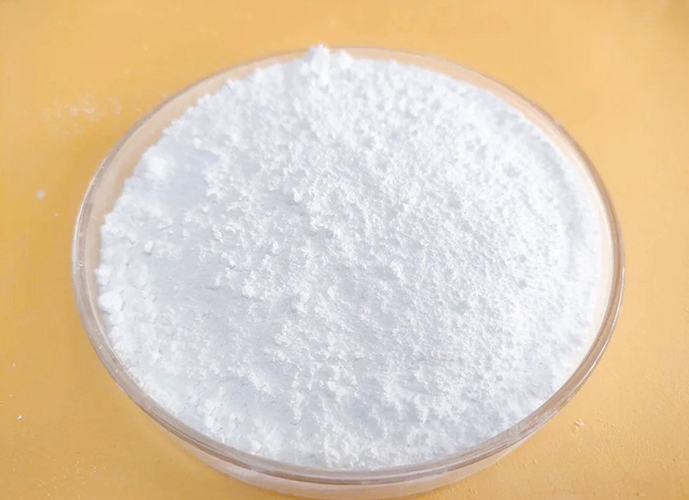
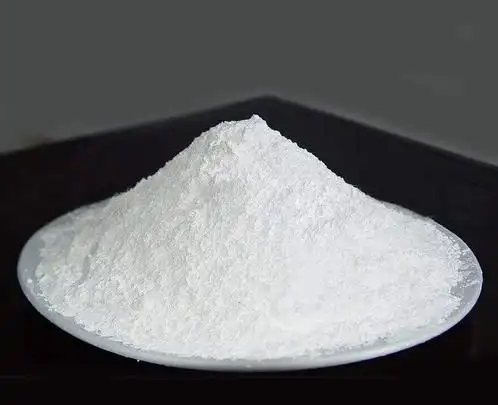
Barium carbonate appears as a white powder with a molecular weight of 197.34 g/mol, a density of 4.43 g/cm³, and a melting point of approximately 1740 °C.
One of its notable characteristics is its very low solubility in water and alcohol. However, it dissolves easily in strong acids and ammonium chloride solutions.
Another important feature is its low hygroscopicity, which means it does not easily absorb moisture from the air. This makes barium carbonate suitable for industrial applications that require stable material properties.
Crystal Structure and Phase Transformation
Research shows that barium carbonate has three crystal forms: α, β, and γ.
- γ-phase is the most common structure in industrial products.
- β-phase can form when the material is heated.
- α-phase may appear under high pressure conditions.
Temperature also affects the crystal structure. When heated to 200–300 °C, the γ-phase can gradually transform into the β-phase.
Under extremely high pressure (above 3 GPa), barium carbonate may form a dense monoclinic crystal structure corresponding to the α-phase.
In addition, when particle size becomes extremely small (below 20 nm), surface energy may cause the material to show amorphous tendencies.
Production Process of High-Purity Barium Carbonate
High-purity barium carbonate is usually produced through chemical precipitation or crystallization processes.
During production, manufacturers carefully control factors such as:
- reaction temperature
- pH value
- reactant concentration
This allows the material to achieve a narrow particle size distribution and high purity.
In many cases, the co-precipitation method is used. The reaction is often performed under inert gas protection to prevent contamination.
After precipitation, the product goes through several steps:
- washing and filtration
- drying
- high-temperature calcination (typically 800–1200 °C)
These steps remove impurities, organic residues, and moisture, producing electronic-grade barium carbonate.
Some advanced production processes also use surface modification techniques. By adding dispersants or coupling agents, manufacturers can improve particle dispersion and compatibility with other materials.
Key Quality Indicators
The quality of high-purity BaCO3 is evaluated using several important indicators:
- Purity: ≥ 99.99%
- Particle size (D50): typically 1–5 μm
- Moisture content: ≤ 0.05%
- Specific surface area: usually 5–20 m²/g
Modern manufacturers also use advanced analytical technologies such as ICP-MS and X-ray diffraction (XRD) to ensure consistent quality throughout the production process.
Among these indicators, particle size and specific surface area are particularly important because they strongly influence the electrical performance of electronic materials.
Safety and Storage
Although BaCO3 is widely used in industry, it can be toxic if ingested.
When swallowed, it may react with stomach acid to form barium chloride, which can interfere with potassium ion channels in the body and lead to serious health effects such as muscle paralysis or heart rhythm disorders.
For safe handling:
- Wear gloves, safety goggles, and dust masks
- Store the material in a cool and dry environment
- Keep it away from acids and food products
In case of accidental ingestion, medical treatment is required immediately.
Proper disposal of industrial waste containing barium compounds is also essential to prevent environmental contamination.
Applications of Barium Carbonate
Barium carbonate is widely used as a raw material in electronic components and specialty glass manufacturing.
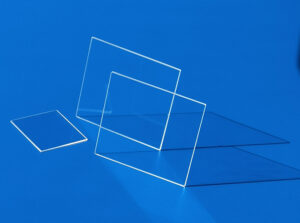
In LCD display glass, it helps lower the melting temperature of glass while improving its chemical stability.
In optical glass and camera lenses, barium carbonate can increase the refractive index, allowing optical devices to produce clearer images.
It is also an important component in electronic ceramics, where material purity directly affects the stability and performance of the final product.
With the rapid development of modern electronics, researchers are exploring new applications for barium carbonate, including flexible electronics, micro-sensors, solid-state batteries, and electromagnetic shielding materials.
Conclusion
As an important inorganic material, barium carbonate plays a vital role in many high-tech industries. Its unique chemical and physical properties make it an essential raw material for electronic glass, ceramic components, and advanced materials.
With the continuous development of electronic technology and new materials, the demand for high-purity barium carbonate is expected to grow, creating new opportunities for innovation and industrial applications.