Nano Barium Titanate: Properties, Crystal Phases and Applications

View Our Products

Contact Us Now !

Nano Barium Titanate (BaTiO₃) is an important functional ceramic material widely used in modern electronics, energy storage, and advanced engineering fields. Due to its outstanding ferroelectric, piezoelectric, and dielectric properties, Nano Barium Titanate has become a key material in electronic ceramics and high-performance components.

With the development of nanotechnology, Nano Barium Titanate powders provide significantly improved electrical and structural performance compared with conventional micron-scale materials. This makes them essential for high-efficiency electronic devices and advanced functional materials.

What is Nano Barium Titanate?

Nano Barium Titanate is a mixed oxide composed of barium and titanium, with the chemical formula BaTiO₃. It belongs to the perovskite crystal structure family and is well known for its strong dielectric and ferroelectric characteristics.

In the solid state, BaTiO₃ can exist in several crystal phases depending on temperature, including:

  • Hexagonal phase
  • Cubic phase
  • Tetragonal phase
  • Orthorhombic phase
  • Rhombohedral phase

Except for the cubic structure, the other phases exhibit ferroelectric behavior, which gives the material unique electrical properties.

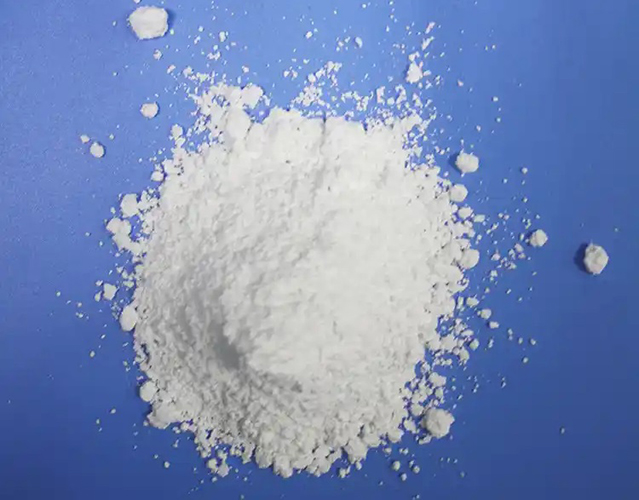
Nano barium titanate powder - VIMATERIAL

Key Properties of Nano Barium Titanate

Nano Barium Titanate offers several outstanding physical and electrical characteristics.

High Dielectric Constant

BaTiO₃ has an extremely high dielectric constant and low dielectric loss. Because of this property, it is widely used in high-frequency electronic components and dielectric devices such as capacitors and frequency modulation equipment.

Piezoelectric Effect

Under mechanical stress or an applied electric field, Nano Barium Titanate can generate electric polarization. This piezoelectric effect makes it suitable for sensors, actuators, microphones, and ultrasonic devices.

Ferroelectric Properties

When BaTiO₃ transforms from the cubic phase to the tetragonal phase at the Curie temperature (approximately 120°C), the crystal structure forms electric domains, giving the material ferroelectric and piezoelectric behavior.

Positive Temperature Coefficient (PTC)

Near the ferroelectric transition temperature, the electrical resistance of BaTiO₃ increases sharply with temperature. This phenomenon is known as the Positive Temperature Coefficient (PTC) effect, which is important for thermistors and self-regulating heating systems.

Advantages of Nano Barium Titanate

When BaTiO₃ particles are reduced to the nanoscale, several performance advantages emerge:

Higher dielectric enhancement: Particles around 100 nm can show dielectric constants up to twice that of conventional materials.

Improved sintering activity: Nano powders can achieve dense sintering at temperatures about 200°C lower than traditional ceramic powders.

Quantum size effects: At the nanoscale, BaTiO₃ may exhibit unique nonlinear optical properties useful for photonic applications.

Additionally, the electrical and optical properties can be tuned by controlling particle size, morphology, and doping composition.

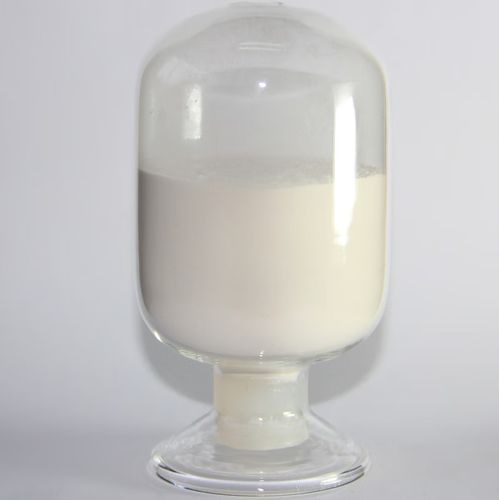
Nano barium titanate - VIMATERIAL

Crystal Phases of Nano Barium Titanate

Cubic Nano Barium Titanate

Typical characteristics:

  • Particle size: 50 nm – 100 nm (adjustable)
  • Purity: ≥ 99.9%
  • Appearance: white powder

Applications include:

  • PTC thermistors
  • Electronic filters
  • Ceramic capacitors
  • Advanced electronic ceramics

The cubic phase is widely used as a base material for electronic ceramic components, especially in miniaturized capacitors.

Tetragonal Barium Titanate

Typical characteristics:

  • Particle size: 300–400 nm
  • Purity: ≥ 99.9%
  • Appearance: white powder

Major applications include:

  • Nonlinear electronic components
  • Dielectric amplifiers
  • Computer memory components
  • Ultrasonic generators

Because of its high dielectric constant and strong piezoelectric performance, the tetragonal phase is particularly valuable for micro-capacitors and precision electronic devices.

Nano Barium Titanate Processing Technology

In electronic ceramics manufacturing, the particle size and dispersion of BaTiO₃ powders strongly influence final product performance.

A commonly used method is wet vertical milling, often performed using advanced equipment such as cell mills. This process allows:

  • Efficient particle size reduction
  • Stable production performance
  • Improved energy efficiency
  • Reduced dust and noise during processing

Proper grinding and classification technologies ensure high-quality nano powders for industrial applications.

What's the use of Nano Barium Titanate?

Electronic Ceramics

Nano Barium Titanate is a fundamental material used in ceramic capacitors, filters, and dielectric amplifiers. It provides high dielectric response and stable electrical performance for electronic devices. It is widely regarded as the “pillar of the electronic ceramics industry.”

Power Electronics and Energy Storage

Modified BaTiO₃ materials are increasingly studied for supercapacitors and high-energy-density storage devices, where nanostructuring and doping improve dielectric strength.

Optical and Photonic Devices

The material exhibits strong photorefractive and nonlinear optical effects, making it useful in optical storage, holography, and electro-optic modulators.

Biomedical and Bioengineering Applications

Nano Barium Titanate can be integrated into polymer composites to create piezoelectric biomaterials that stimulate cell growth. These materials show promising potential in bone repair, tissue engineering, and medical implants.

Biomedical and Bioengineering - VIMATERIAL

Flexible Electronics and Composite Materials

When combined with polymers such as PVDF, Nano Barium Titanate significantly improves dielectric properties and mechanical performance. These composites are widely used in:

  • Flexible sensors
  • Wearable electronics
  • High-dielectric films

Conclusion

Nano Barium Titanate is a highly versatile functional ceramic material with exceptional dielectric, ferroelectric, and piezoelectric properties. Thanks to nanoscale engineering and advanced processing technologies, its performance can be significantly enhanced for modern applications.

From electronic ceramics and energy storage to biomedical materials and flexible electronics, Nano Barium Titanate continues to play a crucial role in the development of next-generation functional materials.

Contact Us

Contact Us