


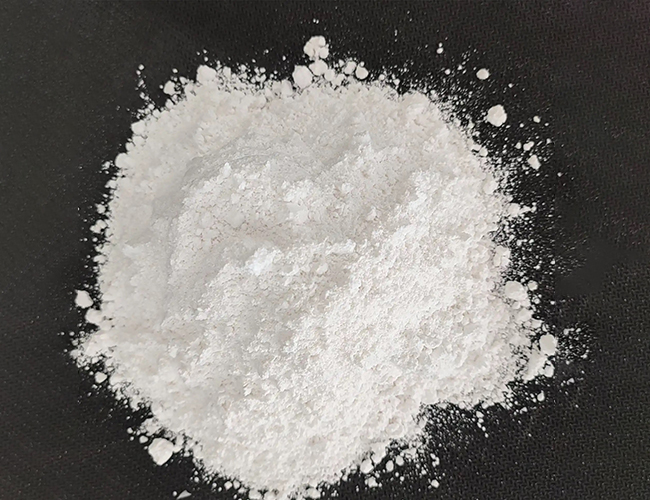
Lithium aluminum titanium phosphate (LATP) is an inorganic oxide solid electrolyte composed of phosphates, titanates, aluminates, and lithium ions. As an emerging solid-state electrolyte material, LATP offers high ionic conductivity at room temperature, low cost, excellent chemical stability, strong safety performance, and low internal resistance.
Thanks to these advantages, LATP is widely used in lithium-ion batteries, solid-state capacitors, and other electrochemical devices.
I. Key Properties and Advantages of LATP (LATP)
Excellent Thermal Stability
Lithium aluminum titanium phosphate LATP maintains structural stability even at elevated temperatures and does not easily decompose. This makes it particularly suitable for high-temperature applications.
Outstanding Electrochemical Performance
Lithium aluminum titanium phosphate LATP delivers good charge–discharge capacity and excellent cycling stability, maintaining performance over many cycles. This makes it highly suitable for battery applications.
High Safety
Lithium aluminum titanium phosphate LATP powder is inherently safer than liquid electrolytes and is less prone to risks such as leakage or explosion, making it ideal for energy storage systems.
High Ionic Conductivity
Lithium aluminum titanium phosphate LATP solid electrolytes are known for their high ionic conductivity, reaching around 10⁻⁴ S/cm at room temperature—approaching or even exceeding some liquid electrolytes. This makes LATP highly attractive for all-solid-state batteries and improved energy efficiency.
Strong Chemical Stability
Compared to sulfide-based solid electrolytes, LATP shows better stability in air and moisture. This reduces the need for inert environments during manufacturing, lowering production costs and complexity.
Compatibility with High-Voltage Cathodes
Lithium aluminum titanium phosphate electrolyte remains stable at voltages up to 5V, making it compatible with high-voltage cathode materials such as NMC (LiNiCoMnO₂). This is crucial for achieving higher energy density in electric vehicles and energy storage systems.
Good Mechanical Properties
Lithium aluminum titanium phosphate LATP has high mechanical strength and can be easily processed into thin films or customized shapes. This supports battery miniaturization and enhances durability.
Crystal Structure of LATP
LATP belongs to the polyanion-type lithium-ion battery material system and shares similarities with olivine-structured materials such as LiFePO₄. Its structure features titanium and aluminum occupying metal sites, while phosphate groups form a stable framework.
Key structural characteristics include:
- Ionic conductivity: ~10⁻⁴ S/cm at room temperature
- Wide electrochemical window: 0–5 V vs Li⁺/Li
- Good stability against lithium metal anodes
LATP Powder Specifications
LATP powder can be considered the “invisible hero” in batteries—it does not directly generate energy but provides fast pathways for lithium-ion transport.
Typical specifications include:
- Particle size: 0.5–10 µm (nano-sized particles are preferred for thin-film batteries)
- Purity: Typically ≥99.5%, with high-purity grades up to 99.95%
II. What's the applications of Lithium aluminum titanium phosphate (LATP)?
Lithium-Ion Batteries
Lithium aluminum titanium phosphate LATP is used as a solid electrolyte to improve energy density, cycle life, and safety, helping prevent thermal runaway.
Electric Vehicles (EVs)
LATP-based batteries provide stable power output and enhanced safety, making them highly relevant for modern EV development in Germany and across Europe.
Energy Storage Systems
Lithium aluminum titanium phosphate(LATP) enables efficient energy storage and release, supporting grid stability and renewable energy integration.
Portable Electronics
Due to its high ionic conductivity and low energy consumption, LATP is used in laptops, wearable devices, and compact electronics.
III. How to make Lithium aluminum titanium phosphate (LATP)?
Solid-State Method
This method involves mixing solid precursors (such as Li₂CO₃, Al₂O₃, TiO₂, NH₄H₂PO₄) followed by high-temperature calcination. Ion diffusion leads to the formation of the NASICON-type LATP structure.
Advantages: Simple, low cost, scalable
Disadvantages: High temperature, lithium loss, lower uniformity
Co-precipitation (Liquid-Phase Method)
Metal ions are dissolved in solution and precipitated simultaneously by adjusting pH. A phosphorus source is added to form a precursor, followed by calcination.
Key feature: Uniform mixing at the ionic level
Sol–Gel Method
This method enables molecular-level mixing through hydrolysis and polymerization of metal alkoxides, forming a gel network that converts into LATP after heat treatment.
Advantages: High purity, fine particle size
Disadvantages: Complex process, higher cost
Hydrothermal / Solvothermal Method
Crystals are directly grown in a high-temperature, high-pressure solution environment (typically 100–300°C).
Advantages: Controlled morphology, lower temperature
Disadvantages: Specialized equipment, limited scalability
Process Comparison
Each method involves trade-offs:
Solid-state: cost-effective but less uniform
Co-precipitation: better homogeneity but sensitive to conditions
Sol–gel: high performance but complex and expensive
Hydrothermal: precise control but limited production scale
Choosing the right method depends on balancing cost, performance, and scalability.
IV. Future Development of LATP
With the rapid growth of electric vehicles, renewable energy storage, and advanced electronics, higher demands are being placed on battery safety, lifespan, and energy density.
Lithium aluminum titanium phosphate LATP, as a promising solid-state electrolyte, has significant potential in next-generation battery technologies. Future research will focus on:
- Optimizing synthesis methods
- Understanding lithium-ion transport mechanisms
- Improving compatibility with electrode materials
These advancements will help unlock the full potential of solid-state batteries and accelerate their commercialization, especially in technologically advanced markets like Germany.
FAQs
What is the formula for lithium aluminum titanium phosphate?
Lithium titanium aluminum phosphate (LiTiA) is composed of elements such as lithium (Li), aluminum (Al), titanium (Ti), phosphorus (P), and oxygen (O). Its chemical formula is typically represented as Li1+xAlxTi2-x(PO4)3, where x ranges from 0 to 1. This structural characteristic endows LiTiA with unique physical and chemical properties.
From a technical perspective, LiTiA possesses a three-dimensional framework structure, allowing lithium ions to move freely within the voids and channels of the framework, thus achieving excellent ionic conductivity. This ionic conductivity is key to the widespread application of LiTiA in the battery field.
What happens when you mix lithium and titanium?
While lithium (Li) and titanium (Ti), as metallic elements, generally do not undergo violent chemical reactions when directly mixed at room temperature and pressure, they can form compounds or alloys under specific conditions (such as high temperature, molten state, or electrochemical environment), primarily used in advanced battery materials.
Is lithium phosphate safer than lithium ion?
Lithium phosphate (usually referring to lithium iron phosphate batteries, chemical formula LiFePO₄) does indeed have a significant safety advantage over traditional lithium-ion batteries (such as ternary lithium batteries NCM/NCA, lithium cobalt oxide LiCoO₂, etc.).
Lithium-ion batteries are prone to fire or explosion under extreme conditions such as overcharging, high temperature, and short circuits. Lithium iron phosphate batteries, with their electrode materials of lithium iron phosphate and carbon, do not contain rare or heavy metals, making them more environmentally friendly than lithium-ion batteries. They can also withstand higher voltage and high temperature environments, and are better able to address battery safety issues.