


The hydrothermal reactor is a small reactor commonly used in chemical laboratories. It is a closed container that can decompose insoluble substances. It can be used for sample pretreatment in atomic absorption spectroscopy and plasma emission analysis; it can also be used for small-dose synthesis reactions; it can also use the strong acid or strong alkali and high temperature and high pressure closed environment in the tank to achieve the purpose of quickly digesting insoluble substances. It is a powerful assistant for digesting samples when determining trace elements and trace elements.
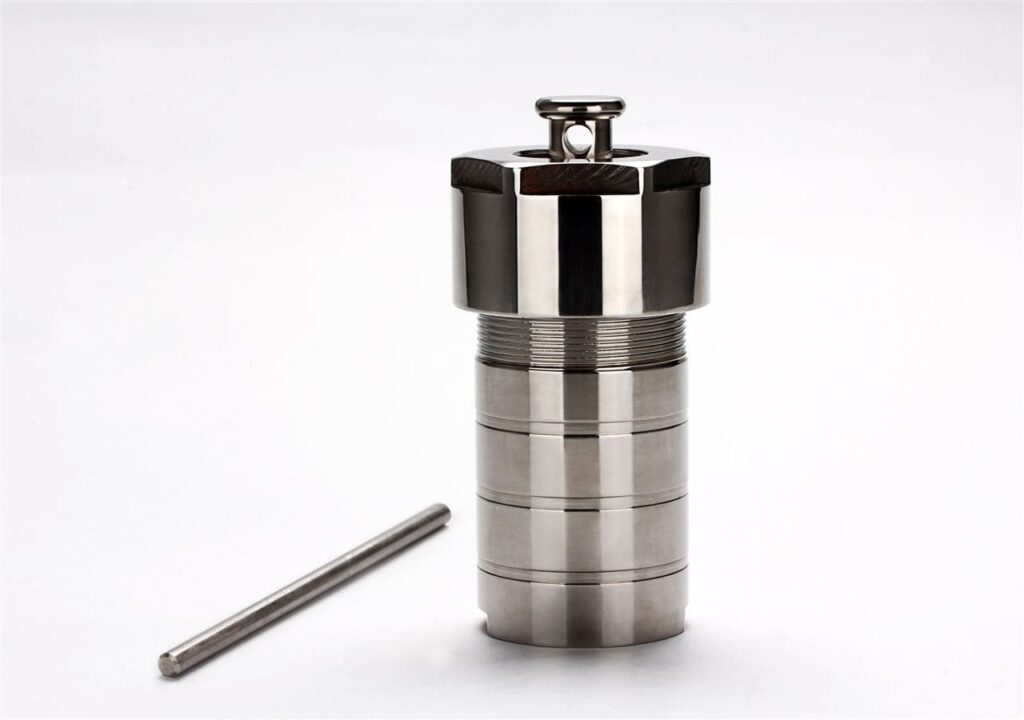
What’s the features of hydrothermal reactor?
Good corrosion resistance, strong acid and alkali resistance, no spillage of harmful substances, environmentally friendly and safe.
Under certain temperature and pressure conditions, it can quickly dissolve samples that are difficult to dissolve at room temperature, as well as samples containing volatile elements, without damage.
Beautiful and light appearance, simple results, easy to understand operation.
Shorten the reaction time, stable reaction results, and reliable data.
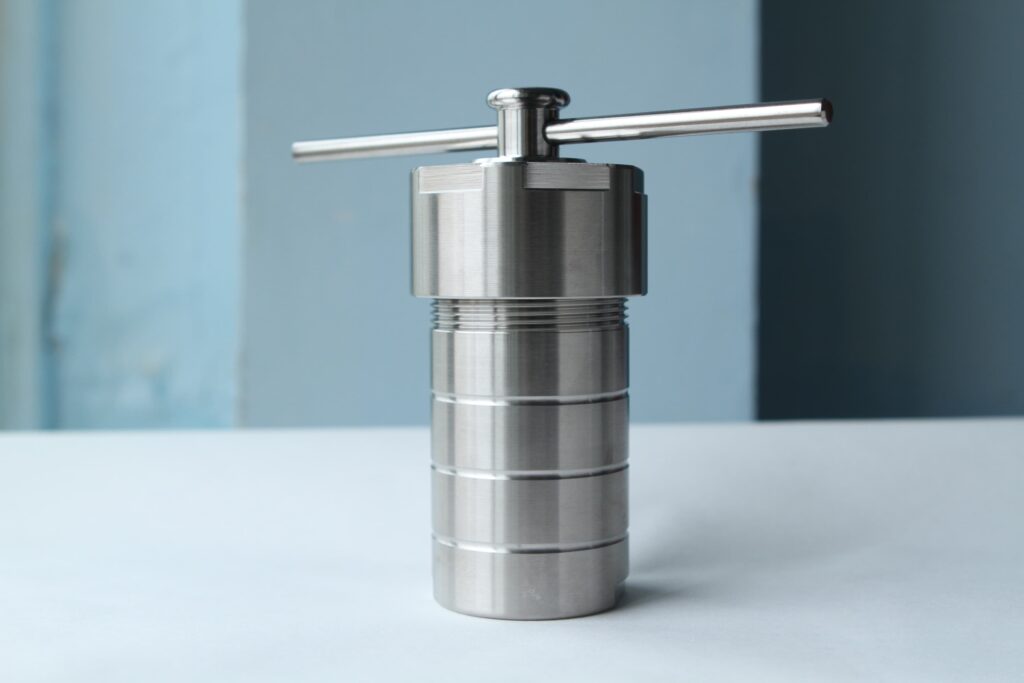
How to use a hydrothermal reactor?
Put the reactants into the reactor body. The added reactants shall not exceed 80% of the reactor body volume. In actual use, it is generally recommended not to exceed 75%.
If the reactants are corrosive, put the corrosion-resistant lining (polytetrafluoroethylene, para-polyphenylene) in the reactor body to ensure that the reactor body is not corroded.
Make sure that the position of the lower gasket of the reactor body is correct (the raised side is downward), then put in the polytetrafluoroethylene bushing and the upper gasket, tighten the reactor cover first, and then tighten the reactor cover with a screw.
Put the hydrothermal reactor into an oven or other heater and heat it to the required reaction temperature at the prescribed heating rate, ensuring that it must not exceed the prescribed safe use temperature.
The lid of the reactor can be opened for subsequent operations only after confirming that the temperature inside the abdomen is lower than the boiling point of the solvent of the reactant system. When cooling it down after the reaction, it must also be operated strictly according to the prescribed cooling rate to help extend the service life of the reactor.
After confirming that the temperature in the kettle has cooled to the natural temperature, first use the screw to loosen the kettle cover, and then open the kettle cover.
Clean it in time after each use to avoid rust. Pay special attention to cleaning the kettle body and kettle cover line seals, and strictly prevent them from being damaged.
Precautions
When working, the external heating temperature of PTFE material is recommended not to exceed 230℃, and that of PPL material is recommended not to exceed 260℃, and the heating rate is recommended to be ≤5℃/min.
When the reaction is completed, the kettle cover can be opened only after the kettle body cools down to room temperature naturally, and it must not be disassembled under pressure.
The hydrothermal kettle does not have an overpressure unloading device. It is strictly forbidden to use it at overtemperature or overpressure to avoid danger.
When using the hydrothermal kettle for the first time, the kettle cover should not be tightened too much to avoid deformation caused by thermal expansion and extrusion of the inner tank at high temperature.

How to clean hydrothermal reactor?
First cleaning
When cleaning the hydrothermal reactor for the first time, add some alkali or water to the inner tank and boil it for a while. When using the hydrothermal reactor for the first time, be sure not to heat it quickly. The temperature should be raised slowly and not too high, otherwise the PTFE lining will be easily deformed. Start from 150 degrees Celsius and keep it for a few hours, then keep it at 200 degrees Celsius for a few hours, then take it out and cool it naturally. After that, when the experimental temperature is 200 degrees Celsius, the inner tank of the hydrothermal reactor will not be deformed.
Different reaction media require different cleaning methods
The cleaning method of the hydrothermal reactor is different for different catalysts. If it is a silicon system, you can add some hydrofluoric acid or alkali to heat and wash it after use; if it is a silicon metal system, it depends on what acid it dissolves in. Hydrochloric acid needs to be treated with aqua regia (a ratio of three to one of concentrated nitric acid and concentrated hydrochloric acid).
For example: dissolve potassium permanganate in water, then add 3-5mL of concentrated hydrochloric acid, put it in the reactor, seal it, and hydrothermally react at 180 degrees for 5-10 hours. The washed reactor will be clean inside and out.
Cleaning method
Pickling method: Add a mixed dilute solution of nitric acid and water in a ratio of about 1:5 prepared in an open container into the hydrothermal reactor. The heating temperature must not exceed 140℃, and the ratio of the mixed solution of nitric acid and water should be strictly controlled.
You can also choose the cleaning reagent according to the type of the object to be washed, and ensure safety and take appropriate cleaning methods under the guidance of the instructor.
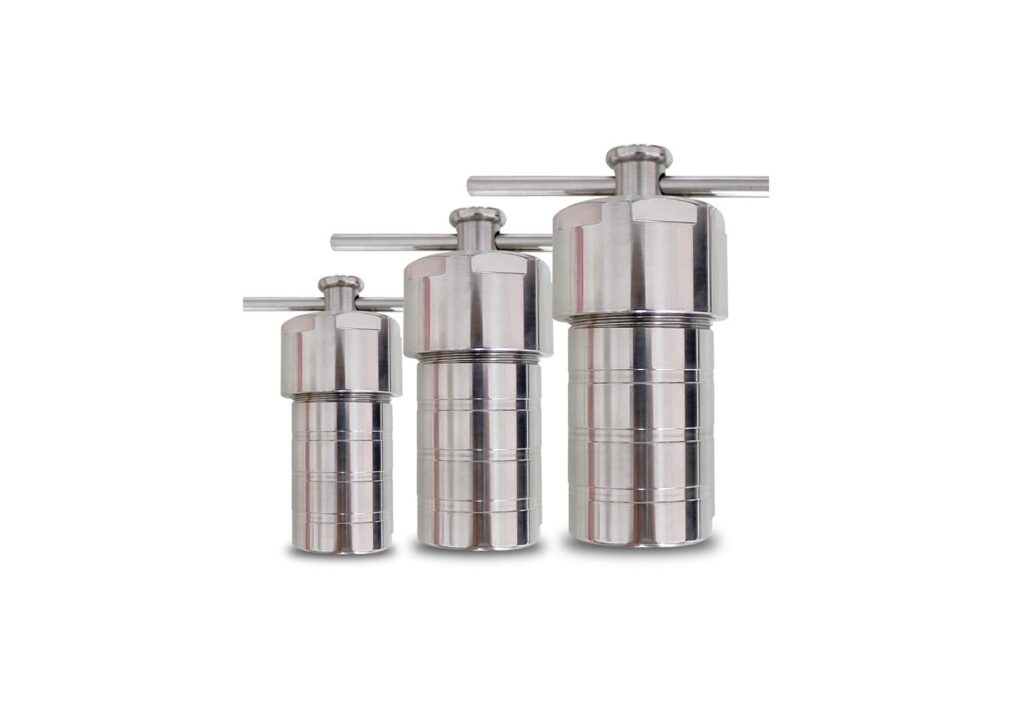
How to detect leaks in a How to detect leaks in a reactor?
When doing hydrothermal reaction in the laboratory, it was found that the hydrothermal synthesis reactor had a leak phenomenon no matter how many times it was done. In the face of the hydrothermal synthesis reactor leaking, how should we find out its leaking position?
Hydrothermal synthesis reactors generally have a volume ranging from more than ten milliliters to hundreds of liters. To check the leaking position of the hydrothermal synthesis reactor, first, you can apply pressure and then listen for the sound of leaking. This situation is suitable for obvious leaks. In most cases, the reactor leaks cannot be heard. This method is only suitable for a few cases.
Secondly, you can use a dropper to drip water at each link of the reactor to see if there are bubbles in the water. This method is time-consuming and labor-intensive and requires careful observation. It is suitable for roughly understanding a certain part of the leak or replacing the leaking parts and needing to confirm again whether the leaking part has been corrected.
The most direct and simple method is to prepare a larger container, fill it with water, and then completely immerse the hydrothermal synthesis reactor in water. See which part of the parts has bubbles coming out to find the leaking part simply and quickly. After picking up the leak, use a hot air blower to blow or wipe the reactor dry.