


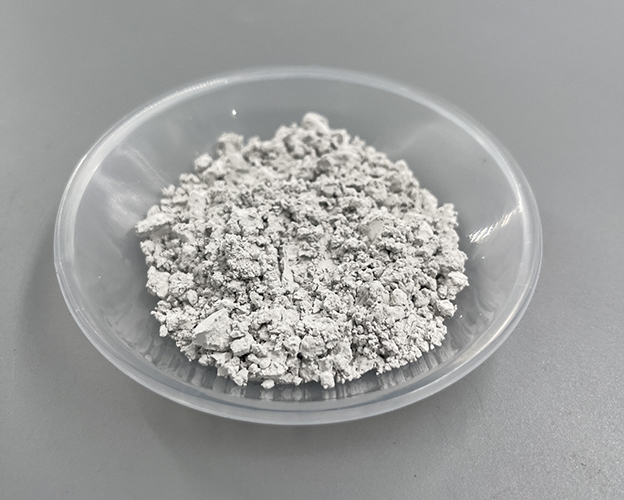
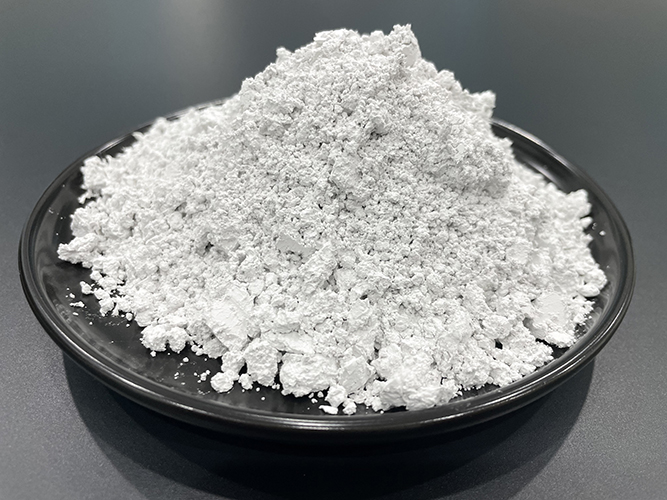
Aluminium nitride powder is a white or gray powder with the chemical formula AlN. It may look simple, but it is one of the most important advanced ceramic materials used today.
With a melting point of up to 2200°C and thermal conductivity as high as 220 W/(m·K), Aluminium nitride powder is widely used in electronics, semiconductors, ceramics, and optoelectronics because it combines excellent heat transfer with strong electrical insulation.
Key Properties of Aluminium Nitrite Powder
1. The "King" of Heat Dissipation
Aluminum nitride has outstanding thermal conductivity of up to 280 W/(m·K), more than five times higher than alumina and close to copper.
That is why Aluminium nitride powder is widely used in high-power LEDs, 5G base stations, and electric vehicle power modules.
Even at 200°C, its thermal conductivity decreases by only about 10%, making it an excellent heat-resistant material.
2. A Thermal Expansion Coefficient That Hardly Moves
The thermal expansion coefficient of aluminum nitride is only about 4.5 × 10⁻⁶/°C, close to single-crystal silicon.
This means Aluminium nitride powder stays stable when temperatures change quickly and is less likely to crack than ordinary ceramics.
That is why it is widely used in semiconductor packaging and substrates.
3. Tough on the Outside, Insulating on the Inside
Aluminium nitride is not only good at transferring heat—it is also an excellent electrical insulator.
Its Mohs hardness is about 9, close to diamond, while its electrical resistivity can reach 10¹⁴ Ω·cm.
Because of this, Aluminium nitride powder can be used in bearings, cutting tools, high-voltage equipment, and high-frequency circuit boards.
How to Make Aluminium Nitride Powder?
There are several ways to produce Aluminium nitride powder. The most common methods are direct nitridation and carbothermal reduction, while more advanced technologies are used for higher-purity products.
1. Direct Nitridation
The direct nitridation method is the most straightforward approach: aluminum powder is heated in nitrogen, and the two react directly to form Aluminum nitride powder.
Chemical reaction:
2Al + N₂ → 2AlN
Typical reaction temperature: 800–1200°C
Advantages
- Simple production process
- Low manufacturing cost
- Suitable for large-scale industrial production
Disadvantages
- A nitride layer forms on the surface of the aluminum powder, preventing nitrogen from penetrating completely
- Low conversion efficiency
- The reaction is difficult to control because it proceeds very quickly
- Heat released during the reaction can cause self-sintering and particle agglomeration
- Additional milling is often required, which may introduce impurities
2. Carbothermal Reduction
The carbothermal reduction method takes a slightly different route. Instead of starting with aluminum powder, it uses alumina (Al₂O₃) mixed with carbon in a nitrogen atmosphere. First, the alumina is reduced, and then the newly formed aluminum reacts with nitrogen to create Aluminum nitride powder.
Chemical reaction:
Al₂O₃ + 3C + N₂ → 2AlN + 3CO
Advantages
- Raw materials are cheap and easy to obtain
- The process is relatively simple
- The resulting Aluminium nitride powder is usually purer, finer, and more uniform
Disadvantages
- The reaction takes a long time
- Higher temperatures are required
- Any extra carbon must be removed afterward
- Production costs are therefore higher than they first appear
3. High-Energy Ball Milling
High-energy ball milling is carried out in a nitrogen or ammonia atmosphere. Aluminum powder or alumina powder is subjected to intense impact, grinding, and mixing inside a ball mill, leading to the formation of Aluminum nitride powder.
Advantages
- Simple equipment
- Short production process
- High manufacturing efficiency
Disadvantages
- Nitridation is often incomplete
- Impurities can easily be introduced during milling
- The quality of the powder is relatively low
4. Self-Propagating High-Temperature Synthesis (SHS)
You can think of self-propagating high-temperature synthesis as the “light it and let it run” version of direct nitridation.
In this process, aluminum powder is ignited in high-pressure nitrogen. Once the reaction starts, the heat generated is enough to keep the entire process going automatically.
Chemical reaction:
2Al + N₂ → 2AlN
Advantages
- Lower energy consumption
- Fast production speed
- Lower cost than traditional high-temperature nitridation
Disadvantages
- High nitrogen pressure is needed to make sure the powder reacts completely
- This makes industrial-scale production more difficult
5. In-Situ Self-Reaction Synthesis
This method is similar to direct nitridation, but uses aluminum alloys instead of pure aluminum. Other metals in the alloy first react with nitrogen to form metal nitrides, after which aluminum replaces the metal and forms Aluminum nitride powder.
Advantages
- Simple manufacturing process
- Low reaction temperature
- Low oxygen impurity content in the final powder
Disadvantages
- Metal impurities are difficult to remove
- Electrical insulation properties may be reduced
6. Plasma Chemical Synthesis
In plasma chemical synthesis, aluminum powder is fed into a plasma flame generated by a DC arc or high-frequency plasma generator. Inside the high-temperature plasma zone, the powder rapidly melts, vaporizes, and reacts with nitrogen ions to form Aluminum nitride powder.
Advantages
- Very small particle size
- Low degree of agglomeration
Disadvantages
- Difficult to scale up for industrial production
- High oxygen content in the final powder
- Expensive and complex equipment
- Incomplete reaction may occur
Chemical vapor deposition forms Aluminium nitride powder at temperatures much higher than the theoretical reaction temperature. Under these conditions, the reaction products generate a highly supersaturated vapor, which condenses into nuclei and then grows into fine particles.
Advantages
- Very high purity
- Excellent crystal structure
- Suitable for high-performance electronic and semiconductor applications
Disadvantages
- High equipment cost
- Complex manufacturing process
- Not ideal for low-cost, large-scale production
The Future of Aluminum Nitride Powder
With the introduction of nanotechnology and green manufacturing, AlN production methods have continuously advanced. Traditional techniques have been replaced or supplemented by modern processes such as physical vapor deposition (PVD) and chemical vapor deposition (CVD), significantly improving AlN purity, crystal structure, and overall properties.
As a key next-generation semiconductor material, aluminum nitride (AlN) offers high thermal conductivity, low thermal expansion, excellent electrical insulation, and strong thermal and chemical stability, making it ideal for high-performance packaging substrates and heat dissipation applications. In particular, in 5G base stations, electric vehicle control systems, and power semiconductor (IGBT module) applications, AlN substrates effectively reduce thermal failure risk and extend device lifespan.
FAQs about Aluminium Nitride Powder
How to make aluminium nitride powder?
Aluminum nitride powder is mainly prepared by direct nitridation and carbothermal reduction. Other methods include self-propagating high-temperature synthesis (SHS), high-energy ball milling, in-situ self-propagating reaction synthesis, plasma chemical synthesis, and chemical vapor deposition.
How strong is aluminum nitride?
Aluminum nitride (AlN) possesses high strength, particularly in ceramic materials. Its flexural strength can reach 350 MPa, and its Vickers hardness is approximately 12–15 GPa (1200–1500 HV), significantly higher than stainless steel. However, it’s important to note that while aluminum nitride is strong, it is a brittle material with relatively low tensile strength (approximately 100–150 MPa) and is prone to hydrolysis in humid environments. Therefore, careful environmental control is necessary during its use.
Is aluminium nitride powder toxic?
Under normal industrial and research conditions, aluminum nitride powder is generally considered a non-toxic or low-toxic material. However, strict adherence to dust control standards is essential to avoid prolonged exposure to high concentrations.