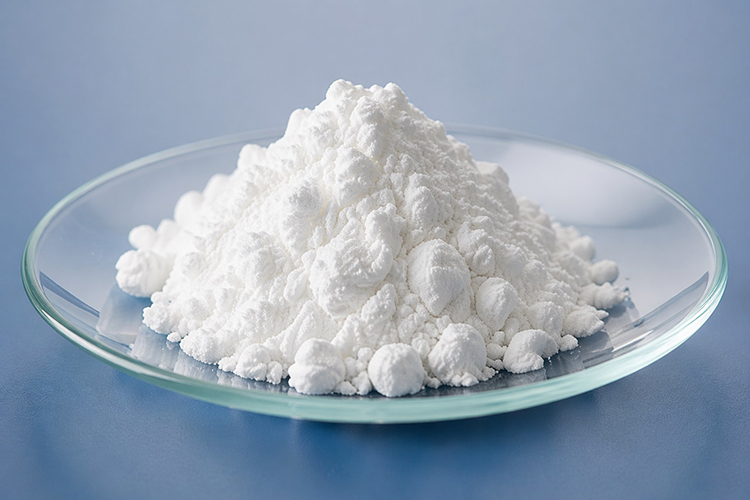
When people hear the term “rare earth elements,” they often think of colorful phosphors or the tiny motors inside their smartphones. Mention “fluorides,” and images of non-stick cookware coatings or cavity-preventing fluoride in toothpaste may come to mind. But when the rare earth element yttrium (Y) meets fluorine (F), the result is a rather unassuming white crystal that plays an extraordinary role in advanced technology: high-purity yttrium fluoride (YF₃).
At first glance, it appears ordinary. Yet in extreme environments—high temperatures, intense laser systems, fiber optics, and aerospace applications—it performs with remarkable stability and resilience. In the world of advanced materials, it is nothing short of a “well-rounded champion.”
What Is High-Purity Yttrium Fluoride?
High-purity yttrium fluoride, with the chemical formula YF₃, typically exists as a white powder or as orthorhombic crystals at room temperature. It has a melting point of approximately 1152 °C and a boiling point as high as 2230 °C. It is resistant to oxidation in air and exhibits only slight hygroscopicity.
However, its true transformation occurs when its purity exceeds 99.99%. At this level, impurities drop to just a few parts per million, and crystal defects are drastically reduced. The result is a material whose optical and electronic properties are significantly enhanced—almost as if it has undergone a complete “rebirth.” This ultra-high purity is what enables YF₃ to meet the stringent demands of cutting-edge technologies.
How Is Yttrium Purified to Such High Levels?
Achieving high-purity yttrium fluoride is no simple task. Industrial processes typically rely on three primary methods:
1. Solvent Extraction: This method uses organic solvents to selectively extract yttrium ions from a mixed rare-earth solution. Through multi-stage countercurrent extraction, impurities remain in the aqueous phase while yttrium is transferred into the organic phase. It is then stripped back into solution in a purified form. This process can elevate purity levels from around 99% to 99.99% or higher.
2. Combustion Synthesis: In this approach, high-purity yttrium oxide is mixed with a fluorine source, such as ammonium bifluoride. The mixture is ignited at temperatures between 400–600 °C, triggering an exothermic reaction that rapidly forms yttrium fluoride particles. This method is energy-efficient, produces fine particles, and is well-suited for large-scale production.
3. Vapor Deposition: For advanced applications, especially in optics and thin films, vapor deposition is essential. YF₃ is heated under vacuum or in an inert atmosphere until it sublimates, then condenses onto a substrate to form a thin film. The thickness can be controlled at the nanometer scale, making this technique indispensable for precision optical coatings and laser components.
Why Is High-Purity Yttrium Fluoride So Versatile?
The exceptional performance of yttrium fluoride comes from a unique combination of physical and chemical properties:
1. Outstanding Optical Properties: Yttrium fluoride is transparent across a wide spectral range—from 0.13 to 12 micrometers—covering ultraviolet to infrared wavelengths. It has a stable refractive index and a high laser damage threshold, making it an ideal coating material for infrared windows and laser gyroscope components.
2. Chemical Inertness: It is highly resistant to both strong acids and alkalis, and it does not react with oxygen or nitrogen at elevated temperatures. This makes it suitable for protective coatings in aerospace environments, where it can withstand gas flows at temperatures approaching 2000 °C.
3. Low Phonon Energy: As a host material for rare-earth ions, yttrium fluoride has low lattice vibrational energy. This reduces non-radiative transitions in luminescent centers, significantly enhancing upconversion efficiency. As a result, it serves as an excellent “fluorescence engine” for applications such as biomedical imaging and night-vision systems.
4. Low Neutron Absorption Cross Section: Yttrium fluoride interacts minimally with neutrons, making it valuable in nuclear reactors as a transparent window or partition material. It allows accurate signal detection without interfering with neutron flux.
Where Is High-Purity Yttrium Fluoride Used?
Despite its modest appearance, yttrium fluoride is already playing a critical role in several high-tech fields:
1. Laser Fusion Technology: In large-scale laser systems such as those used in inertial confinement fusion, YF₃ thin films serve as anti-reflective and damage-resistant coatings. These coatings help synchronize and amplify hundreds of laser beams, enabling the generation of extremely high energy pulses—effectively creating miniature “artificial suns.”

2. Fiber Optic Communications: Erbium-doped YF₃ glass fibers can directly amplify optical signals at the 1.55 μm wavelength, which is the standard for telecommunications. This allows long-distance data transmission—such as transoceanic cables—without the need for frequent signal repeaters, enabling ultra-high-speed data transfer.
3. Aerospace Thermal Protection: In rocket engines, YF₃–Y₂O₃ composite coatings are applied via plasma spraying to protect internal surfaces from extreme heat and erosion. These coatings significantly outperform traditional materials, extending service life and improving reliability.
4. Dental Applications: High purity yttrium fluoride is used as an additive in dental resins. It slowly releases fluoride ions, helping to prevent tooth decay and inhibit bacterial growth. At the same time, the high atomic number of yttrium enhances X-ray contrast, allowing dentists to clearly see the boundaries of fillings during imaging.
5. Quantum Computing: In superconducting quantum devices, materials with extremely low dielectric loss are essential. YF₃ thin films exhibit very low loss at cryogenic temperatures (around 10 mK), making them promising candidates for next-generation quantum chip packaging.
Future Outlook
As technologies such as 6G communication networks, controlled nuclear fusion, and deep-space exploration accelerate, the demand for high-purity yttrium fluoride is expected to grow dramatically—from kilograms to potentially tons per year.
At the same time, advances in green metallurgy, low-temperature extraction, and plasma purification are making it possible to further reduce impurity levels while lowering production costs. Materials with purities of 99.999% (5N) or even 99.9999% (6N) are becoming increasingly accessible, paving the way for broader commercialization.
What was once a niche material confined to research laboratories is now poised to enter everyday life. In the near future, components made from high-purity yttrium fluoride may be found in augmented reality glasses, automotive LiDAR systems, and even quantum-enabled devices.
Quietly and invisibly, this “optical magician” is shaping the future of advanced technology—one photon at a time.
Frequently Asked Questions (FAQs)
Q1: What is yttrium fluoride?
A: Yttrium fluoride (chemical formula YF₃) is an inorganic compound composed of yttrium and fluorine. It typically appears as a white crystalline solid or powder. Known for its high melting point, chemical stability, and low reactivity, yttrium fluoride is widely used in advanced materials science. In high-purity form, it exhibits excellent optical and electronic properties, making it especially valuable in high-tech applications such as lasers, coatings, and optical systems.
Q2: What is the use of yttrium fluoride?
A: Yttrium fluoride is widely used in advanced technologies due to its excellent optical transparency, chemical stability, and high-temperature resistance. It is commonly applied in optical coatings for lasers and infrared systems, used in fiber optic communications to enhance signal transmission, and serves as a protective material in aerospace components exposed to extreme conditions. Additionally, it plays a role in dental materials for fluoride release and in emerging fields such as nuclear and quantum technologies thanks to its unique physical properties.
Q3: Is yttrium fluoride rare?
A: Yttrium fluoride itself is not considered extremely rare, as yttrium is a relatively abundant rare earth element found in minerals such as xenotime and monazite. However, high-purity yttrium fluoride (e.g., 99.99% or higher) is much more difficult to produce and therefore more valuable. The refining process is complex and costly, which makes ultra-high-purity grades relatively scarce and in high demand for advanced technological applications.