


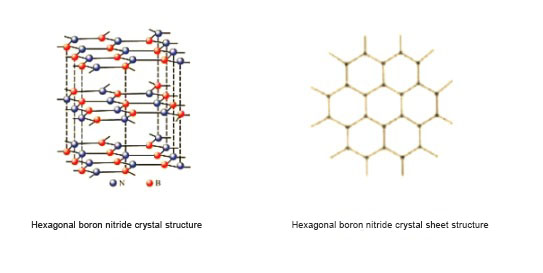
1)Stable Solid Lubrication
Due to its low covalent bonding and layered crystal structure, h-BN provides stable solid lubrication over a wide temperature range, from low temperatures up to approximately 900°C. When the electrical conductivity or chemical reactivity of graphite limits its application, h-BN offers a reliable alternative.
2)Vacuum-Compatible Lubrication
Unlike graphite, the lubrication mechanism of h-BN does not depend on adsorbed water molecules. As a result, it maintains low friction in vacuum environments, making it suitable for aerospace systems and high-vacuum industrial equipment.
3)Thermal Stability in Different Atmospheres
Hexagonal boron nitride exhibits high thermal stability under various conditions:
- Up to 1000°C in air
- Up to 1400°C in vacuum
- Up to 2800°C in inert gas atmospheres
4) Thermal Conductivity with Electrical Insulation
h-BN combines effective heat transfer with excellent electrical insulation. This unique combination allows thermal management without introducing electrical interference, which is essential for electronic and high-temperature insulation applications.
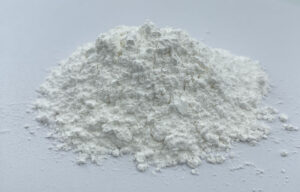
5)Chemical Inertness and Non-Wettability
Hexagonal boron nitride is chemically inert to most acids, alkalis, and reactive media. It is not wetted by molten metals such as aluminum, copper, or iron, which makes it particularly suitable for metallurgical and high-temperature processing environments.
6)Material Compatibility and Safety
Thanks to its chemical stability and biocompatibility, h-BN does not release harmful substances during use and is compatible with a wide range of materials, supporting safe and reliable industrial and consumer applications.
Hexagonal boron nitride is used across a wide range of industrial sectors due to its structural characteristics and balanced property profile.
Thermal Management for Electronics
As electronic components continue to increase in power density and integration, efficient heat dissipation has become critical. Hexagonal boron nitride supports effective thermal management while maintaining electrical insulation, making it suitable for high-power electronic devices and chip packaging systems.
Solid Lubrication
h-BN provides stable lubrication from low temperatures up to 900°C, including in oxidative atmospheres. Its performance in vacuum environments further extends its applicability to aerospace and high-vacuum systems.
Ceramic and Composite Materials
Through hot-pressing processes, h-BN powders can be processed into high-temperature insulating ceramics used in electronics and semiconductor manufacturing, including CVD crucibles, microelectronic packaging components, and sputtering targets.
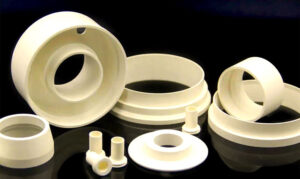
When combined with titanium diboride, electrically conductive composite ceramics can be produced for vacuum deposition and metallization processes.
Industrial and Defense Applications
In aerospace, automotive, defense, and non-ferrous metallurgy industries, h-BN is used for its resistance to high temperatures, corrosion, and thermal shock. Hexagonal boron nitride coatings provide durable surface protection for components exposed to harsh operating conditions.
Cosmetics and Neutron-Absorbing Coatings
In cosmetic formulations, h-BN improves adhesion, coverage, and application uniformity while providing a smooth, soft feel.

Additionally, due to its boron content and neutron absorption capability, h-BN-based coatings are used in neutron shielding applications where both functional performance and surface appearance are required.