


As semiconductor technologies continue to scale down and performance demands rise, advanced materials are playing an increasingly critical role. Among them, hafnium oxide (HfO₂) has emerged as a key high-k dielectric material, widely used in microelectronics, optics, and high-performance ceramics.
With its excellent thermal stability, high dielectric constant, and strong chemical resistance, hafnium oxide is becoming an essential material for next-generation technologies.
I. What Is Hafnium Oxide?
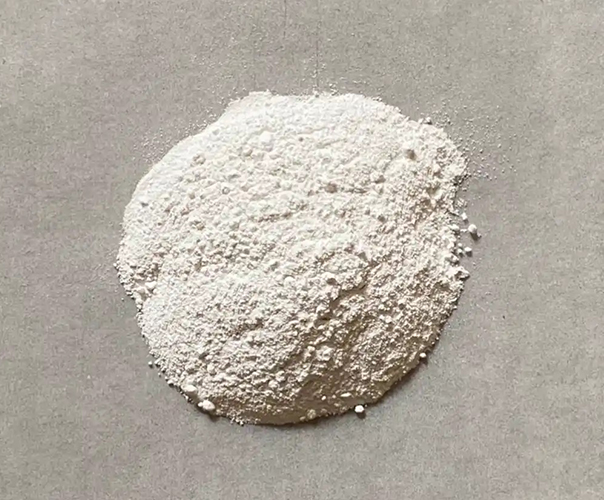
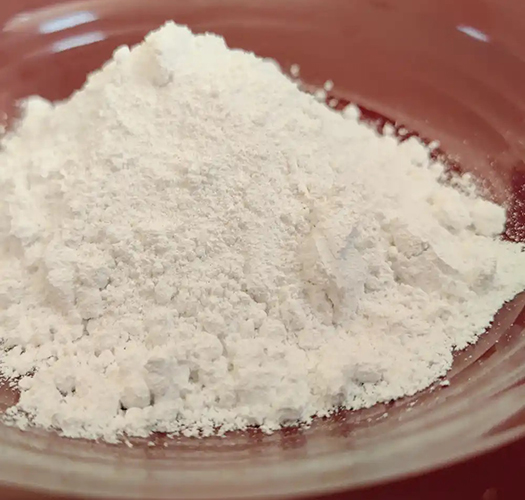
Hafnium oxide (HfO₂) is a white, high-melting-point inorganic compound (~2800°C) known for its outstanding insulating and dielectric properties. It is insoluble in water and most acids and exhibits high refractive index and chemical stability.
These characteristics make it highly suitable for applications requiring durability, reliability, and performance under extreme conditions.
Key Properties of Hafnium Oxide
High Dielectric Constant (κ ~20–25): Significantly higher than traditional SiO₂ (κ = 3.9), enabling reduced leakage current in semiconductor devices.
Wide Band Gap (~5.7 eV): Ensures excellent electrical insulation.
Exceptional Thermal Stability: Maintains structural integrity at temperatures above 2800°C.
High Density (~9.68 g/cm³): Contributes to mechanical strength and durability.
High Refractive Index (~2.13): Ideal for precision optical coatings.
Strong Chemical Resistance: Stable under most environmental conditions.
Biocompatibility: Suitable for select biomedical applications.
Crystal Phases
Hafnium oxide exists in three primary crystal structures:
- Monoclinic (stable at room temperature)
- Tetragonal (high-temperature phase)
- Cubic (high-symmetry phase)
Each phase differs in atomic arrangement and density, directly affecting electrical and mechanical properties. This makes phase control a critical factor in high-end applications such as semiconductor devices.
II. Applications of Hafnium Oxide
Electronics Industry
- High-κ Dielectric Material: Used as a replacement for silicon dioxide in MOSFET gate dielectrics, reducing leakage current and improving device performance and integration.
- Thin Film Applications:
Deposited via physical vapor deposition (PVD) or chemical vapor deposition (CVD) to form high-quality insulating and diffusion barrier layers in integrated circuits.
Optical Applications
- Optical Coatings: Used in anti-reflective coatings, reflective films, and optical filters due to its suitable refractive index and transparency.
- Laser Materials: Serves as a host matrix for rare-earth doping in high-performance laser crystals and glasses.
Other Applications
- Ceramics: Enhances hardness, toughness, and high-temperature resistance in cutting tools, abrasives, and refractory materials.
- Catalysts: Functions as a catalyst or catalyst support in petrochemical processes such as hydrogenation and cracking.
- Biomedical Field: Applied as coatings in certain medical devices due to its biocompatibility.
III. Manufacturing Methods
Different preparation methods influence crystal structure, purity, and particle size, thereby affecting performance in applications.
Chemical Precipitation Method:
Hafnium salts (e.g., hafnium tetrachloride) react with precipitating agents (e.g., ammonia or sodium hydroxide) to form hafnium hydroxide, which is then filtered, washed, dried, and calcined to obtain HfO₂.
Sol-Gel Method:
Hafnium compounds undergo hydrolysis and polymerization in solvents to form a sol, followed by gelation, drying, and calcination. This method produces high-purity, uniform powders or films.
Physical Vapor Deposition (PVD):
Hafnium metal is evaporated at high temperatures and reacts with oxygen to form thin films on substrates. Widely used in electronic device manufacturing.
IV. Safety Considerations
Hafnium oxide is generally safe under normal conditions. However, powder forms may irritate the respiratory system.
- Wear protective masks to avoid inhalation
- Rinse skin with water after contact
- Seek medical attention if it enters the eyes
Storage and Handling:
- Store in a cool, dry environment
- Avoid contact with strong acids and bases
- Use sealed containers to prevent moisture absorption and contamination
- Handle carefully during transport to avoid damage or exposure
V. How to Choose the Right Hafnium Oxide?
When selecting HfO₂ materials, consider:
- Purity: Critical for high-end applications
- Crystal Phase: Influences physical and electrical properties
- Specific Surface Area & Particle Size Distribution: Affect processing and final product density
A reliable supplier should provide detailed technical datasheets to support your application needs.
From a market perspective, hafnium oxide supply is closely tied to hafnium extraction, which is primarily derived from zircon sand. Due to complex separation processes, production costs are relatively high. Pricing is influenced by raw materials, processing complexity, and market demand. Users should balance performance requirements with cost considerations.
VI. Research and Development Trends
Ongoing research focuses on tuning hafnium oxide properties through doping and nanostructure engineering. These efforts aim to optimize electrical, optical, and mechanical performance for next-generation devices. Hafnium oxide continues to evolve as a critical material in advanced technology landscapes.
With its unique combination of electrical, thermal, and chemical properties, hafnium oxide (HfO₂) stands out as a cornerstone material for modern and future industries.
From semiconductor devices to optical systems and advanced ceramics, its versatility and performance make it a valuable solution for high-tech applications.
What is hafnium oxide?
Hafnium oxide (HfO₂) is an inorganic compound composed of hafnium and oxygen. It is an important functional material belonging to the transition metal oxide family. It possesses a high melting point (approximately 2810℃), high hardness (Mohs hardness 6.5-7.5), and excellent chemical stability, being virtually insoluble in water and most acids (except hydrofluoric acid) at room temperature. These properties make it a core material in high-temperature materials, optical coatings, and electronic devices.
What is hafnium oxide used for?
Hafnium oxide (HfO₂) is an important inorganic compound. Due to its high thermal neutron absorption cross-section, it is a key material for nuclear reactor control rods and also has wide applications in semiconductors, optics, and advanced memory technologies.
Nuclear Energy and High Temperature Engineering: Nuclear reactor control rods and protective materials, high-temperature refractory and coating materials, hafnium metal preparation and precursors.
Semiconductor and Microelectronics: Transistor gate dielectric layers, memory applications, other electronic components.
Optics and Multifunctional Materials: Optical coatings and laser materials, ceramics and catalysts, special functional materials.
Is HfO2 a semiconductor?
Hafnium oxide (HfO₂) is not a semiconductor itself, but a typical high-k dielectric insulating material. Although strictly speaking, hafnium oxide is an insulator rather than a semiconductor due to its extremely poor conductivity, which hinders electron movement, this does not prevent it from playing a crucial role in semiconductor devices. Particularly in metal-oxide-semiconductor field-effect transistors (MOSFETs), hafnium oxide is often used as an insulating layer material to effectively prevent the flow of electrons and holes.
What is the difference between Al2O3 and HfO2?
Al₂O₃ (aluminum oxide) and HfO₂ (hafnium oxide) differ mainly in dielectric properties and application focus. Al₂O₃ has a lower dielectric constant but excellent interface quality, high thermal stability, and low leakage, making it suitable for passivation and interface layers. HfO₂ has a much higher dielectric constant, which is beneficial for advanced CMOS scaling and high-density devices, but it has relatively higher leakage and lower thermal stability. In practice, Al₂O₃ is used for stability and interface control, while HfO₂ is used for high-k performance, and combining both can achieve better overall device performance.
Is hafnium oxide toxic?
Hafnium oxide is relatively safe under normal conditions, but its powder form may irritate the respiratory system. Wear a protective mask when handling it to avoid inhaling dust. After significant contact, rinse skin with water; if it gets into eyes, seek immediate medical attention. Store in a dry place, away from strong acids and alkalis.