


Boron nitride (BN) is a fascinating advanced ceramic known for its unique combination of thermal, mechanical, and electrical properties. Thanks to its multiple crystal forms, BN has found widespread applications in high-temperature lubrication, electronics, thermal management, and cutting tools.
Depending on how boron and nitrogen atoms are arranged, boron nitride exists in several distinct polymorphs. Each structure delivers dramatically different performance characteristics. Let’s explore the four primary crystal types and what makes them special.
I. Main structural crystal forms and properties of boron nitride
1. Hexagonal Boron Nitride (h-BN)
Structure:
Often called “white graphite,” hexagonal boron-nitride BN has a layered honeycomb structure similar to graphite. The layers are held together by weak van der Waals forces, allowing them to slide easily over one another.
Key properties:
Soft and lubricious (Mohs hardness ~1.5)
Excellent thermal stability (decomposition temperature ~3000 °C)
High electrical insulation (band gap ~5.9 eV)
Outstanding chemical inertness
Typical applications:
High-temperature solid lubricants
Cosmetic and polymer fillers
Crucibles and release coatings
Neutron absorption materials
At VIMATERIAL, high-purity h-BN powders and coatings are widely used in thermal insulation systems and high-temperature processing environments where both stability and cleanliness are critical.
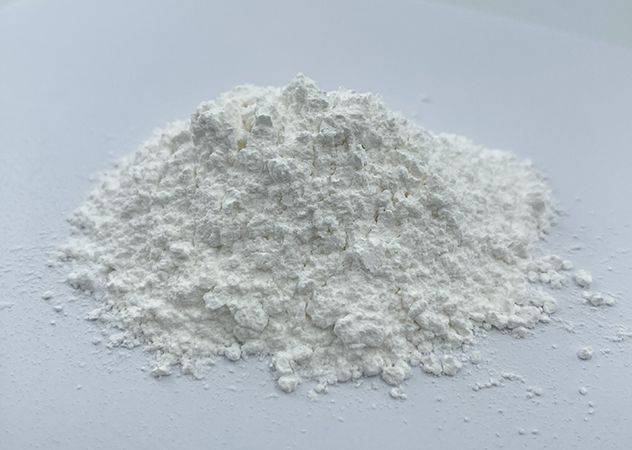
2. Cubic Boron Nitride (c-BN)
Structure:
Cubic BN features a diamond-like tetrahedral (sp³) bonding network. The atoms are tightly packed, resulting in an extremely hard and dense material.
Key properties:
- Ultra-hard (Mohs ~9.8, second only to diamond)
- High thermal conductivity (~1300 W/m·K)
- Excellent chemical and oxidation resistance
- Superior performance in ferrous metal machining compared to diamond
Typical applications:
- Cutting tools and abrasives
- Wear-resistant coatings
- Heat spreaders for high-power electronics
Because of its exceptional hardness and heat resistance, c-BN tools supplied by VIMATERIAL are especially valued in precision machining and demanding industrial environments.
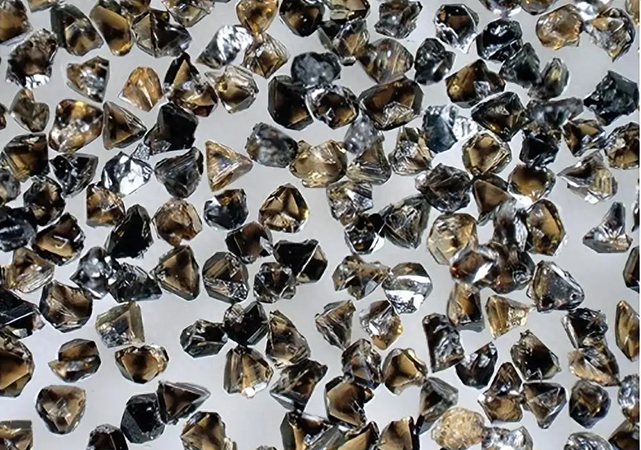
3. Wurtzite Boron Nitride (w-BN)
Structure:
Wurtzite boron nitride BN resembles the hexagonal form but differs in stacking sequence (ABAB → ABAC). It is generally considered a metastable phase.
Key properties:
- Hardness between h-BN and c-BN (Mohs ~8)
- Forms under high pressure
- Can transform into c-BN
Typical applications:
- High-pressure research
- Transitional or experimental superhard materials
Although less common in commercial use, w-BN is important for understanding phase transformation pathways in superhard ceramics.
4. Rhombohedral Boron Nitride (r-BN)
Structure:
This is a distorted variant of hexagonal BN, where slight rotational differences between layers reduce symmetry.
Key properties:
- Tunable electrical behavior
- Lower stability
- Requires specialized synthesis methods
Typical applications:
- Mainly research and experimental electronics
- Potential for flexible or low-dimensional devices
II. Comparison of intermorphic transformations and stability
The stability of BN phases strongly depends on temperature and pressure:
h-BN → c-BN: Requires high temperature and pressure (typically >1500 °C and >5 GPa); catalysts are often used industrially to lower synthesis conditions
w-BN: Appears as an intermediate phase during high-pressure transitions
r-BN: Produced via techniques such as mechanical exfoliation or chemical vapor deposition (CVD)
Understanding these transitions enables manufacturers like VIMATERIAL to tailor synthesis routes and engineer BN materials with precisely controlled properties for industrial applications.
III. Emerging BN Nanostructures: The Future
Beyond bulk crystals, boron nitride is also gaining attention in low-dimensional forms:
2D h-BN (White Graphene)
- Atomically thin
- Excellent dielectric properties
- Ideal insulating layer for next-generation electronics
Boron-Nitride Nanotubes (BNNTs)
- Ultra-high strength
- Oxidation resistance
- Lightweight and thermally stable
Potential uses:
- Aerospace protective coatings
- Thermal management systems
- Advanced composites
These nanostructures are opening new opportunities in microelectronics, energy devices, and extreme-environment engineering.
IV. Final Thoughts
The versatility of boron nitride lies in its polymorphism. From soft lubricating layers to superhard cutting materials and advanced nanostructures, BN offers solutions across vastly different industries.
By carefully controlling crystal phase, purity, and morphology, companies like VIMATERIAL continue to unlock new performance boundaries for high-temperature, high-wear, and high-reliability applications.
As materials science advances, boron nitride is set to play an even bigger role in enabling next-generation technologies.