


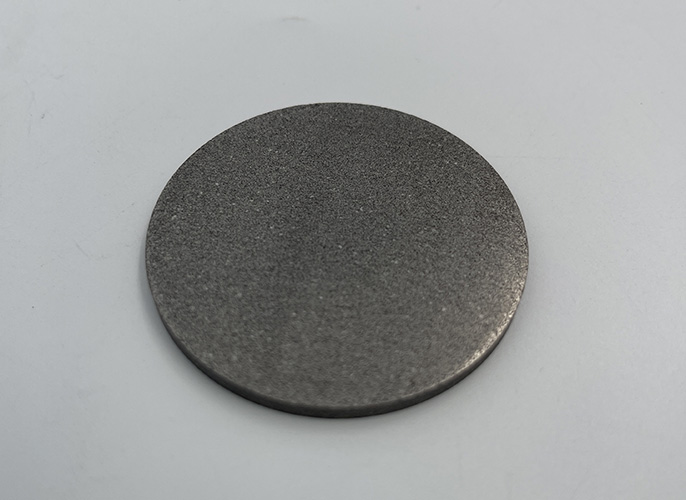
Cobalt iron boron alloy target (CoFeB) is an alloy composed of cobalt (Co), iron (Fe), and boron (B). Depending on the specific application, the elemental composition can be adjusted accordingly. By combining the excellent magnetic properties of cobalt and iron with the unique chemical characteristics of boron, CoFeB alloy targets enable the formation of thin films with outstanding magnetic performance and fine microstructure during PVD processes.
As a high-performance functional material, CoFeB alloy targets play an irreplaceable role in a wide range of advanced technology fields.
Characteristics of Cobalt Iron Boron Alloy Targets
High Magnetic Energy Density
CoFeB exhibits an exceptionally high magnetic energy density, allowing it to deliver strong magnetic performance even in limited volumes or ultra-thin film configurations. This makes it ideal for device miniaturization and high-density integration.
High Temperature Resistance and Thermal Stability
The magnetic properties of CoFeB remain stable during medium- to high-temperature annealing and subsequent processing steps. Its structure and performance show minimal degradation, making it well suited for semiconductor and spintronic manufacturing environments.
Ultra-Precision and Excellent Film Uniformity
Films sputtered from CoFeB targets can be thinner than one-hundredth the diameter of a human hair. The amorphous structure ensures uniform composition and smooth surfaces, enabling nanometer-level control of film thickness and magnetic properties.
Excellent Soft Magnetic Properties
With low coercivity and low hysteresis loss, CoFeB allows easy magnetic switching, helping to reduce power consumption and improve response speed in electronic devices.
Cobalt iron boron alloy targets are the core material in magnetron sputtering processes. The ultra-thin magnetic films deposited from these targets significantly enhance the performance of smartphone memory chips, hard disk drives, and even wireless charging coils.
What We Offer?
Purity: 3N (99.9%)
Sizes: 1”, 2”, 3”, etc. (custom machining according to drawings)
Shapes: Planar targets, tubular targets, and custom geometries
Impurity Control: Available upon request
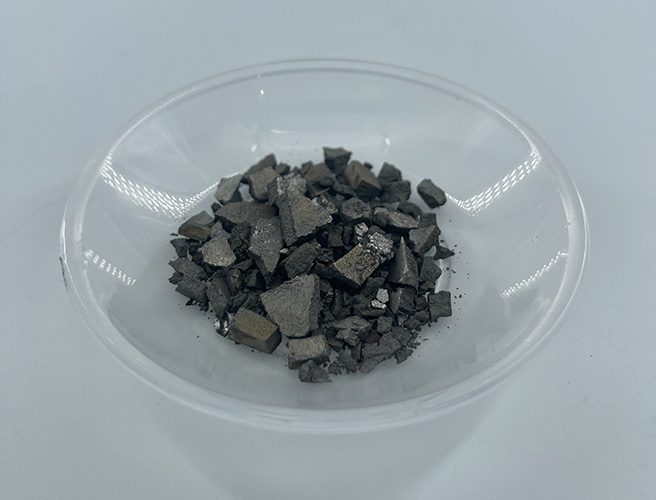
Additional Forms: CoFeB granules and CoFeB pieces
Preparation of CoFeB Targets
Raw Material Preparation: High-purity iron (Fe), cobalt (Co), and boron (B) powders are prepared, typically with a purity of 99.9% or higher.
Powder Mixing: The powders are mixed in specific ratios using a ball mill for several to more than ten hours to ensure homogeneous blending.
Compaction: The mixed powders are pressed into shape using molds under pressures ranging from several hundred to several thousand megapascals.
Sintering: The compacted targets are sintered in a furnace at temperatures ranging from several hundred to over one thousand degrees Celsius for several to more than ten hours, ensuring high density and structural integrity.
Post-Processing: The sintered targets are then machined through cutting, grinding, and polishing to achieve the required dimensions and surface quality.
What's Cobalt Iron Boron Alloy Targets used for?
Magnetic Recording:
In magnetic recording applications, CoFeB targets enable ultra-high data storage density, meeting the growing demands of the information age. Their stable magnetic properties ensure long-term data reliability and minimize the risk of information loss.
Thin Film Deposition:
CoFeB alloy targets are widely used in magnetron sputtering processes, which require extremely high purity and uniform microstructures. Through specialized melting and heat-treatment techniques, CoFeB targets achieve dense and homogeneous microstructures, ensuring precise composition control and uniform film deposition.
Harsh Environment Applications:
By adding appropriate alloying elements, the environmental stability of CoFeB can be further enhanced, making it suitable for demanding applications such as aerospace and marine engineering.
Electric Motors:
With the rapid development of green energy technologies, CoFeB alloy targets show great potential in permanent magnet motors. Their high magnetic energy density significantly improves motor efficiency and reduces energy loss, supporting electric vehicles, wind power generation, and other renewable energy applications.
How to Choose the Right Target?
Selecting a sputtering target is like choosing a premium skincare product: purity and microstructure matter. These factors directly determine final film performance.
High purity minimizes impurity incorporation and ensures stable film properties.
High density reduces particle ejection during sputtering and improves film uniformity.
Fine grain size contributes to more uniform sputtering behavior, while appropriate grain orientation can enhance deposition efficiency.
Through specialized heat-treatment processes, CoFeB alloy targets can achieve optimized microstructures. By adjusting alloy composition, magnetic parameters of the deposited films can be precisely tailored.
As thin-film technologies continue to advance, performance requirements for sputtering targets are becoming increasingly stringent. The emergence of nanostructured and composite targets is further expanding the application boundaries of magnetron sputtering technology.