


I. What Are Barium Titanate Ceramics?
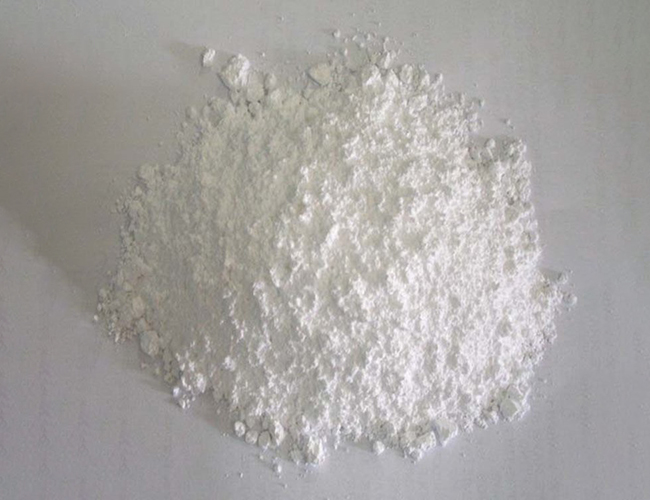
Barium Titanate ceramics are a typical perovskite-structured ferroelectric ceramic material widely used in the electronics industry. They are characterized by a very high dielectric constant, excellent temperature stability, and tunable ferroelectric properties.
Through doping strategies and microstructure control—such as grain size regulation, phase composition engineering, and sintering densification—barium titanate ceramics can achieve tailored dielectric properties, insulation performance, and temperature coefficient characteristics.
Because of these advantages, barium titanate is widely used as the core dielectric material in multilayer ceramic capacitors (MLCCs). It is also applied in piezoelectric ceramics, PTC thermistors, dielectric composites, and advanced electronic components.
Classification of Barium Titanate
1. Classification by Particle Size
Micron-scale barium titanate powder: Typically used in traditional capacitors and PTC thermistor ceramics.
Submicron barium titanate powder: Suitable for high dielectric constant materials and thin dielectric layers in electronic components.
Nano-scale barium titanate powder: Designed for ultra-thin MLCC dielectric layers and next-generation electronic devices.
Particle size control plays a critical role in determining sintering behavior, dielectric performance, and reliability of ceramic components.
2. Classification by Crystal Structure
Cubic phase barium titanate: A high-temperature phase with relatively stable dielectric properties, often used as a base dielectric material.
Tetragonal phase barium titanate: The stable phase at room temperature, exhibiting strong ferroelectric and piezoelectric properties.
Phase-engineered barium titanate: Through controlled doping, the Curie temperature and phase transition behavior can be adjusted to meet requirements for high dielectric constant or wide operating temperature ranges.
3. Classification by Preparation Method
The synthesis route significantly influences particle size distribution, purity, and crystallinity. Common preparation methods include:
Each method offers different advantages in terms of cost, scalability, and powder quality control.
II. Applications of Barium Titanate Ceramics
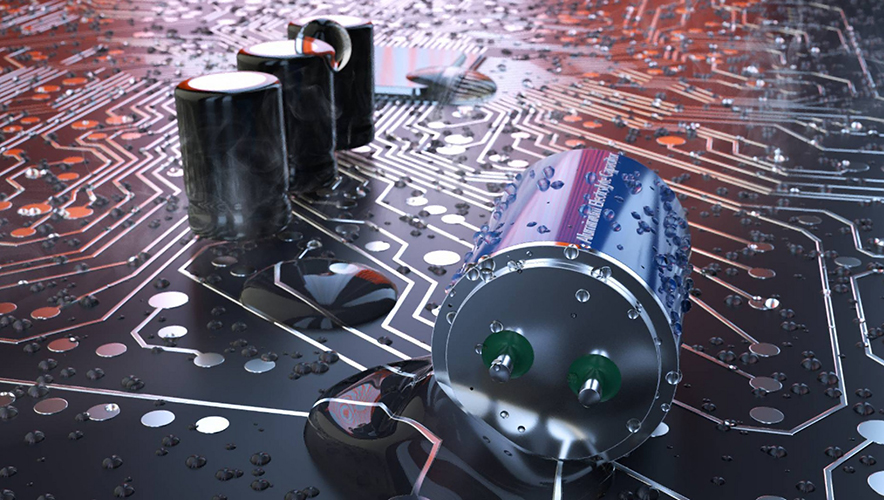
Pure barium titanate ceramics and their modified compounds possess very high dielectric constants, making them widely used in the production of multilayer ceramic capacitors (MLCCs).
Barium titanate ceramics can also function as high energy-density dielectric materials, enabling the fabrication of high-energy storage capacitors used in pulse power technologies. Compared with other energy storage devices, capacitors offer several advantages:
- High discharge power
- High energy efficiency
- Long pulse discharge lifetime
These features are making capacitors increasingly important as energy storage components in pulse power systems, including applications in electromagnetic rail weapons, fully electric naval ships, and military vehicles.
In the electric vehicle sector, high-power supercapacitors demonstrate strong application potential. They are suitable not only for short-term power output but also for improving vehicle performance during starting, acceleration, and climbing due to their:
- High power density
- High energy density
- Large single-cycle energy storage
Supercapacitors also feature low internal resistance, high charge–discharge efficiency, long cycle life, and environmental friendliness. When integrated with other energy systems—such as generators, batteries, and fuel cells—they enable efficient energy recovery and reduced emissions, significantly improving the driving range of electric vehicles per charge.
III. Differences from Similar Materials
Compared with other perovskite compounds, such as Strontium Titanate, barium titanate has a higher ferroelectric transition temperature (approximately 120 °C). Its dielectric constant also remains more stable across temperature changes, making it suitable for applications requiring wide temperature ranges.
Additionally, barium titanate offers better chemical stability than lead-based ferroelectric materials, reducing environmental risks.
In the field of analytical reagents, the purity (typically above 99%) and particle size distribution (customizable) of barium titanate directly affect experimental accuracy. Therefore, selecting the appropriate specification is essential for specific application requirements.
IV. Key Challenges in Barium Titanate Procurement
In practical industrial adoption, customers often face several challenges when sourcing barium titanate powder for MLCC or electronic ceramics:
- Dielectric constant fluctuations, leading to capacitor value deviations
- Narrow sintering windows, resulting in unstable ceramic densification
- Impurities and ionic contamination, causing insulation degradation and higher failure rates
- Particle size distribution tails, increasing the risk of dielectric breakdown in thin layers
- Batch-to-batch variations, requiring repeated process adjustments
Therefore, supplier evaluation increasingly focuses on:
- Particle size distribution and agglomeration control
- Purity level and impurity spectrum
- Stability of doping formulations
- Sintering density and controllable grain growth
- Compatibility with electrode materials and slurry systems
Suppliers capable of delivering “material parameters + process window guidance + failure analysis support” are more likely to become long-term strategic partners.
V. Technology Trends and Innovation
1) Thinner Dielectric Layers and Higher Capacitance Density
The demand for thinner dielectric layers drives powder nanosizing, low-defect materials, and stronger dispersion systems, along with stricter control of cleanliness and impurities.
2) Automotive-Grade and High-Reliability Systems
Applications in high temperature, high humidity, thermal cycling, and high-voltage environments require materials with improved insulation lifetime, reduction resistance, and comprehensive reliability data packages.
3) Platform-Based Material Systems
The industry is evolving from simple powder supply to integrated solutions, including:
- Powder materials
- Doping strategies
- Granulation guidance
- Sintering process recommendations
This collaborative approach helps customers reduce process tuning time and shorten certification cycles.
VI. Future Outlook
As electronic systems continue to evolve toward higher integration density, higher operating frequencies, and more demanding environments, the importance of barium titanate ceramics will continue to grow.
These materials not only determine the capacitance density and reliability of MLCCs, but also influence the power integrity and long-term reliability of entire electronic systems.
The next generation of industry leaders will not simply be those who produce the lowest-cost powders, but those who can integrate:
- Microstructure engineering
- Batch-to-batch consistency
- Process window optimization
- Reliability verification
into a fully coordinated supply chain, enabling downstream manufacturers to achieve faster mass production, fewer failures, and more stable supply.
VIMATERIAL operates with a professional quality management system and a comprehensive product monitoring process to ensure consistent material quality and reliability.
By choosing VIMATERIAL, you gain a trusted supplier of advanced ceramic materials and barium titanate powders for high-performance electronic applications.
FAQs
What is barium titanate used for?
Barium titanate is an important functional ceramic material with excellent dielectric, ferroelectric, and piezoelectric properties. It is widely used in electronic components such as multilayer ceramic capacitors (MLCC), thermistors, and microwave dielectric devices for filtering, oscillation, and communication applications. In addition, barium titanate can be used in piezoelectric ceramics, optical devices, and ferroelectric memory. Due to its good biocompatibility, it also shows potential for applications in biomedical materials such as artificial bones and dental materials.
Is barium titanate hazardous?
Barium titanate is classified as a non-hazardous material for transportation. However, it may be harmful if swallowed or inhaled, especially in powder form. During handling and use, appropriate personal protective equipment (PPE) such as gloves, protective clothing, and dust masks or respirators should be worn. Adequate ventilation is recommended to minimize dust generation and reduce the risk of inhalation. Direct contact with the material and prolonged exposure should be avoided to ensure safe handling.
Is BaTiO3 a perovskite?
Yes, barium titanate is a typical perovskite-structured material. At room temperature, barium titanate exhibits a tetragonal perovskite structure. In the temperature range of 130–1460 °C, it transforms into a cubic perovskite structure, and when the temperature exceeds 1460 °C, it changes to a hexagonal non-ferroelectric structure. Due to its excellent electrical properties, it is widely used in applications such as multilayer ceramic capacitors (MLCC), thermistors, and piezoelectric devices.
Is barium titanate piezoelectric?
Yes, barium titanate is an important piezoelectric material with excellent piezoelectric properties. Its crystal structure is perovskite, exhibiting high symmetry and crystal stability, thus allowing for the fabrication of high-quality single crystals and ceramic materials. Barium titanate possesses a high piezoelectric coefficient, low mechanical dissipation, excellent stability, and tunability, making it a crucial material for fabricating piezoelectric devices such as piezoelectric sensors, piezoelectric actuators, and piezoelectric ceramic filters.