Everything You Need to Know About Yttrium Oxide Granulated Powder

View Our Products

Contact Us Now !

What Is Yttrium Oxide Granulated Powder?

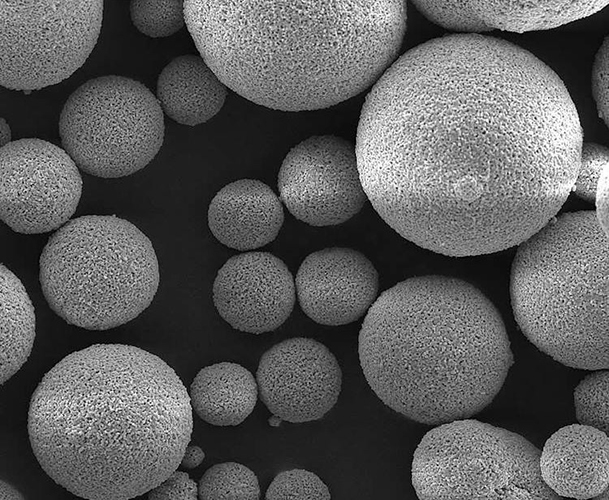
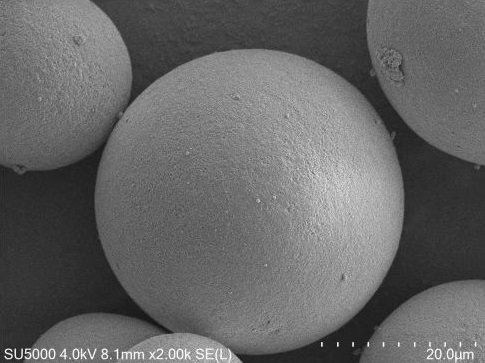
Yttrium oxide granulated powder is a spherical particulate material produced by agglomerating and sintering high-purity yttrium oxide (Y₂O₃) powder through specialized processing techniques. The particle size can be precisely controlled and customized according to application requirements. Thanks to its excellent flowability and spray characteristics, the resulting coating remains highly stable at elevated temperatures and exhibits strong resistance to corrosion from many reactive molten metals. It also offers outstanding electrical insulation and plasma corrosion resistance.

These properties make it widely used in semiconductor manufacturing, including protective coatings for plasma etching equipment, lithium battery sintering saggers, and graphite setter plates for cemented carbide applications.

Yttrium oxide granular powder - VIMATERIAL

Basic Composition

The primary component is yttrium oxide (Y₂O₃), which has a cubic crystal structure. As a rare-earth oxide, yttrium oxide features a high melting point, high hardness, excellent chemical stability, and outstanding optical properties.

Characteristics of Yttrium Oxide Granulated Powder

Property Details
Product Names Yttrium oxide granulated powder, granulated yttrium oxide, spherical yttrium oxide powder, yttria coating powder
Chemical Formula Y₂O₃
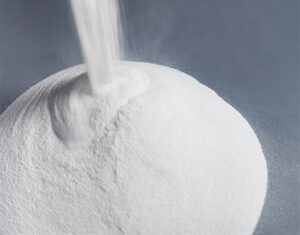
Appearance White or slightly yellowish powder
Particle Morphology Spherical or near-spherical particles with excellent flowability and dispersibility
Purity 99.9%, 99.99%, 99.999%
Particle Size 15–45 μm, 20–40 μm, 35–50 μm, 40–60 μm, etc. Customized particle sizes are available based on application requirements.
Loose Bulk Density 1.6–1.7 g/cm³
Tapped Density 2.0–2.1 g/cm³
Specific Surface Area The powder has a relatively large specific surface area, providing enhanced reactivity and adsorption performance in various applications.

Advantages of Spherical Granulated Yttrium Oxide

1. High Purity and Low Porosity

The powder purity can reach up to 99.999%, with low thermal conductivity and porosity. This significantly reduces internal coating defects and improves coating density.

2. Excellent High-Temperature and Thermal Shock Resistance

The coating can operate continuously within a temperature range of 800–1650°C while maintaining structural stability under extreme thermal cycling conditions.

3. Outstanding Corrosion Resistance

Yttrium oxide coatings exhibit excellent resistance to reactive molten metals such as aluminum and titanium alloys, as well as plasma environments, making them ideal for semiconductor and display panel manufacturing equipment.

4. High Process Compatibility

The spherical particle morphology and controllable particle size distribution (customizable D50 values) optimize coating uniformity and deposition efficiency during thermal spraying, while minimizing material waste. Different particle size distributions can be tailored to meet specific spraying process requirements.

Granulated yttrium oxide - VIMATERIAL

Analysis of Typical Test Results

1. Coating Density

Scanning Electron Microscope (SEM) observations show that the coating cross-sectional porosity is below 2%, indicating sufficient particle sintering and a dense microstructure.

2. High-Temperature Resistance

After exposure at 1600°C for 100 hours, the coating showed no cracking or peeling, with a weight loss rate below 0.5%, demonstrating excellent thermal stability.

3. Plasma Corrosion Resistance

After 50 hours of exposure in a radio-frequency plasma environment, the coating surface roughness changed by less than 0.1 μm, and the corrosion rate remained below 0.01 mm/year, meeting semiconductor equipment protection standards.

4. Electrical Insulation

The volume resistivity exceeds 10¹⁴ Ω·cm, and the dielectric strength reaches 20 kV/mm, making it suitable for high-voltage insulation applications.

Manufacturing Process of Granulated Yttrium Oxide

Yttrium oxide granulated powder is commonly produced using methods such as chemical precipitation, sol-gel processing, and spray drying.

Taking spray drying as an example, a yttrium-ion-containing solution is first atomized into tiny droplets through a spray system. The droplets are then rapidly dried in hot air, causing the solute to precipitate and form spherical primary particles. Subsequent high-temperature calcination removes impurities and improves crystallinity, ultimately producing high-quality yttrium oxide granulated powder.

Applications of Granulated Yttrium Oxide

1. Semiconductor and Electronics Industry

Plasma Etching Equipment Protective Coatings: Used on the inner walls of etching chambers to resist plasma corrosion, extending equipment lifespan and ensuring process stability.

Electronic Ceramics and Substrates: Serves as an additive in ceramic materials to improve dielectric properties and high-temperature resistance for microwave devices, capacitors, and related applications.Yttrium oxide granulated powder - VIMATERIAL
2. High-Temperature Components

Thermal Barrier Coatings (TBCs): Applied to engine blades, nozzles, and other components to enhance high-temperature resistance up to 1650°C and improve oxidation resistance.

High-Temperature Alloy Protection: Used as corrosion-resistant coatings for gas turbines, nuclear reactors, and other extreme-temperature environments.

3. Energy and Environmental Technologies

Solid Oxide Fuel Cells (SOFCs): Used as electrolyte or buffer layer materials to improve fuel cell efficiency and stability.

Lithium Battery Sagger Coatings: Protects saggers from corrosion caused by reactive molten metals, significantly extending service life.

4. Optical and Laser Devices

Transparent Ceramic Substrates: Used in laser windows, infrared lenses, and related optical components due to their wide optical transmission range (0.29–8 μm) and low phonon energy characteristics.

Phosphor Matrix Materials: When doped with rare-earth ions such as Eu³⁺, yttrium oxide can be used to produce high-brightness red phosphors for displays and lighting systems.

5. Other Industrial Applications

Cemented Carbide and Graphite Setter Plates: Used as sintering aids or protective coatings to improve material density and wear resistance.

Display Panel Manufacturing Equipment: Applied as corrosion-resistant coatings in display panel production systems.

Conclusion

With its exceptional purity, high-temperature resistance, and corrosion resistance, yttrium oxide granulated powder has become a critical material in advanced manufacturing industries. It provides effective material solutions for sectors such as semiconductors, aerospace, energy, and high-end industrial equipment.

FAQ About Yttrium Oxide (Y₂O₃)

Q1. What is yttrium oxide used for?

A: Yttrium oxide is mainly used in semiconductor coatings, plasma-resistant materials, electronic ceramics, thermal barrier coatings, lithium battery sintering applications, and optical or laser devices due to its excellent heat resistance, corrosion resistance, and electrical insulation properties.

Q2. What is the current price of yttrium oxide?

A: The price of yttrium oxide varies depending on purity, particle size, and application. Industrial-grade yttrium oxide is generally more affordable, while high-purity yttrium oxide for semiconductor and coating applications is more expensive.

Q3. How is yttrium oxide made?

A: Yttrium oxide is produced from rare earth materials through purification, precipitation, drying, and high-temperature calcination processes. Common methods include chemical precipitation, sol-gel processing, and spray drying.

Q4. What is the difference between yttrium and yttrium oxide?

A: Yttrium is a metallic rare-earth element, while yttrium oxide (Y₂O₃) is a stable ceramic compound made from yttrium and oxygen. Yttrium metal is mainly used in alloys, whereas yttrium oxide is widely used in coatings, ceramics, electronics, and optical applications.

Contact Us

Contact Us